

 dinero_admin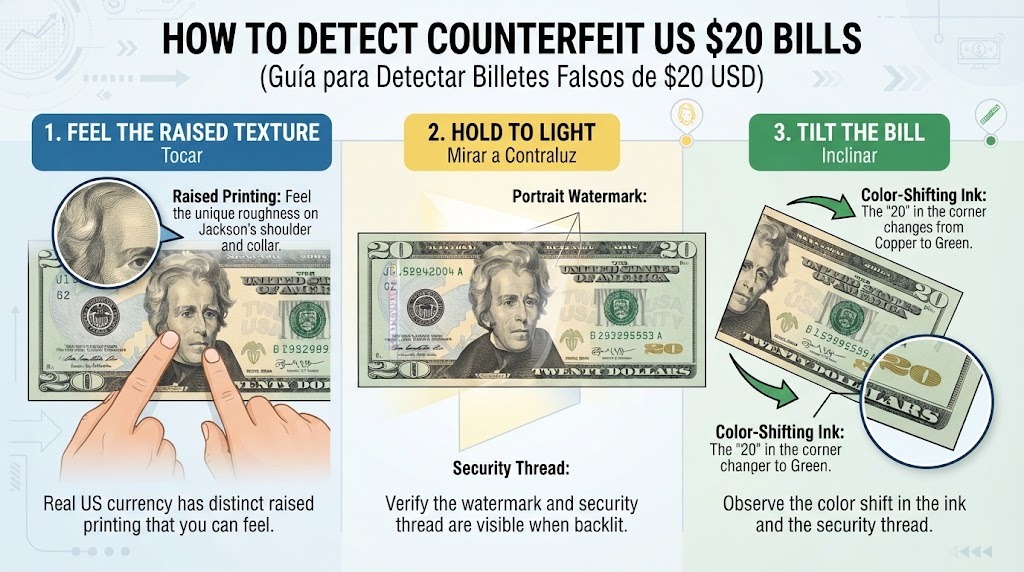
The Banco Central de Reserva (BCR) highlighted the importance of checking the security features of US dollar bills to distinguish genuine ones from counterfeits. Using two US$20 bills as an example, the institution demonstrated that both could look similar at first glance; therefore, it recommends paying attention to specific characteristics before accepting cash.
Three steps to verify authenticity
The first step is to touch the bill to feel the raised printing found on certain areas of genuine notes. This feature allows one to detect textural differences and serves as a key indicator of authenticity.
The second step is to hold the bill up to the light. Doing so allows you to verify the presence of the watermark and the security thread embedded in the paper. These elements are among the features that distinguish genuine bills from counterfeits, so it is important to ensure they are visible and match the bill’s specifications.
The third recommendation is to tilt the bill to observe the color-shifting denomination. According to the BCR, this feature, which shifts from copper to green, is found on bills of US$10 and higher. Checking this detail can therefore help detect potential counterfeits.
The importance of checking bills
The exercise presented by the BCR demonstrates that identifying counterfeit money is not always easy when looking only at the general design. Consequently, the institution recommends becoming familiar with security features and checking multiple elements rather than relying solely on the bill’s appearance.
While a single feature might raise doubts, examining the texture, watermark, security thread, and color shift allows for a more thorough verification. Knowing these signs helps people handle cash with greater confidence and remain alert to potential counterfeit bills.
You may also read: