

 dinero_admin
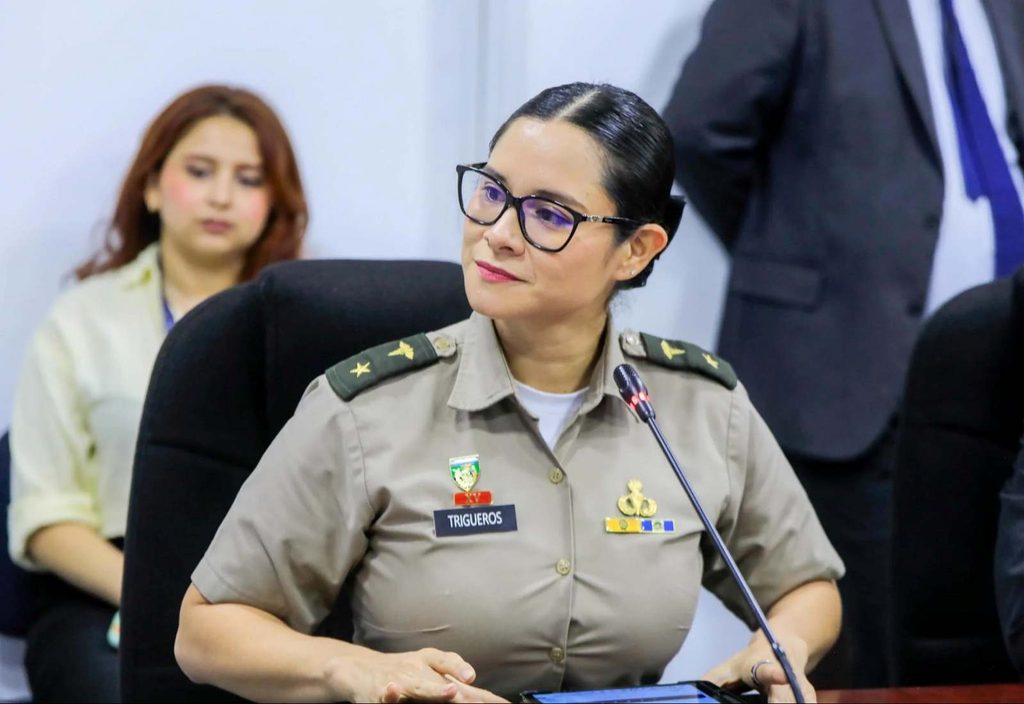
El Salvador’s education sector will be allocated US$3.416 billion for 2027,equivalent to 8.1% of the Gross Domestic Product (GDP), to fund projects for the renovation of schools, the narrowing of the digital divide, and the strengthening of various training programs. The allocation of these resources was presented by the minister of Education, Science and Technology, Karla Trigueros, to the members of the Special Budget and Finance Committee.
Of the total amount, US$2.70019 billion will be managed directly by the Ministerio de Educación, Ciencia y Tecnología (MINEDUCYT), while the remainder will be handled by other institutions involved in school infrastructure projects. The minister described this allocation as the largest in the country’s history, emphasizing that it represents a commitment to expanding and improving educational services.
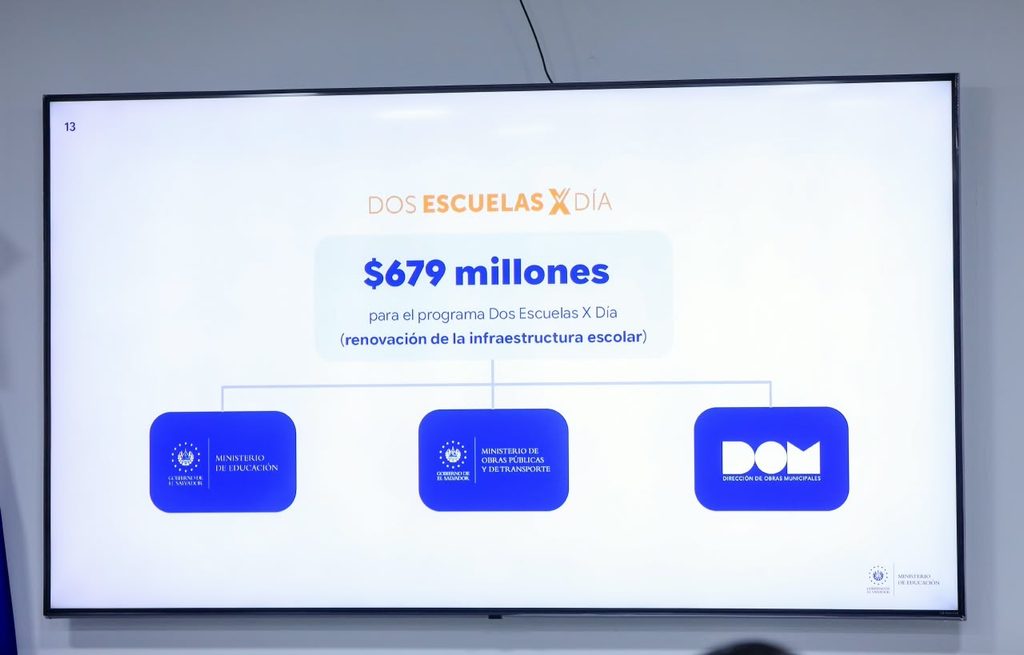
A key investment area is the Dos Escuelas por Día program, which will receive US$679 million to continue the renovation of educational facilities. According to the Minister, this initiative has already reached over a thousand schools. Its implementation involves the collaboration of MINEDUCYT, the Ministerio de Obras Públicas y Transporte (MOPT) and Dirección de Obras Municipales (DOM), with additional support from inmates in the “Fase de confianza” of their sentences, as part of the “Cero Ocio” plan.
Regarding direct support for students, the budget includes US$134 million for the distribution of school supply packages, which consist of uniforms, shoes, and stationery. Furthermore, the ” Crecer y Aprender Juntos” program, focused on the holistic development of early childhood will be allocated US$132.69 million to strengthen educational support during the earliest stages of development.
Investment in technology will also represent a significant portion of the budget allocation. The Programa de Conectividad Digital Social will have US$415 million at its disposal, earmarked for the development of technological skills and the continued distribution of electronic devices. The strategy includes providing tablets for students in preschool and the first cycle of primary education, as well as computers for students from the fourth grade through high school.
In addition to this investment, US$163.6 million will be allocated to the Programa de Modernización del Sistema Educativo,, which includes the integration of artificial intelligence into educational processes. Furthermore, the Programa de Conectividad Digital Social will be provided with US$32.61 million to expand access to the internet and digital services, with the goal of strengthening the technological infrastructure of educational centers and their surrounding communities.
The budget also includes resources to expand training opportunities for various segments of the population. The Programa de Trayectorias Educativas Completas will receive US$55.32 million to support adults looking to resume and complete their studies. Meanwhile, US$21 million will be dedicated to expanding preschool education offerings and strengthening Centros de Atención a la Primera Infancia (CAPI).
At the higher education level, the Universidad de El Salvador (UES) will receive an allocation of US$118 million for its operations in 2027, an increase of US$2 million over the previous year. Through this distribution, the education budget aims to address various needs within the system, ranging from infrastructure and access to technological tools to early childhood education, the continuity of studies, and university-level training.
You may also read: