

 A. M.
A. M. 
Financial education doesn’t begin in banks or in adulthood, but at home. Teaching children to manage money from an early age is a key tool for them to make responsible decisions in the future, avoid over-indebtedness, and develop a healthy relationship with their finances. Far from being a complex topic, it can be approached practically and adapted to each stage of life.
Money as part of daily education
Talking about money with children shouldn’t be a taboo subject. Integrating financial concepts into daily life helps children understand the value of effort and the importance of managing resources. From explaining why one product is chosen over another to involving them in simple household decisions, every experience becomes a learning opportunity.
The key is to use clear, age-appropriate language, avoiding unnecessary technical jargon.
Teaching the value of money and work
One of the first lessons is understanding that money is not unlimited. Explaining that it comes from work and effort allows children to appreciate what they have. Simple activities, such as assigning small household chores linked to a small reward, help connect effort with income.
This approach fosters responsibility and reduces the tendency to ask for money without understanding its origin.

Introducing the habit of saving early
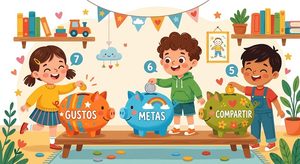
Saving is one of the cornerstones of financial education. Using a piggy bank or a clear jar allows children to see how money grows over time. Setting clear goals, such as saving for a toy or a special activity, teaches patience and planning.
As they grow older, you can explain the difference between spending everything immediately or waiting to reach a larger goal.
Learning to differentiate between wants and needs
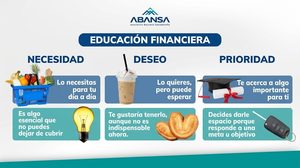
A fundamental concept is distinguishing between what is needed and what is wanted. This lesson helps control impulsive spending and make more conscious decisions. At the supermarket or in a store, parents can explain why certain expenses are a priority and others can wait.
This exercise strengthens judgment and the ability to choose responsibly.
Involving them in simple household decisions
Allowing children to participate in basic financial decisions, such as planning a small budget for a family outing or comparing prices before buying, makes them active participants in the process. These practical experiences reinforce what they have learned and show them that money requires organization and planning.
It’s not about burdening children with adult responsibilities, but about including them gradually and educationally.
Example as the primary lesson
Beyond explanations, the example set by parents is crucial. Children learn by observing how adults manage money, prioritize expenses, and handle unexpected events. Practicing healthy financial habits at home reinforces the message and makes it believable.
Consistency between words and actions is essential for effective teaching.

Adapting financial education to each stage
The way finances are taught changes with age. While basic concepts like saving and the value of money are prioritized in childhood, topics such as budgeting, responsible credit use, and personal goal setting can be introduced in adolescence.
This progressive learning prepares young people to face more complex financial decisions in the future.
An investment in the future
Teaching children basic financial literacy is a long-term investment. The knowledge and habits acquired at home can make the difference between a financially sound life and one filled with difficulties. With patience, consistency, and everyday examples, families can raise more conscious, responsible generations, better prepared to manage their money.
You can also read: