

 A. M.
A. M. 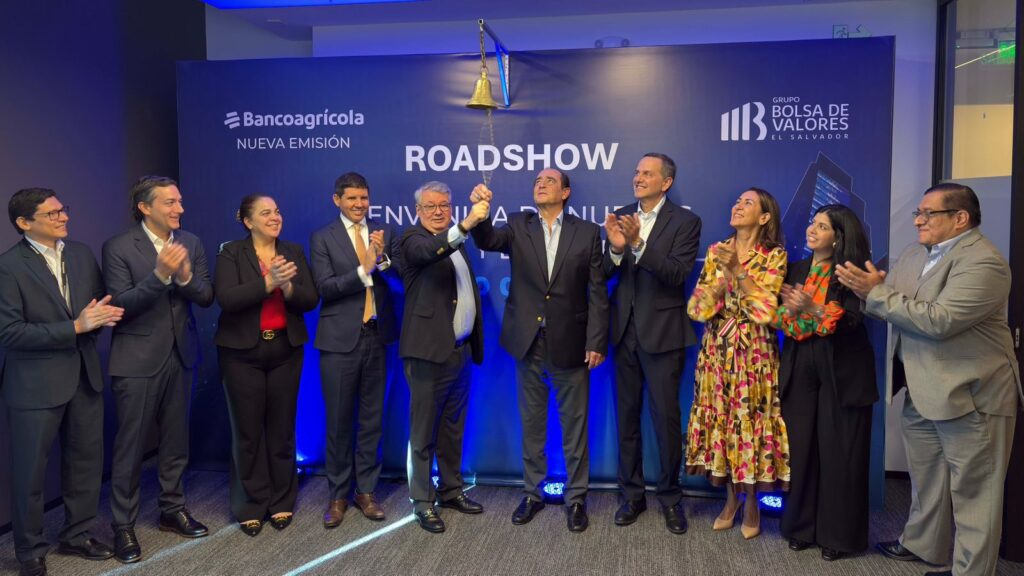
The El Salvador Stock Exchange welcomes the first Bono Azul issued by Bancoagrícola, a pioneering instrument that marks a new milestone in the development of sustainable finance in the country. The issuance has an authorized amount of up to US$200 million, solidifying its status as a highly significant transaction in the salvadoran capital market.
Rolando Duarte, president of the Stock Exchange, emphasizes that “This placement reaffirms the stock market’s commitment to responsible financing and to strengthening instruments aligned with environmental and social objectives. The incorporation of thematic bonds, such as blue bonds, reflects a natural evolution of the market toward investment models that generate a positive impact and promote a sustainable economy”.
Bancoagrícola, as the issuer, becomes the first financial institution in the country to place a Blue Bond through the local stock market. The proceeds from this issuance will be used to finance short-, medium-, and long-term credit operations.
“With this approval, we strengthen our commitment to promoting the country’s sustainable development”, said Rafael Barraza, CEO of Bancoagrícola. “This Blue Bond represents a significant step forward for our institution and for El Salvador, which joins the markets using innovative financial instruments capable of generating a positive environmental impact. The support of IDB Invest as a strategic partner has been crucial, given their understanding of the region’s sustainability trends and best practices”.
The symbolic bell-ringing ceremony included the participation of Julián Mora, corporate vice President of the Grupo Cibest , who stated: “This Blue Bond issuance reflects the Grupo Cibest vision of promoting financial solutions that contribute to the region’s sustainable development. Joining Bancoagrícola in this milestone reaffirms our commitment to mobilizing capital for projects that promote responsible economic growth”-
The operation is supported by IDB Invest, a member of the IDB Group, which is participating as a strategic partner by providing financing and technical assistance to strengthen the bank’s sustainable finance strategy. This issuance is part of a Sustainable Bonds program of up to US$200 million, aimed at expanding access to financing for initiatives that promote sustainability.
The first placement was for US$25 million, with a five-year term, comprised of three tranches: the first, for US$10 million, subscribed by IDB Invest as the lead investor; the second, for US$10 million, to be subscribed in the coming days by LAGreen Fund, managed by Finance in Motion; and the third, for US$5 million, by Norfund, the latter two as co-investors. The bonds, denominated in US dollars, will be listed on the El Salvador Stock Exchange under the Guidelines for the Issuance of Green, Social, and Sustainable Bonds.
The funds raised will boost access to financing for projects related to responsible water management, sanitation, pollution prevention and control, and ecosystem conservation, including projects impacting coastal communities and marine ecosystems, while simultaneously revitalizing the salvadoran capital market.
The issuance was authorized by the Superintendencia del Sistema Financiero, as a result of coordinated work between the regulator, the Stock Exchange, and the issuer, who received technical assistance from IDB Invest in developing its Sustainable Framework, demonstrating the institutional strength that supports the development of new financial instruments in El Salvador.
The Stock Exchange recognizes this placement as a key step in consolidating the thematic bond market in the country, paving the way for future green, social, and sustainable issuances, and strengthening the range of investment options for local and international investors.
“With this transaction, the salvadoran stock market continues to position itself as a modern, transparent platform aligned with global trends in sustainable financing, reaffirming its role as a strategic channel for mobilizing resources toward projects that generate long-term economic, social, and environmental impact”, concludes Rolando Duarte.
You can also read: