

 A. M.
A. M. 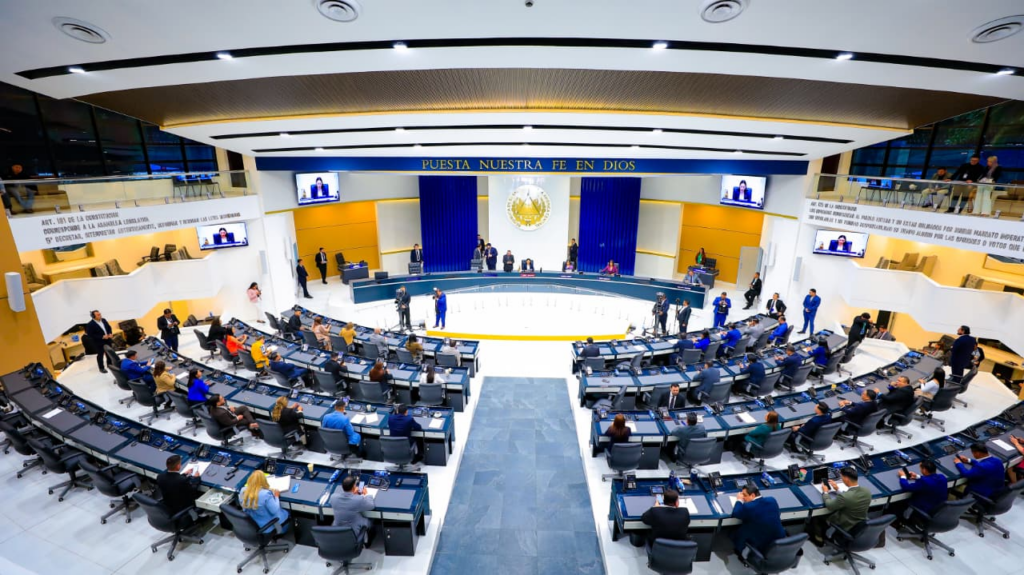
With 56 votes, the Legislative Assembly approved the Ley de Creación de la Autoridad Salvadoreña de Economía Azul, a regulation that establishes a new entity responsible for regulating fishing and aquaculture in the country, with a focus on sustainable development and the responsible use of marine and freshwater resources.
The law establishes the Autoridad Salvadoreña de Economía Azul (ASEA) as an autonomous institution, with its own assets and attached to the Ministry of Economy, which will assume leadership, planning, and implementation of public policies related to the fishing and aquaculture sector, as well as related activities.
The concept of a blue economy seeks to balance economic growth with environmental sustainability, promoting the use of oceans, rivers, and coastal areas without compromising their conservation. To this end, it promotes the use of technology, innovation, and the responsible management of natural resources.

Among the law’s main objectives are designing and implementing public policies that strengthen fishing and aquaculture, guarantee food and nutritional security, fostering the sector’s growth, and ensuring the rational use of aquatic resources. It also seeks to promote environmental sustainability, innovation, and cooperation among the public, private, and academic sectors.
During the legislative debate, Congressman Ricardo Rivas of the Nuevas Ideas party stated that the new legal framework will boost investment, protect marine and agricultural resources, and modernize fishing activities to make them more sustainable. He indicated that the creation of the ASEA will directly benefit more than 5,000 fish farmers and approximately 30,000 deep-sea fishers who depend on this activity for their livelihoods.
The regulations also stipulate that ASEA will assume the functions currently performed by the Ministry of Agriculture and Livestock and the Centro de Desarrollo de la Pesca y la Acuicultura (CENDEPESCA), centralizing the management of the sector under a single authority.

Among its responsibilities, ASEA will be in charge of regulating the use of hydrobiological resources, authorizing and supervising activities in the sector, and guaranteeing the traceability, quality, and safety of fishery and aquaculture products. It will also promote ecosystem conservation and compliance with current regulations.
The new authority will also foster scientific research, technology transfer, and capacity building through coordination with national and international institutions, the private sector, and cooperation agencies.
Regarding its funding, ASEA will have access to resources from the General State Budget, revenues from services, international cooperation, donations, and other sources permitted by law. Its management will be subject to oversight by the Court of Accounts of the Republic, as well as external audits, with the aim of guaranteeing transparency and the proper use of public resources.
You can also read: