A. M.
A. M. 
Congressman Christian Guevara alerted the public, via his social media account, about a new type of digital scam circulating through fake emails that inform people they have a supposed “tax refund.”
According to the legislator, the fraudulent messages mimic official communications from the Ministry of Finance and include details such as deadlines, amounts to claim, and buttons to click to process the refund. However, it is an attempt to deceive victims into providing their personal or financial information.
“If you receive an email saying you have a tax refund, do not click to claim it”, warned Guevara, who urged the public to remain vigilant against these types of messages.
How the scam Works
Cybercriminals use institutional logos, names of official agencies, and formal language to gain trust. The email content includes a link that supposedly directs users to the official portal to complete a digital form. However, by clicking on it, people may be providing sensitive data such as identification numbers, passwords, or banking information.
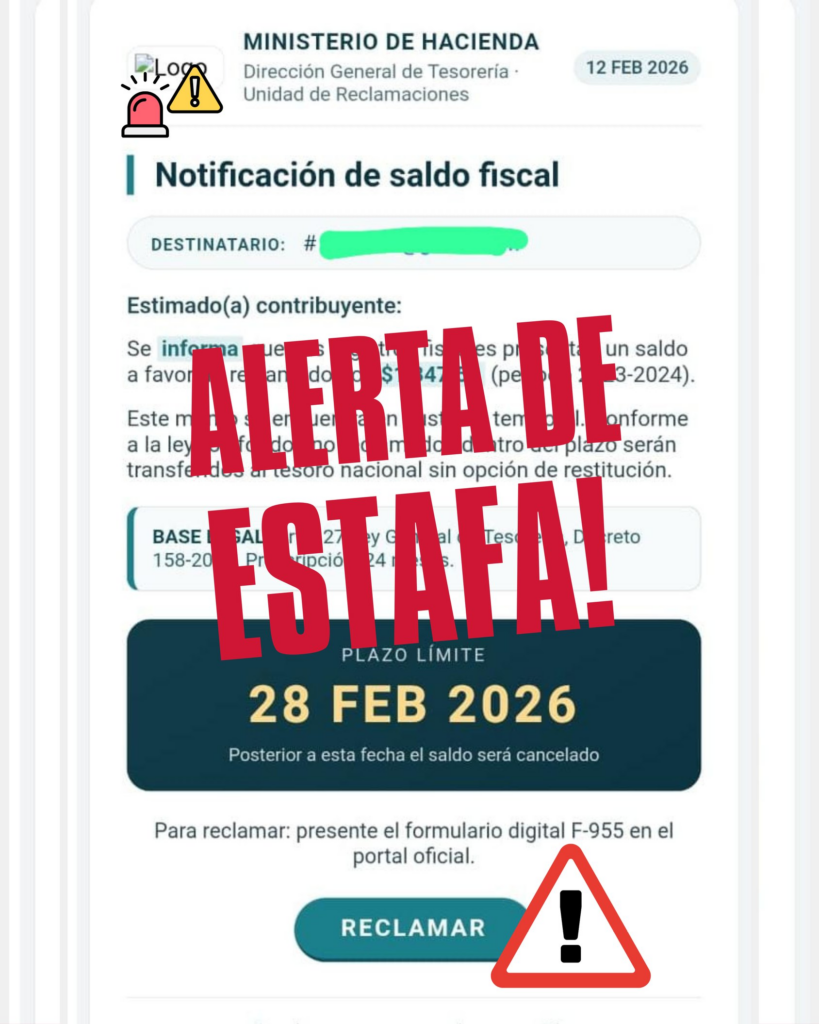
In some cases, these links can also install malware on devices, increasing the risk of data theft or financial fraud.
Recommendations to avoid becoming a victim: Authorities and digital security specialists recommend:
Do not click on suspicious links sent via email.
Verify any information related to tax refunds or balances directly on the official Ministry of Finance website.
Carefully check the sender’s address, as it often does not correspond to authentic institutional domains.
Do not share personal or banking information through links received by email.
Report the message as phishing or fraudulent email.
Call for prevention
The congressman reiterated the importance of not being swayed by urgency or the promise of receiving money, as this is one of the main mechanism’s scammers use to pressure people.
The main recommendation is to remain calm, confirm information through official channels, and not interact with links or forms that raise doubts. Prevention and verification are key to avoiding falling for these types of digital scams.
You can also read: