

 A. M.
A. M. 
San Salvador hosted the Cumbre Bitcoin Capitalthis week, an event held as part of the Plan B Network activities. The summit brought together leaders from the crypto and financial ecosystems to analyze Bitcoin’s role in the evolution of global capital markets.
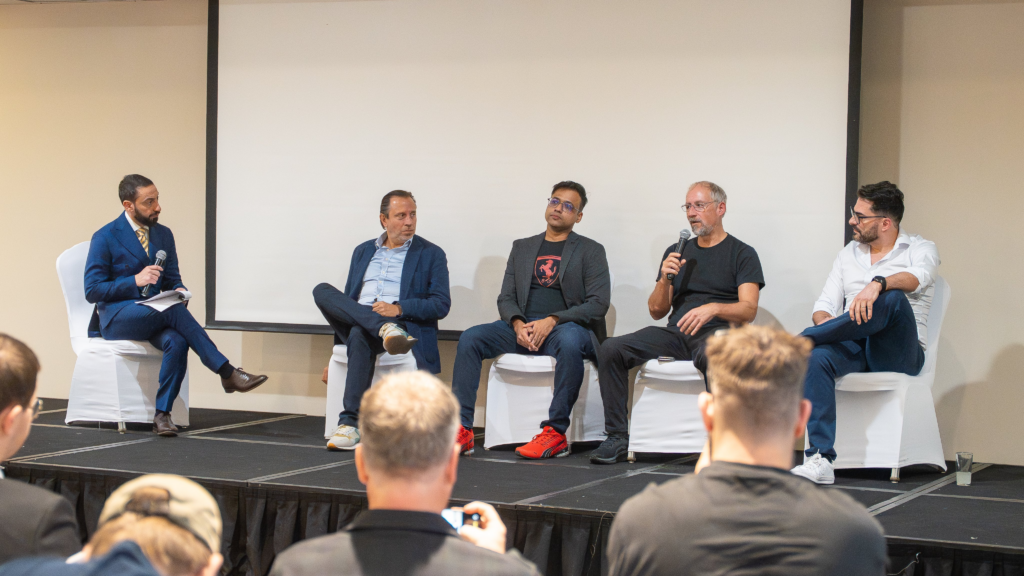
One of the central panels, titled “The Next Market: Liquidity Meets Global Capital Markets”, addressed how Bitcoin-based infrastructure is moving toward schemes compatible with financial regulations and institutional adoption.
The panel featured Adam Back, CEO and founder of Blockstream; Michele Crivelli, CEO of NexBridge; Federico Suárez Rendón, also associated with NexBridge; and Luca Esposito of Blockstream Capital Partners, who served as moderator.
Liquid Network and its connection to regulated markets
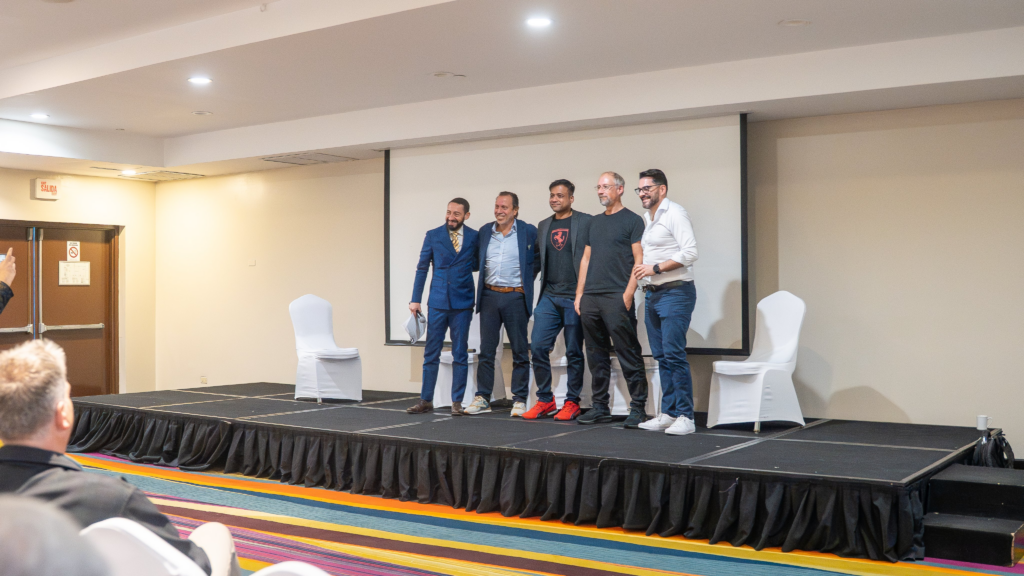
One of the highlights was the role of Liquid Network, the Bitcoin sidechain developed by Blockstream, which enables confidential transactions and the issuance of digital assets on an infrastructure anchored to the main Bitcoin network.
During the panel, it was explained that Liquid is serving as a bridge between Bitcoin’s native infrastructure and regulated capital markets, facilitating the tokenization of real-world assets (RWAs) and opening up space for greater institutional participation.
The panelists agreed that Bitcoin is no longer perceived solely as an alternative financial system, but as a piece that is beginning to integrate into the global financial architecture, especially in jurisdictions that have made progress in their regulatory frameworks.
Regulatory compliance and confidentiality
One of the central themes of the debate was “compliance by design.” As explained, Liquid allows for the establishment of rules for the transfer of restricted securities—such as jurisdictional limits or requirements for accredited investors—keeping sensitive information off the public chain while ensuring technical verification.

The importance of confidential transactions was also emphasized, considered a key element for financial institutions that handle sensitive data and require high standards of risk management and privacy.
Institutional requirements and technological evolution
The panelists noted that financial institutions require five fundamental conditions for operating with digital assets: settlement reliability, robust cryptographic security, transaction speed, regulatory compliance, and risk management. According to their presentation, Liquid’s infrastructure aims to meet these criteria through technical tools already implemented on the main network.
Furthermore, the activation of smart contracts using the Simplicity language on the network was highlighted, expanding programmable capabilities on Bitcoin and marking a transition from pilot projects to production implementations.
El Salvador as a strategic setting
The event reaffirmed El Salvador’s position as a hub for discussions on Bitcoin-based financial innovation. Since the country adopted this cryptocurrency as part of its economic strategy, it has hosted international gatherings focused on regulation, technological infrastructure, and institutional adoption.
The Bitcoin Capital Summit, held this week in San Salvador, demonstrated that the salvadoran model continues to generate global interest, particularly in discussions about the convergence of blockchain technology, regulated markets, and new digital financial instruments.
You can also read: