

 A. M.
A. M. 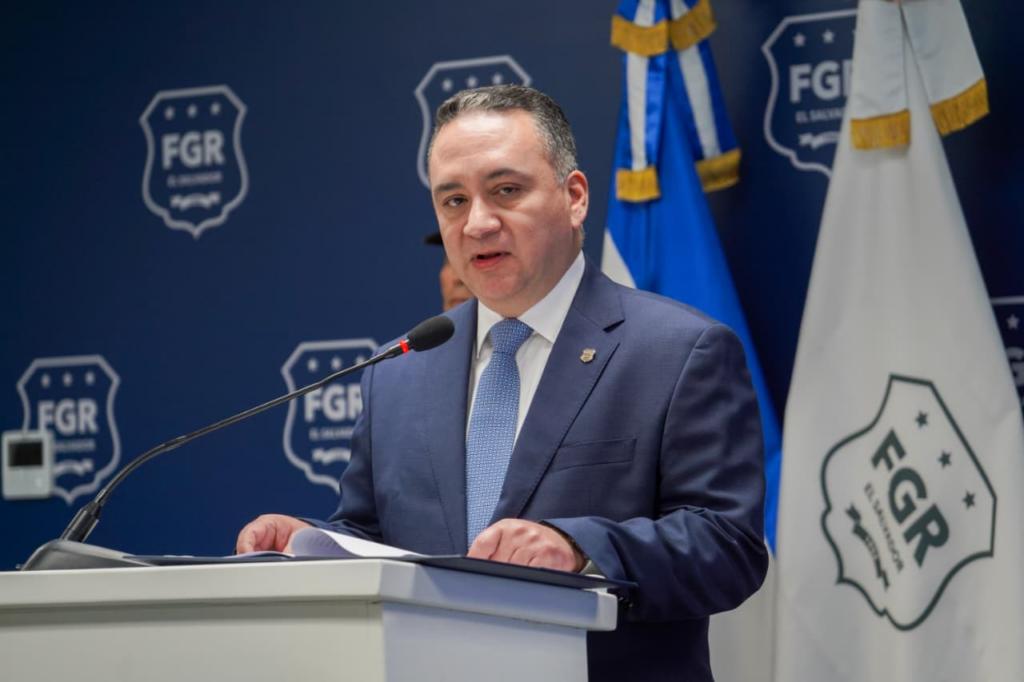
The Fiscalía General de la República (FGR) reported that El Salvador registered a 51.5% reduction in crime during 2025 compared to 2024, a result that consolidates one of the most significant advances in security in the country’s recent history.
The reduction encompasses high-impact crimes such as extortion, robbery, theft, assault, and other property crimes, which for years directly affected the economy and the peace of mind of salvadoran families. According to the official, the decrease in these criminal activities is a result of strengthened investigative processes and the strategic use of criminal analysis.
Among the key factors that have contributed to this decrease in crime are the technical and scientific work, the specialization of prosecutors in crime scene processing, and the ongoing coordination with the Policía Nacional Civil and Fuerza Armada, which has allowed for faster and more precise action against criminal organizations.
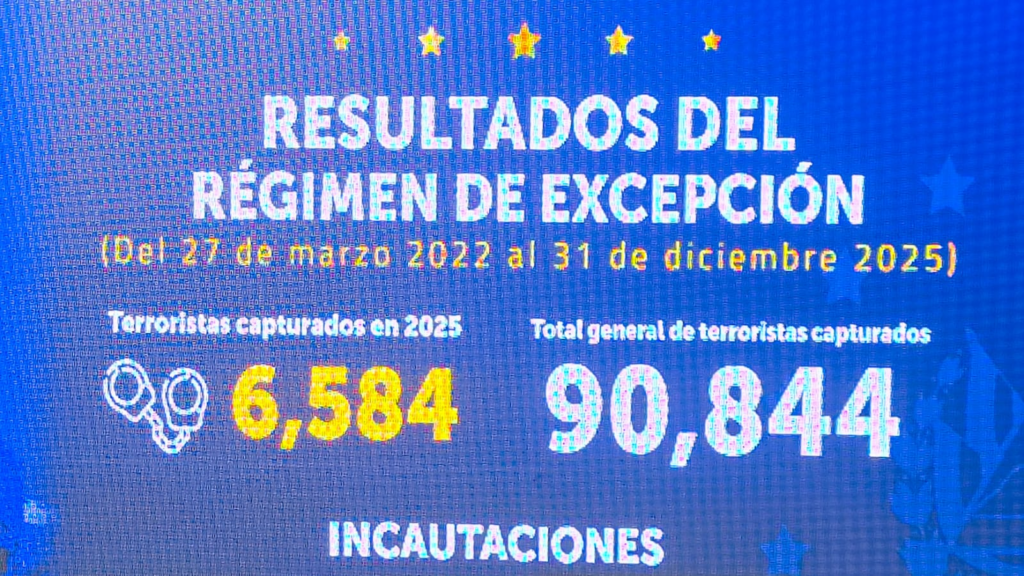
The attorney general emphasized that the State of Emergency has also been crucial in ensuring that arrests result in firm criminal proceedings, preventing crimes from going unpunished. In this context, the Fiscalía General de la República has filed thousands of indictments and secured the first convictions, always respecting due process.
Furthermore, the institution highlighted that the overall reduction in crime is complemented by progress in other areas of security, such as the fight against drug trafficking, where more than 25,000 kilograms of drugs were seized in 2025, directly impacting the finances of organized crime.
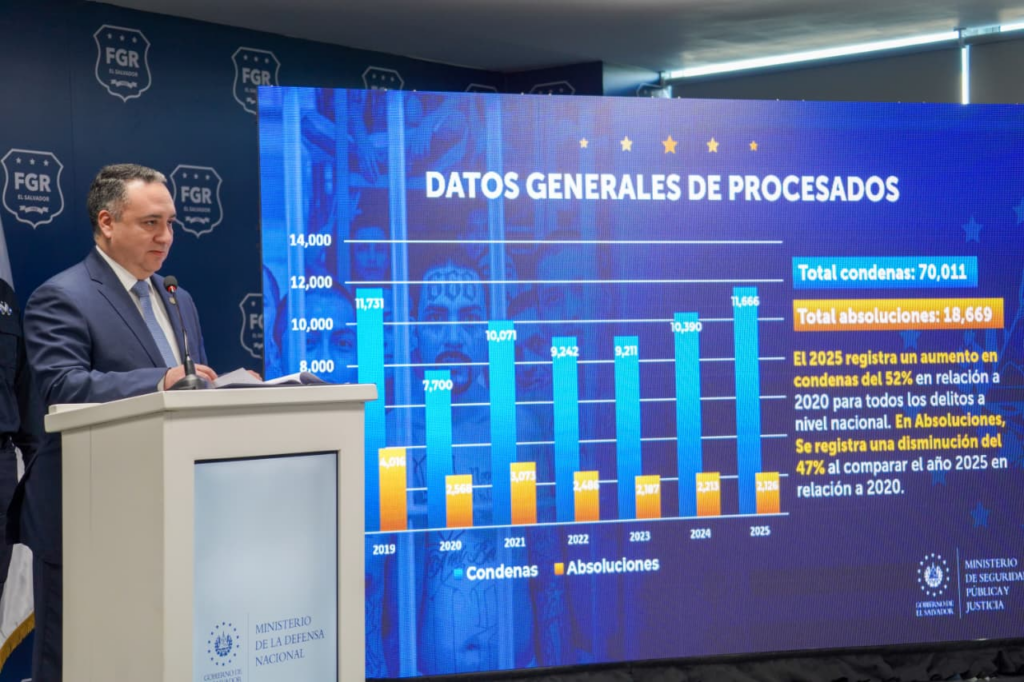
During the presentation of the annual security report, the Attorney General said that this decrease is not due to isolated actions, but rather to a comprehensive and sustained strategy, in which the FGR has fulfilled its constitutional role of leading criminal investigations, presented solid accusations, and ensuring that crimes do not go unpunished.
According to the Attorney General’s Office, these results confirm that when the State acts in a coordinated manner and with institutional support, it is possible to reverse historical patterns of violence and crime, strengthening public trust and ensuring that justice ceases to be a promise and becomes a tangible reality for the salvadoran population.
You can also read: