

 dinero_admin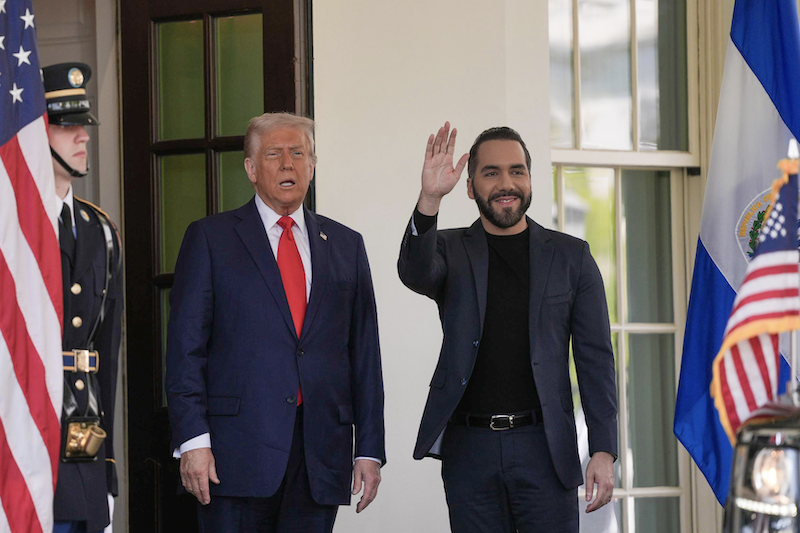
The president of El Salvador, Nayib Bukele, is among the heads of state invited to the presidential summit to be held on march 7 in Miami, convened by republican leader Donald Trump. The meeting, which will take place at the Doral Hotel, seeks to consolidate a regional bloc aligned with the United States’ strategy in the face of China’s growing influence in Latin America.
Bukele’s participation is significant in a context where Washington is trying to strengthen alliances with governments that share its vision on security, trade, and strategic investment. According to diplomatic sources in the U.S. capital, the central objective of the meeting is to coordinate actions to limit Chinese influence in sectors considered sensitive, such as critical minerals, logistics infrastructure, food production, and technology.
What does this mean for El Salvador?
For the salvadoran government, attending this summit represents an opportunity to position itself as a strategic partner of the United States in the region. In recent years, El Salvador has sought to diversify its economic base, attract foreign investment, and expand its presence in global value chains, particularly in areas related to technology and infrastructure.
The agenda of the meeting in Miami is expected to be closely tied to economic security. Washington considers control of strategic resources (such as lithium, copper, and rare earth elements) crucial for energy stability and national defense. In this regard, countries that support the U.S. position could gain access to financing mechanisms, technical cooperation, and investment opportunities.
Furthermore, the salvadoran government has expressed interest in strengthening cooperation on security and trade, two central pillars of U.S. foreign policy.
The background: Minerals, defense, and supply chains
The summit comes after the United States hosted a global meeting in Washington on critical minerals, where it promoted agreements to secure the supply of essential inputs for the technology and military industries. The Republican administration also published a National Security Strategy that prioritizes the Latin American region within its defense framework and establishes limits on the influence of extra-regional actors.
Along these lines, Trump also announced the creation of a strategic reserve of critical minerals called Project Vault, which would combine private financing and support from the Export-Import Bank of the United States (EXIM Bank). Allied countries would have priority in the distribution of resources linked to this initiative.
A block with ideological affinity
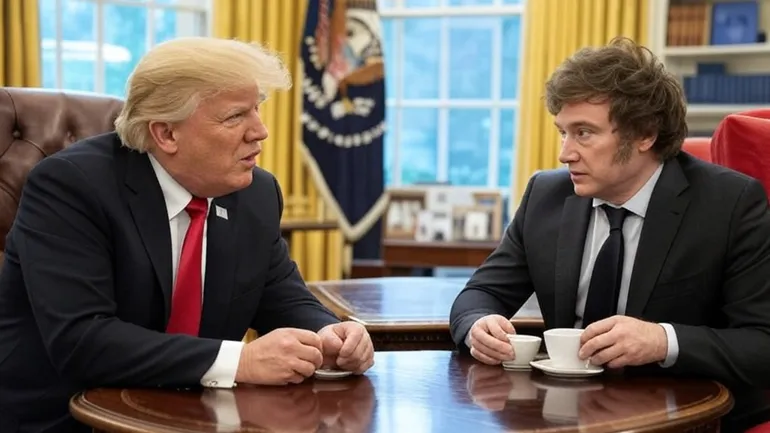
In addition to Bukele, Javier Milei (Argentina), Santiago Peña (Paraguay), Rodrigo Paz (Bolivia), Daniel Noboa (Ecuador), and Tito Asfura (Honduras) have been invited. These governments have shown political affinity with the Republican vision on issues such as free markets, security, and reducing chinese influence in strategic sectors.
The meeting would also highlight differences within Latin America. While some countries seek to strengthen ties with Washington under this new orientation, others maintain deep trade relations with Beijing and prefer a more balanced foreign policy.
What’s at stake?
Beyond the ideological dimension, the Miami meeting aims to redefine the map of economic alliances in the region. The debate revolves around who controls natural resources, who finances infrastructure, and under what standards strategic projects are developed.
For El Salvador, Bukele’s presence at this summit could mark a further step in its rapprochement with the United States, in an international scenario where competition between powers shapes economic, technological, and security decisions.
The meeting on march 7 will not only bring together like-minded presidents, but will also address the future of geopolitical influence in Latin America and the role each country is willing to play in this new global balance.
You can also read: