

 A. M.
A. M. 
The second release of results from the V Censo Agropecuario y I de Pesca confirms the importance of the agricultural sector to El Salvador’s economy, according to the Banco Central de Reserva, highlighting significant production levels and a strong focus on commercialization.
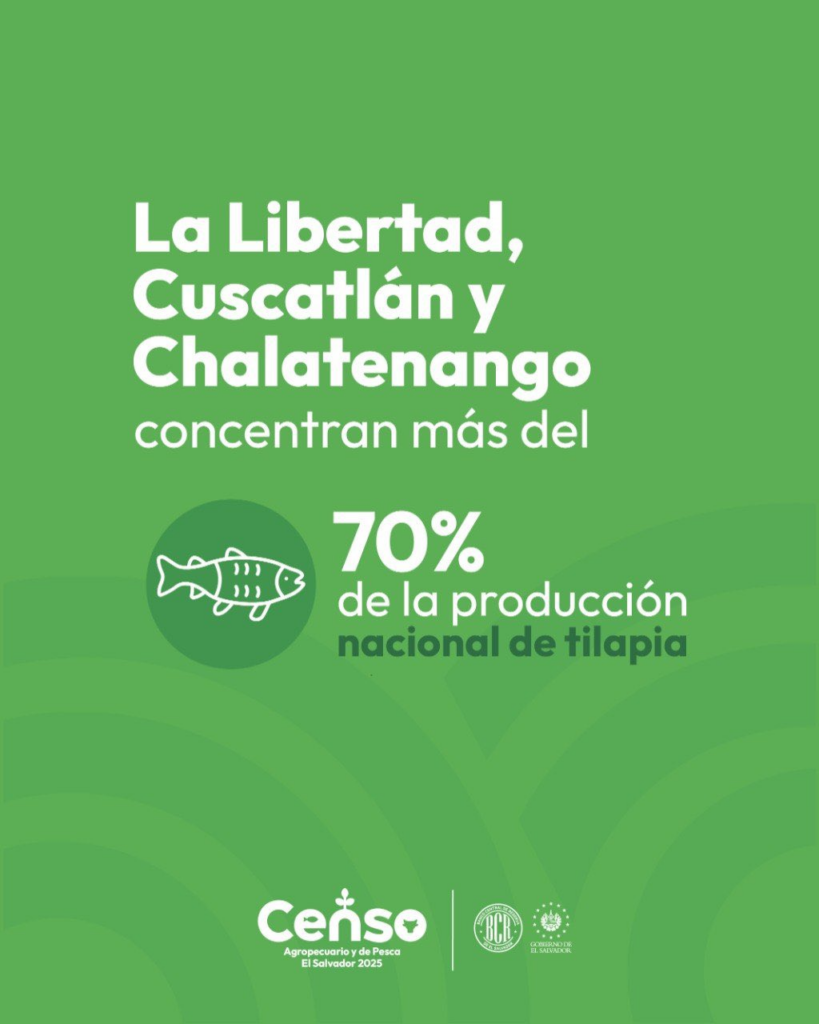
In the aquaculture sector, tilapia is the most cultivated species, with a production of 8.2 million pounds, 99.3% of which is destined for sale. Shrimp production reached 5.2 million pounds, with 84.9% going to market, primarily concentrated in the department of La Paz, which contributes 68.4% of national production.
Regarding traditional crops, sugarcane production reached 6.7 million short tons between may 2024 and april 2025, across an area of 102,167 blocks (approximately 102,167 acres). Coffee also maintains a significant presence, with 105,741 blocks(approximately 105,741 acres) under cultivation and a national production exceeding 4 million quintals (approximately 1,000 pounds) of coffee cherries.
Coffee production is concentrated in four departments, which together account for 74% of the national total: Santa Ana leads with 29.2%, followed by La Libertad (15.9%), Ahuachapán (15.7%), and Sonsonate (13.2%).
In the staple grains segment, corn continues to be the main crop in terms of both harvested area and production volume, with a strong concentration in the western part of the country. Ahuachapán stands out with 12.4% of the total, along with departments such as Santa Ana, Sonsonate, La Libertad, and Usulután, each contributing over 8%.
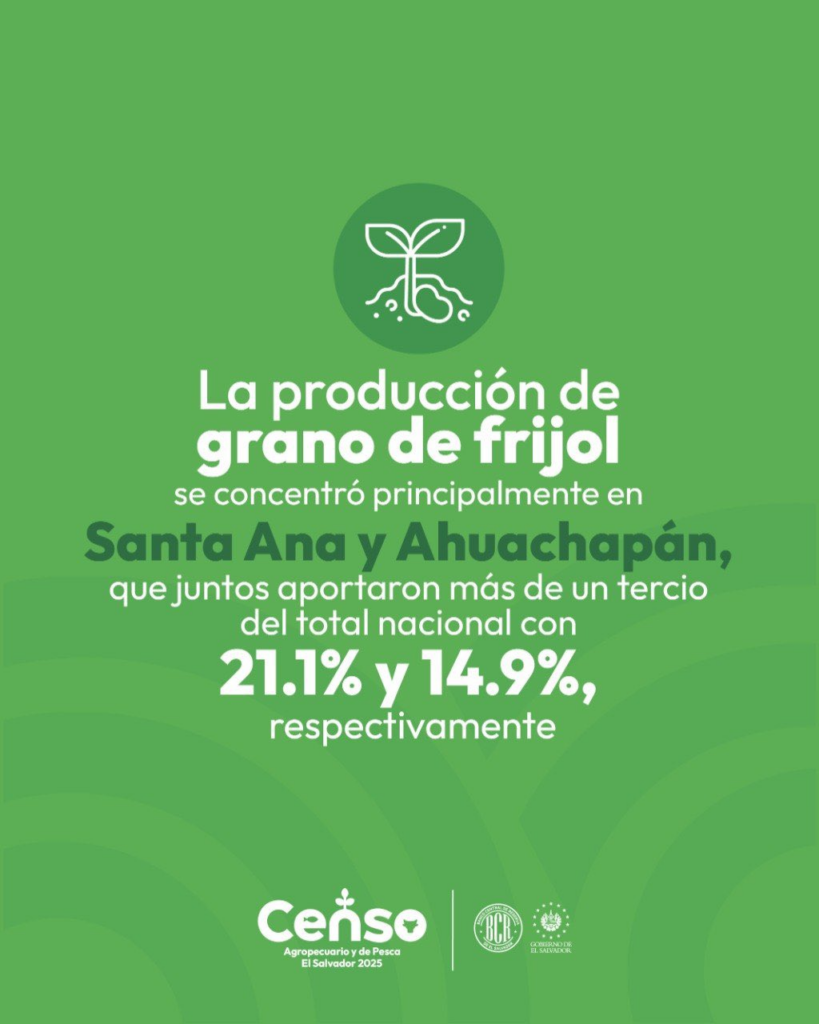
The census also reveals that 55.2% of the area planted with beans is used in rotation with other crops, demonstrating intensive use of agricultural land. In the case of sorghum, 45.9% of production is concentrated in the western region, primarily in Ahuachapán and Sonsonate, and is mostly used for animal feed.
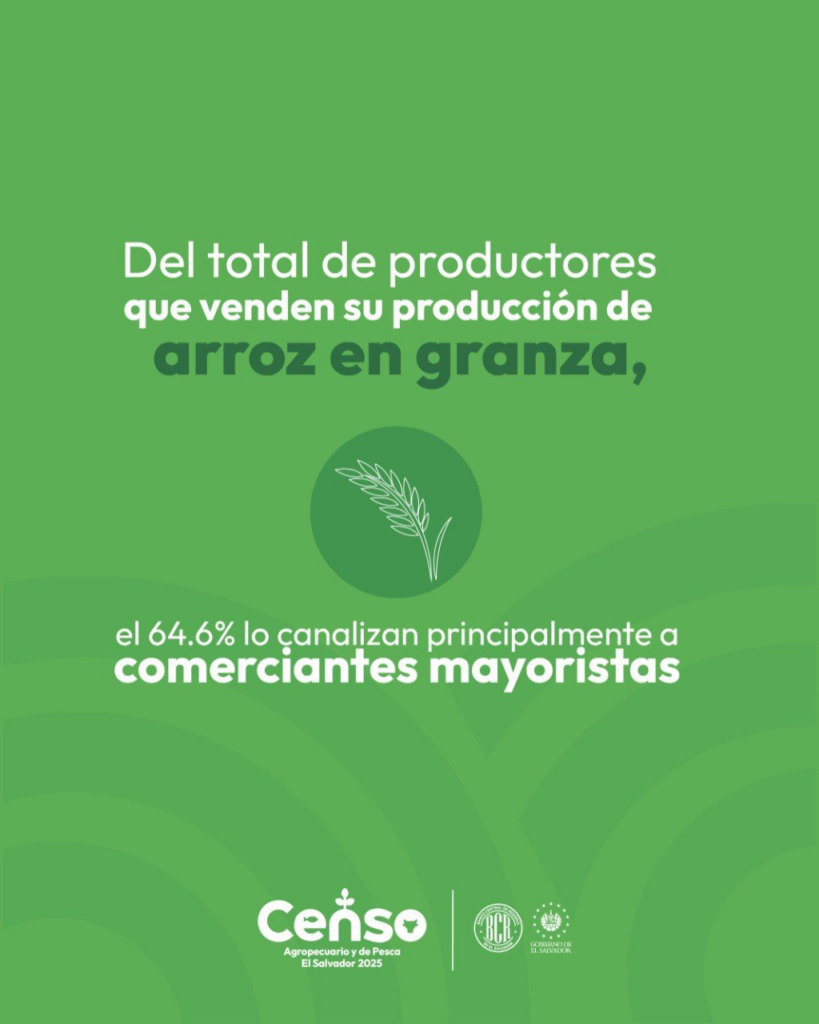
Paddy rice production is mainly located in La Libertad and Chalatenango, which account for 44.6% and 27.4%, respectively, with 96.9% of the total destined for sale.
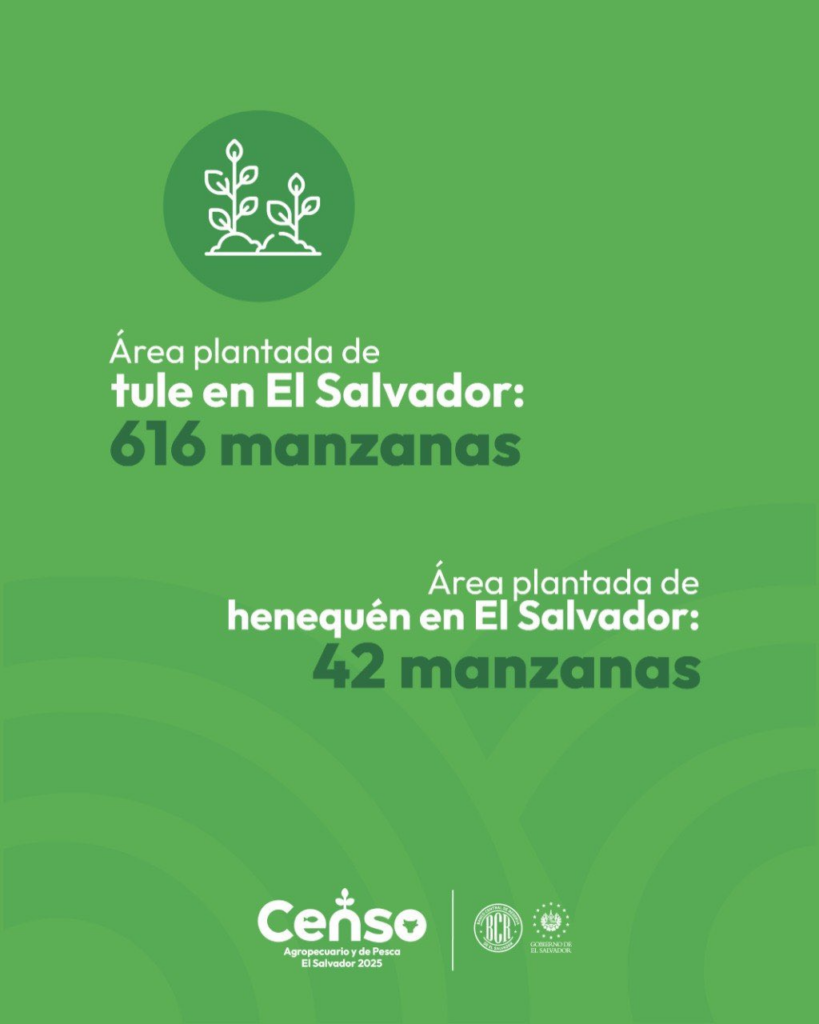
Finally, the report also highlights the existence of less traditional crops such as tule and henequen, with 616 and 42 manzanas planted, respectively, reflecting the sector’s productive diversity.
These results demonstrate a dynamic agricultural sector, with a strong commercial orientation and a territorial distribution that is key to the country’s economic development.
You can also read: