


 A. M.
A. M. 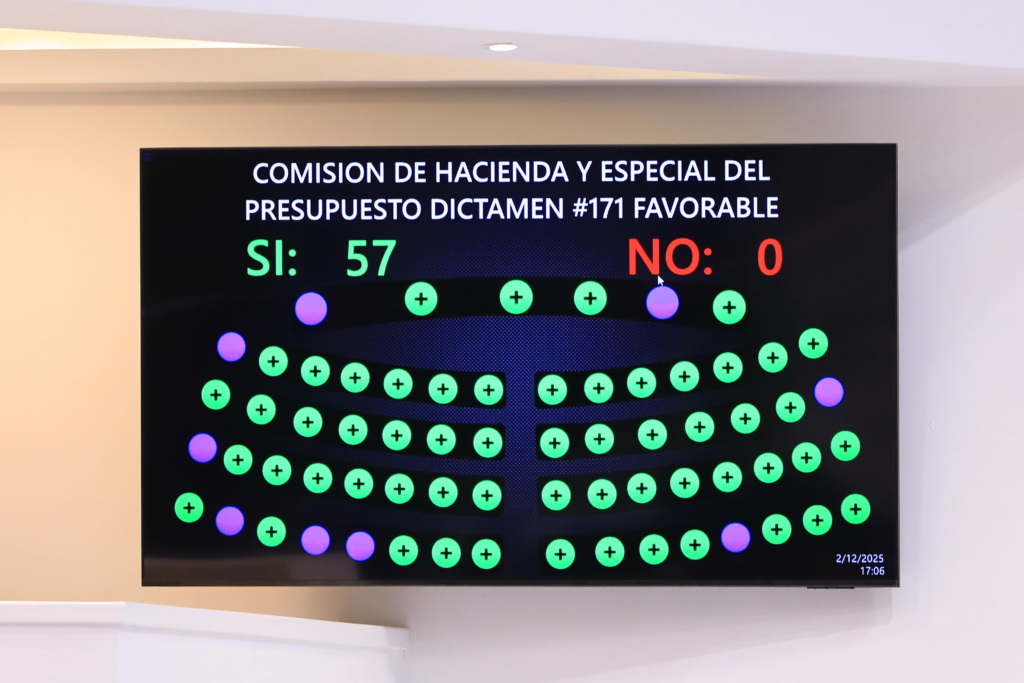
This approval will allow the Ministry of Public Works to manage resources from two loans with the BIRF to improve road mobility. This includes land purchases and the resettlement of families from the areas where the work is being carried out.
With 56 votes, the Legislative Assembly approved special and transitional provisions for the execution, supervision, and administration of resources from two loan agreements for US$150 million and US$120 million that the Government signed with the International Banco Internacional de Reconstrucción y Fomento (BIRF), to finance El Salvador’s Resilient Transportation and Infrastructure Project.
The goal is to improve mobility, road safety, and the resilience of public works to climate change; it also aims to ensure environmental protection and the well-being of communities.
By approving these measures, the Ministerio de Obras Públicas y de Transporte (MOPT) will have the legal framework to develop, sign, and manage all aspects of both loans.
Furthermore, it will be authorized to purchase land, pay compensation, provide temporary housing, and construct permanent homes for families residing in the areas where road construction projects are taking place, including the Apopa bypass.
Similarly, the MOPT will be authorized to donate to the Fondo Nacional de Vivienda Popular (FONAVIPO)the land and buildings it acquires and provides free of charge to the selected families, according to the Plan de Reasentamiento Involuntario (PRI), approved on august 4.
The plan complies with the environmental and social standards established by the World Bank, which governs BIRF lending policies, especially those regulating land acquisition and resettlement processes.
For this process, FONAVIPO will register these properties in its inventory and carry out the accounting entries according to the property values determined by the MOPT.
The regulations also stipulate that families receiving a property as part of the Plan de Reasentamiento Involuntario may not sell, mortgage, or transfer it in any way for the first 20 years after receiving the deed.
Furthermore, it will be established that the PRI housing projects will be of social interest. Therefore, the registration process for properties delivered to families will be exempt from registration and cadastral fees.
Additionally, the regulations indicate that the Ministry of Finance will carry out the budgetary and financial operations necessary to ensure compliance with the obligations arising from the contracts with the IBRD (World Bank).
Agreements with the BIRF
On january 9, 2024, the Legislative Assembly authorized the Executive Branch to sign a US$150 million loan agreement with the BIRF, to finance the Resilient Transportation and Infrastructure Project. This agreement was signed on february 27 and ratified on april 9 of the same year.
On july 11, the Assembly also authorized a US$120 million loan from the same institution to continue the project and contribute to boosting the economy, including works in various parts of the country, such as the northern part of the San Salvador Metropolitan Area.
The MOPT developed the Involuntary Resettlement Plan to support the sectors affected by the relocation and to enable the project’s implementation.
Tax exemption for cancer medications
With 57 votes, lawmakers also exempted the Ministerio de Salud (MINSAL) from import duties on a donation of medications for cancer patients at the Hospital Nacional Especializado Rosales. These patients are from low-income families and lack access to treatment.
This exemption means the Ministry will not incur any taxes, including import duties, VAT, maritime and port service fees, warehousing costs, or handling fees related to the import.
In may 2019, the MINSAL signed an agreement with The Max Foundation, a non-profit organization that supports low-income patients worldwide who cannot access cancer treatments.
As part of this agreement, El Salvador will receive a donation of 500 boxes of Glivec FCT 400 mg and 465 boxes of Glivec FCT 100 mg.
The exemption will not eliminate the oversight that must be carried out by the Ministry of Finance, through the Dirección General de Aduanas (DGA) and the Dirección General de Impuestos Internos (DGI), as well as other relevant government agencies.
2025 Budget amendments
With 56 votes, legislators also amended the 2025 Budget Law to allocate US$267 million to the Ministry of Finance, ensuring it has sufficient funds to cover the government’s strategic priorities, general state obligations, and various transfers. The money comes from the issuance of securities, approved on november 11.
You can also read: