


 A. M.
A. M. 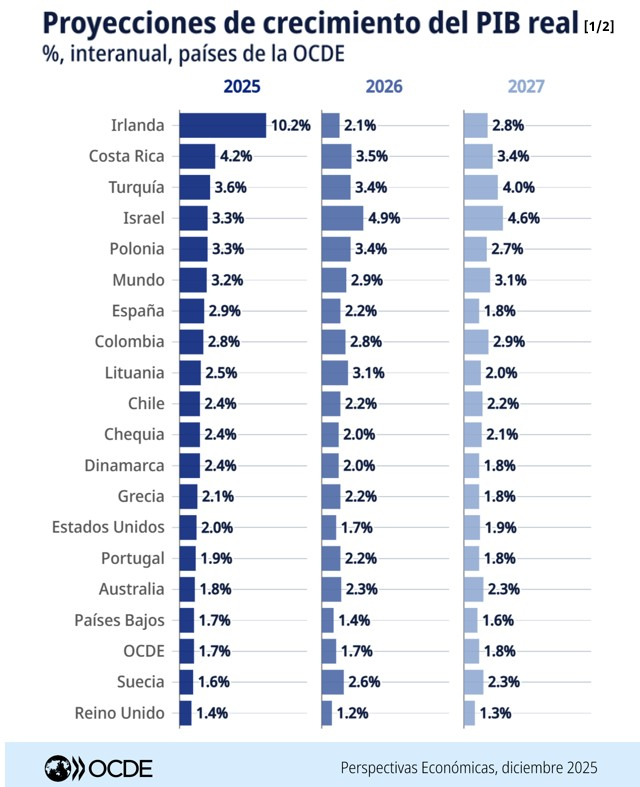
The global economy is ending the year with signs of resilience, according to the latest Economic Outlook published by the OECD. Although global dynamism remains solid in 2025 with an estimated growth of 3.2%, forecasts point to a slight slowdown in 2026, when global GDP is expected to increase by 2.9%, before recovering to 3.1% in 2027.
This performance reflects an international context marked by the normalization of monetary policies, the moderation of inflationary pressures, and global demand that continues to adjust after years of economic shocks. Despite this, international activity remains stable, driven by emerging economies and countries experiencing a rebound in investment and consumption.

The report also highlights that, although the slowdown in 2026 will be widespread, several economies will experience significant recoveries in 2027. These include Turkey, Israel, and Chile, which show more robust growth foundations and projections above the OECD average.
The organization emphasizes that risks persist, particularly those associated with geopolitical tensions, energy price volatility, and the impact of artificial intelligence on labor markets. However, the gradual return of macroeconomic stability and improvements in global supply chains allow for a more favorable outlook toward 2027.
Overall, the data confirm that, despite global challenges, the world economy continues to advance at a moderate but steady pace, consolidating a more balanced recovery that is less vulnerable to external shocks than in previous years.
You can also read: