


 A. M.
A. M. 
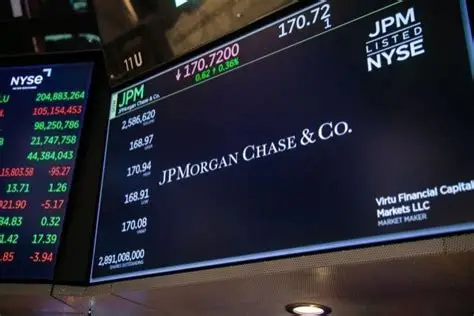
JPMorgan Chase projects that the U.S. Federal Reserve (Fed) will not cut interest rates in 2026, amid rising oil prices stemming from the conflict with Iran and increasing inflation in the U.S. economy.
According to international media, JPMorgan’s chief U.S. economist, Michael Feroli, stated that the Fed would keep rates in the current range of 3.50%–3.75% throughout the year, a stance he has maintained since January and reaffirmed following the latest Federal Open Market Committee meeting. Additionally, the bank anticipates a possible 25-basis-point hike by the third quarter of 2027.
Feroli warned that the conflict in the Middle East has added pressure to inflation, which remains elevated. The core Personal Consumption Expenditures (PCE) price index stands at 3.1% year-over-year, which, in his view, precludes any consideration of monetary easing in the short term.
Divided opinions on wall street
JPMorgan’s projection contrasts with Goldman Sachs’ view, which forecasts two 25-basis-point rate cuts in september and december 2026. Its chief U.S. economist, David Mericle, recently adjusted the timeline for rate cuts due to the impact of rising oil prices, though he maintains that a rate hike is unlikely.

Meanwhile, the Federal Reserve’s own projections point to a single rate cut in 2026. However, the markets are showing greater uncertainty. According to the CME Group’s FedWatch tool, there is about a 45% probability of a rate hike this year, compared to 12% prior to the start of the conflict, and only a 27.5% probability of a cut in december.
Oil and gasoline weigh on the economy
The main factor behind these forecasts is the energy crisis stemming from the closure of the Strait of Hormuz, through which nearly 20% of the world’s seaborne oil passes. Since early march, traffic on this route has fallen by more than 90%, significantly affecting global supply.
Given this scenario, JPMorgan analysts warn that Brent crude could exceed $150 per barrel if the situation persists. This increase is already reflected in consumer prices: the price of a gallon of gasoline in the United States reached $4.119, compared to $2.997 a month ago.
Experts at the bank note that if the price of gasoline approaches $5 per gallon, it could directly affect household consumption and slow the economic growth projected for 2026.
Uncertain outlook in the Middle East
The prospects for a quick resolution to the conflict remain limited. Reports indicate that the United States, Iran, and regional mediators have explored the possibility of a temporary 45-day ceasefire, though no concrete progress has been made in the short term.
In this context, President Donald Trump warned of possible military action if traffic through the strait is not restored, adding further uncertainty to international markets.
Even in the event of a ceasefire, JPMorgan estimates that the recovery of oil supplies could take up to four months, thereby prolonging pressure on energy prices and global inflation.
Impact on economic policy
The scenario described reinforces the view that U.S. monetary policy will remain restrictive for longer than expected. The combination of persistent inflation, high energy costs, and geopolitical tensions limits the Federal Reserve’s room to maneuver.
Consequently, both investors and analysts are closely monitoring the evolution of the conflict in the Middle East, as its outcome will be key to determining the direction of interest rates and the performance of the global economy in the coming years.
You may also read: