

 A. M.
A. M. 
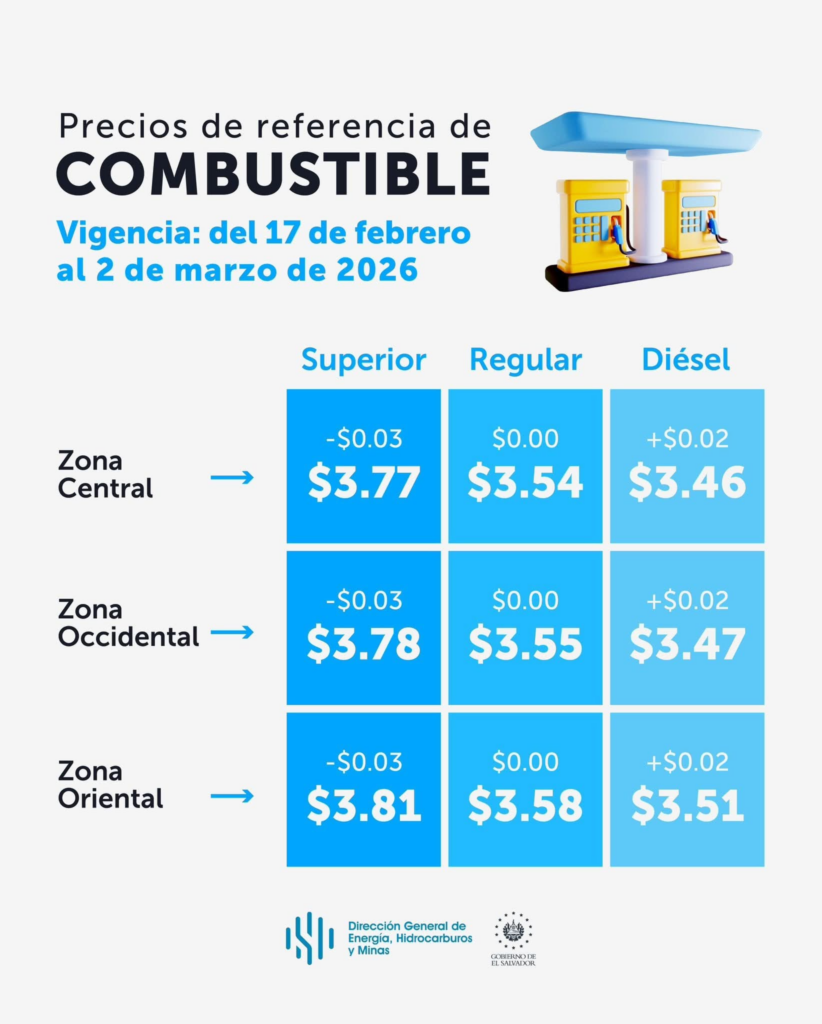
The Dirección General de Energía, Hidrocarburos y Minas (DGEHM) reported that the reference prices of fuels in El Salvador will register mixed variations during the fortnight from february 17 to march 2, 2026, influenced by international factors linked to the supply and demand of hydrocarbons.
According to the institution, premium gasoline decreases to US$0.03 in the three areas of the country, regular gasoline remains unchanged and diesel experiences an increase of US$0.02 per gallon.
Prices by area
In the central zone, premium gasoline will have a reference price of US$3.77 per gallon; the regular one, US$3.54; and diesel, US$3.46.
In the western zone, the superior one will cost US$3.78; the regular one, US$3.55; and diesel, US$3.47.
Meanwhile, in the eastern zone, the upper price was set at US$3.81; the regular one at US$3.58; and diesel at US$3.51 per gallon.
International factors
The DGEHM explained that these variations respond to reports from the International Energy Agency (IEA), which reported an increase in gasoline reserves and a reduction in diesel stocks globally, which has generated differentiated behavior in the international prices of these derivatives.
Another element that has had an impact is the recovery of 60% of production in the Tengiz oil field, in Kazakhstan, after a forced closure that occurred in january. This reactivation has contributed to maintaining a certain stability in the energy markets.
In addition, the IEA reduced its global oil demand growth forecast for 2026, raising expectations of greater supply availability in the international market and putting downward pressure on some prices.
Taxes included
The institution clarified that the published reference prices already incorporate current taxes, including the Servicio Público del Transporte Colectivo de Pasajeros (COTRANS), the Fondo de Estabilización del Fomento Económico (FEFE) and Impuesto Especial a los Combustibles (IEC).
Supervision at service stations
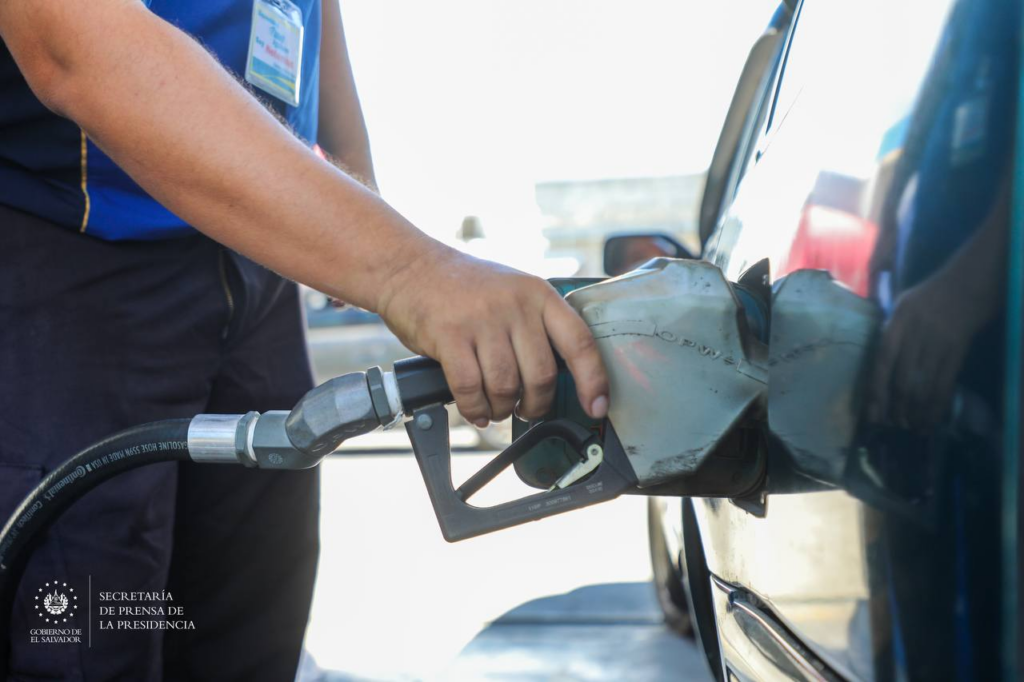
The DGEHM also reported that it maintains and has reinforced verification operations at service stations nationwide, with the aim of guaranteeing both the quality and exact quantity of fuel dispensed.
Inspectors carry out constant monitoring of companies that market petroleum products. If non-compliance with the regulations is detected, the stations may be subject to sanctions, in protection of consumer rights.
With these actions, the institution seeks to ensure conditions of transparency in the market and that Salvadorans can choose the gas station that offers them the best service and price within the established reference scheme.
You can also read: