A. M.
A. M. El Salvador has solidified its position as the fastest country in the region for export customs clearance, according to a recent report by the Inter-American Development Bank (IDB). With the shortest average processing times at the border, the country ranks ahead not only of its Latin American neighbors but also of the average for advanced economies included as a benchmark in the study.
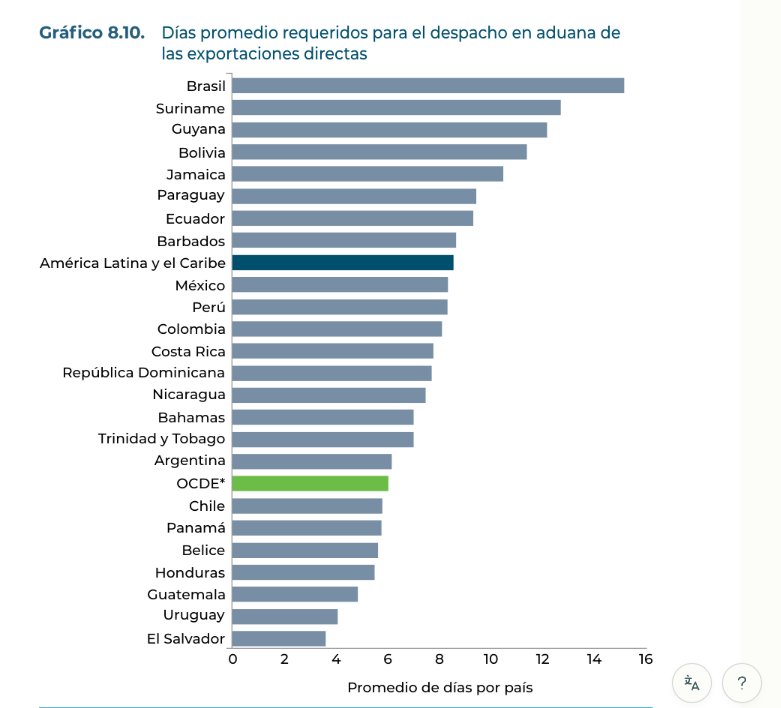
The IDB chart places El Salvador at the lower end of the ranking of days required for a direct export to be ready for international shipment, indicating the best performance among the countries analyzed. This time is significantly shorter than the average for Latin America and the Caribbean, which still exhibits slower and more bureaucratic processes.
In contrast, at the top of the chart appear countries like Brazil, Suriname, and Guyana, which have the longest waiting times and make customs a real bottleneck for foreign trade. The gap between these countries and El Salvador can be up to three times longer on average.
Competitive advantage for exports
The speed of salvadoran customs clearance translates into lower logistics costs and greater predictability for exporting companies. For SMEs, which are more sensitive to delays, this efficiency means being able to meet delivery deadlines, maintain contracts, and participate in supply chains that operate with lean inventories.
Furthermore, by reducing border friction, the country sends a positive signal to potential investors seeking agile platforms to supply regional and global markets. In a context where logistics remains a critical factor for competitiveness, El Salvador’s position gives it a clear advantage over its competitors.
A Challenge for the rest of the region
The regional average for Latin America and the Caribbean, which appears in the upper-middle range of the graph, shows that most countries still face significant delays in their customs processes. These delays increase the cost of goods, limit participation in dynamic markets, and reduce the competitive pressure that incentivizes efficiency and innovation.
The IDB report implicitly suggests that El Salvador’s experience can serve as a model for other governments seeking to modernize their borders, simplify procedures, and better leverage international trade opportunities as a driver of growth and development.
You can also read: