

 dinero_admin
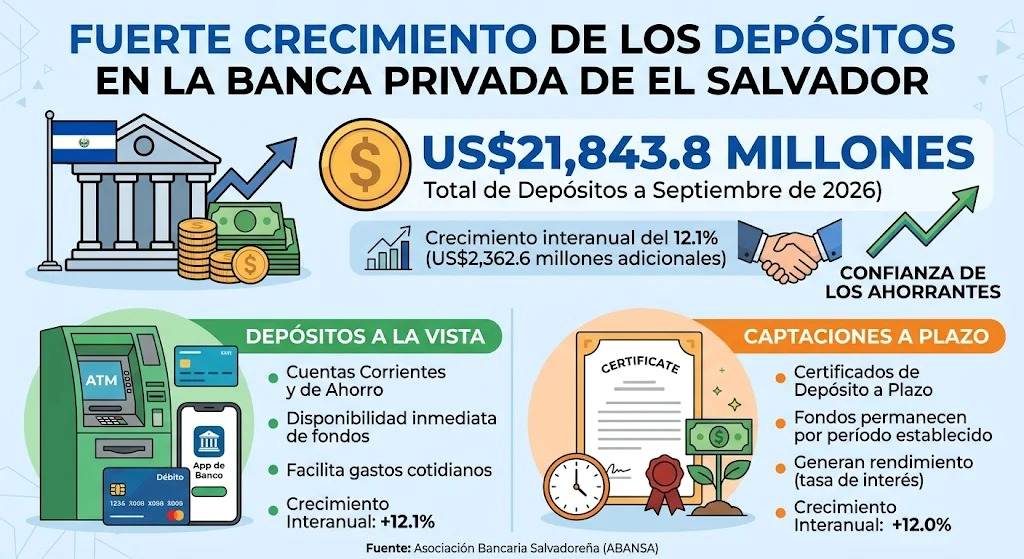
Deposits in El Salvador’s private banks reached US$21,843.8 million as of september 2026, representing a year-on-year growth of 12.1%, an increase of US$2,362.6 million, according to data released by the Asociación Bancaria Salvadoreña (ABANSA).
This rise reflects a greater volume of funds captured by financial institutions through the savings of individuals and businesses. In practical terms, it means that clients are keeping more money within the banking system, whether in accounts that allow for immediate access to funds or in products with a fixed term for withdrawal.
According to ABANSA, both demand deposits and term deposits saw similar growth during the period analyzed. Demand deposits increased by 12.1% compared to september 2025, while term deposits recorded a year-on-year growth of 12.0%.
Demand deposits consist primarily of funds that clients keep in accounts with immediate availability, such as checking and savings accounts. These products allow for transactions and withdrawals whenever needed, facilitating the management of daily income and expenses.
Term deposits, meanwhile, are funds held by a bank for a pre-established period. These products generally offer an agreed-upon interest rate and are intended for individuals or businesses able to keep their funds deposited for a set duration, with the goal of earning a return.
The growth in both categories indicates that the expansion of deposits was not limited to funds available on demand, but also included money placed in fixed-term accounts. This reflects the engagement of savers with the various options offered by the private banking sector for managing their financial resources.
ABANSA noted that the behavior of deposits reflects the confidence savers have in the banking sector as a secure destination for their money. The association highlighted that the increase in collected funds represents progress in savings within the salvadoran financial system.
Deposits also constitute an important source of funds for banking institutions, forming part of their financial intermediation activity. Through this function, banks manage the funds they collect and channel them into various financial operations, including the granting of loans to individuals and businesses.
You may also want to read: