

 dinero_admin
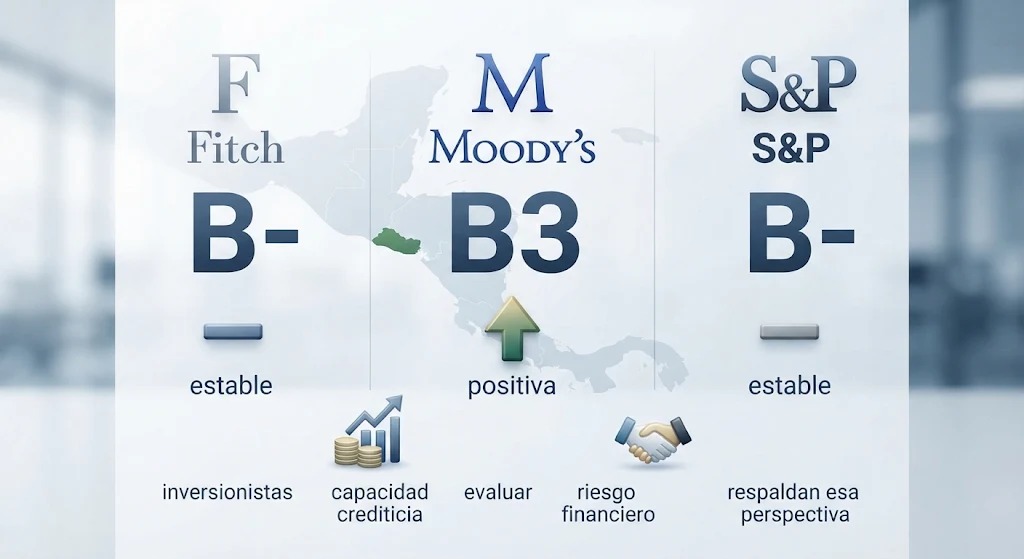
El Salvador’s sovereign risk ratings remained unchanged during the third quarter of 2026, according to a report by the Consejo Monetario Centroamericano (SECMCA), which compiles assessments from international rating agencies Fitch Ratings, Moody’s Investors Service, and Standard & Poor’s (S&P). The country retains the ratings reported in the previous quarter, though the outlooks vary among the three agencies.
According to the report, Fitch Ratings assigns El Salvador a rating of B- with a stable outlook. This assessment remains unchanged, reflecting that the agency has not altered its evaluation of the country’s creditworthiness during the period under review.
Meanwhile, Moody’s Investors Service maintains El Salvador’s rating at B3, but with a positive outlook. This assessment is a favorable signal, as it suggests the potential for an upgrade to the rating, provided that the conditions supporting this outlook persist.
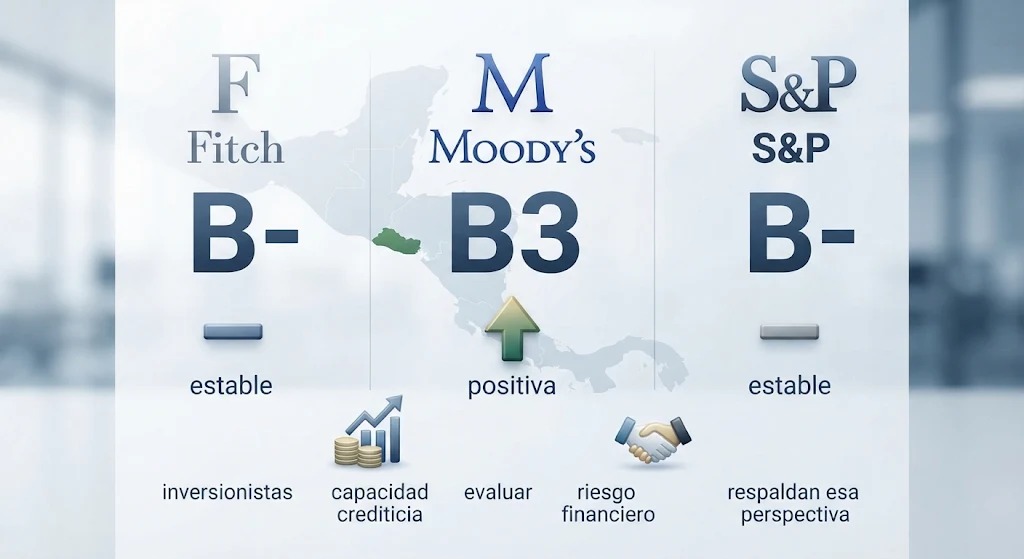
Standard & Poor’s also maintains El Salvador’s sovereign rating at B- with a stable outlook. Consequently, two of the three agencies maintain a stable outlook for the country, while Moody’s offers a positive assessment regarding its potential credit trajectory.
Sovereign risk ratings allow investors to evaluate a country’s capacity to meet its financial obligations, particularly the repayment of its debt. These ratings also serve as a benchmark for analyzing the level of risk associated with purchasing bonds and other debt instruments issued by governments.
In general, outlooks complement the ratings by indicating the potential future direction of a credit rating. A stable outlook suggests that no changes are expected in the short term, while a positive outlook points to the possibility of an improvement, though it does not imply that such an upgrade has already been granted.
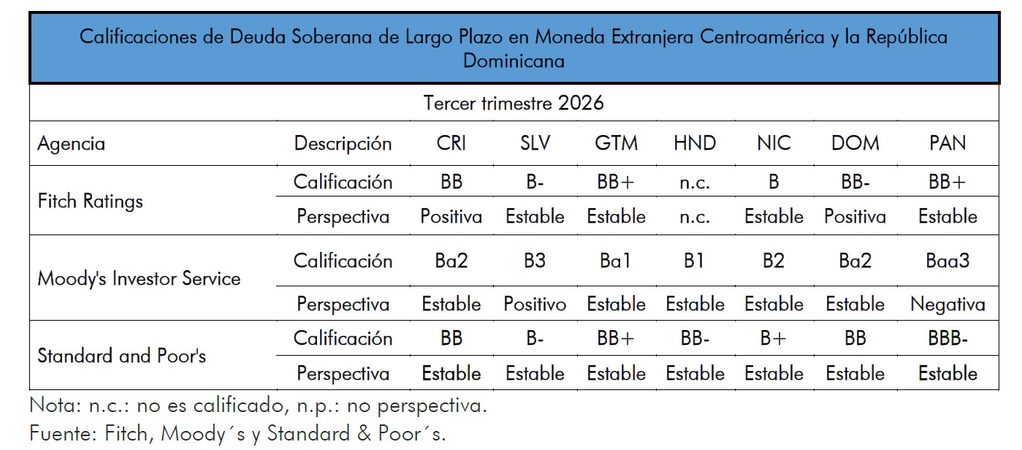
In the regional landscape, the SECMCA reported that Honduras was the only country in the CAPARD region to see a rating review during the third quarter, following Moody’s affirmation of its B1 rating. No reviews or modifications were reported for the other countries, which therefore retained the ratings and outlooks from the previous report.
Consequently, El Salvador reached the end of the third quarter of 2026 with no changes to its sovereign ratings, maintaining two stable outlooks and one positive outlook. These assessments serve as a benchmark for markets and investors analyzing the financial risk of Central American countries.
You may also want to read: