

 A. M.
A. M. 
The Metrocable project, promoted by the government, will have an approximate investment of US$110 million, reported the Minister of Public Works, Romeo Herrera, during a television interview on the program “Frente a Frente”. The official explained that it is a modern transportation system that seeks to transform mobility in the San Salvador Metropolitan Area.
Herrera explained that the Metrocable will not be an isolated project, but rather part of a comprehensive transportation plan. “It’s not just Metrocable; it will be connected to a larger system,” he stated, emphasizing that the project includes an integrated network that will improve travel times and urban connectivity.
Construction progress
The minister confirmed that work has already begun in the Parque Cuscatlán area, where excavations are currently underway. The project includes the construction of 22 towers, each with 10 piles as its structural base.
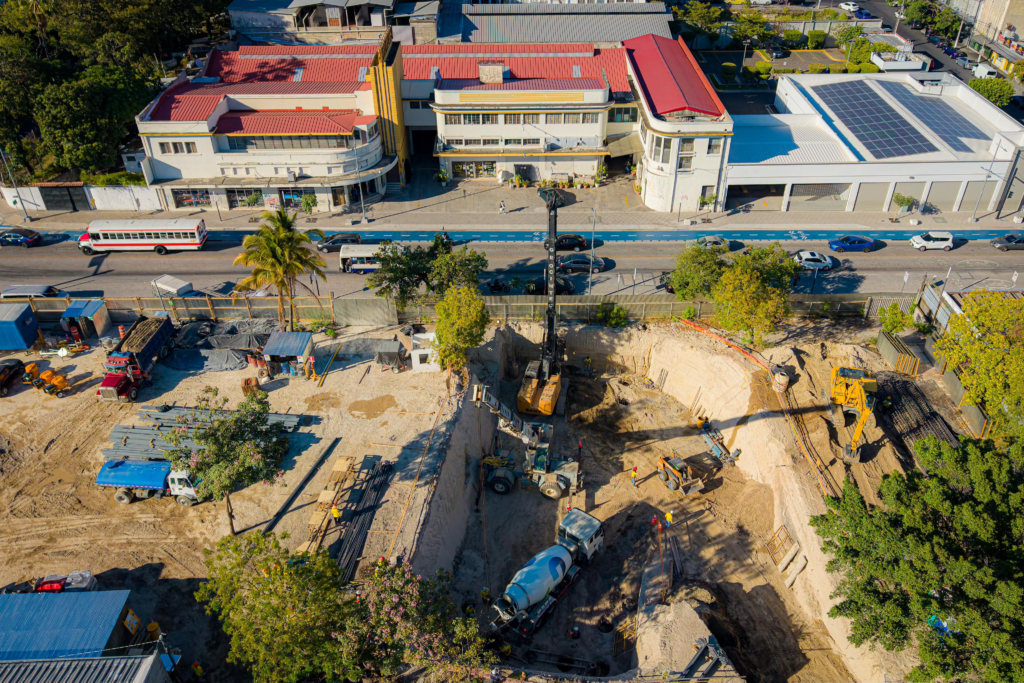
The route will begin at the intersection of Zacamil Street and 5th Avenue North and will end at Rubén Darío Street in the historic center of San Salvador. In total, it will be 3.5 kilometers long.
Four stations and connections to other systems
The system will have four stations: one in Zacamil, another near the Universidad de El Salvador, one at the Government Center (which will include parking and pedestrian access to bus stops), and the last one at Rubén Darío Street.
According to the minister, the goal is to integrate the Metrocable with traditional public transportation to facilitate user mobility.
Capacity and Travel Times
The Metrocable will have 153 gondolas, each with a capacity for 10 seated passengers. It is estimated that it will be able to transport 7,000 passengers per hour and will operate for 18 hours a day, from 3:00 a.m. until late at night, exceeding the usual hours of public transportation.
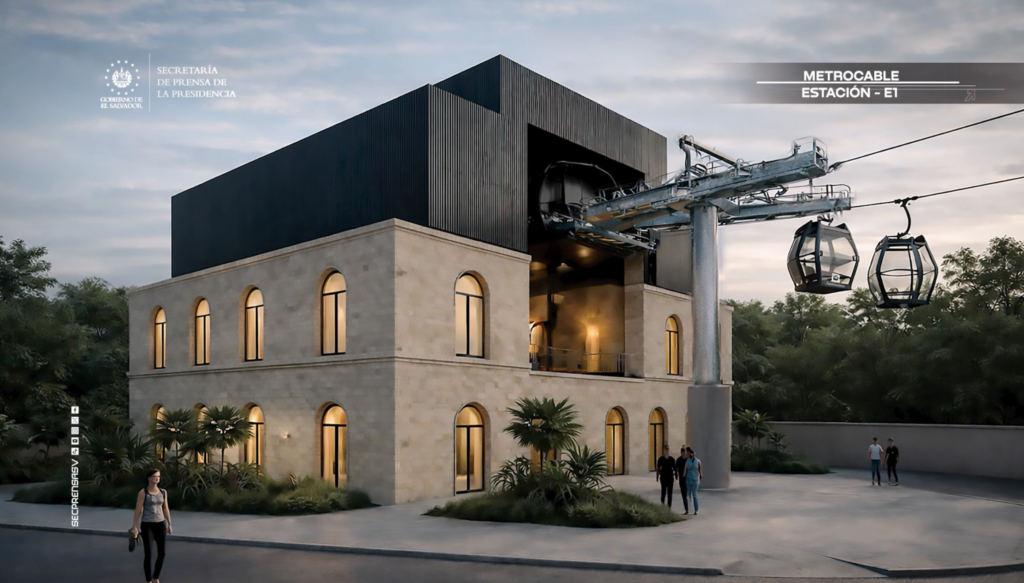
Herrera indicated that the travel time will be less than 15 minutes, a significant reduction compared to the hour or more that the journey can currently take by bus or minibus. It is estimated that around 200,000 people could benefit directly.
Construction timeline
The Minister of Public Works stated that the estimated construction time is 18 months from the formal start of construction. He emphasized that the stations and cabins will be of international standard, with state-of-the-art technology, prioritizing quality and safety.
During the television interview, Herrera reiterated that the Metrocable is part of a comprehensive strategy to modernize urban mobility and offer efficient alternatives to the population, especially in high-density areas with long travel times.
You can also read: