


 A. M.
A. M. 
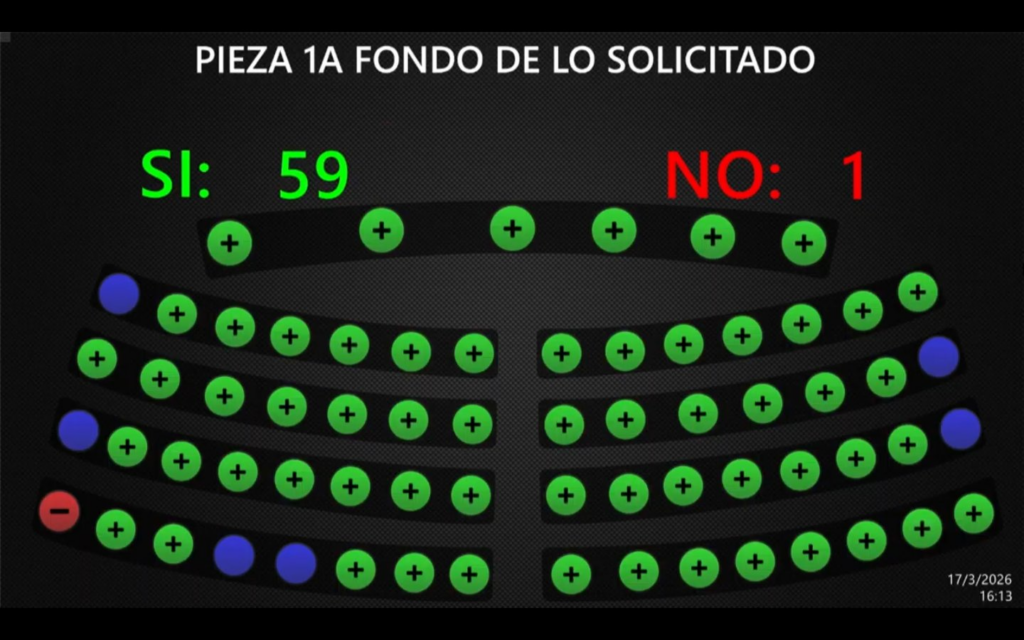
The Legislative Assembly of El Salvador approved, with 59 votes, a reform to article 27 of the Constitution of the Republic that enables the application of life imprisonment in El Salvador for crimes of homicide, rape and terrorism, introducing this figure for the first time in the country’s legal system.
The decision implies a substantial change in the salvadoran penal system, since until now the Constitution expressly prohibited life sentences. With the approved modification, this prohibition is eliminated and it is established that life imprisonment may be imposed only in cases of crimes considered maximum seriousness.
A change in the Constitution
The second paragraph of article 27 established that life sentences were prohibited, along with other sanctions considered contrary to fundamental rights. After the reform, the text will be modified to allow life imprisonment in specific cases, maintaining the prohibition of defamatory, proscriptive punishments and any form of torment.
This change redefines the scope of criminal sanctions in the country, by incorporating a sentence that has no time limit and that can imply that a person remains in prison for their entire life.
Conditions and scope of life imprisonment
The reform clearly delimits the cases in which this penalty may be applied, restricting it to three types of crimes: homicide, rape and terrorism. In this way, it is intended that its use be exceptional and focused on behaviors that generate greater social impact.
The effective implementation of life imprisonment will depend on adjustments in secondary legislation, which must establish the specific criteria for its imposition, as well as the corresponding judicial procedures.

Next steps for your application
After its approval, the reform must be ratified in a subsequent legislature to come into force. In addition, the Political Commission will study modifications to the Penal Code, the Law against Acts of Terrorism and the Juvenile Penal Law, to harmonize these regulations with the new constitutional text and avoid legal gaps.
Arguments in favor of the measure
Representative Suecy Callejas pointed out that the elimination of the ban on life sentences responds to the need to correct what she considers a period of impunity for serious crimes that affected the population.
According to the legislator, the reform seeks to guarantee that those who commit high-impact crimes do not regain their freedom, thus strengthening the protection of citizens and the right to live in security conditions.
Other deputies supported the initiative, highlighting that the incorporation of this penalty strengthens the justice system and responds to the social demand for more severe sanctions against crime.
Part of a security strategy
The reform is part of the policies promoted by the Government of President Nayib Bukele, aimed at combating violence and reducing crime rates in the country.
The proposal was presented by the security cabinet, made up of the Minister of Security, Gustavo Villatoro, and the Minister of Defense, René Francis Merino, as part of a strategy that seeks to toughen penalties for serious crimes.
Implications for the penal system
The incorporation of life imprisonment represents a turning point in salvadoran legislation, introducing one of the most severe penalties within the judicial system.
Its application will imply new challenges for the penitentiary and judicial system, as well as the need to establish clear criteria that guarantee its use in accordance with the Constitution and secondary laws.
Altogether, the reform marks a structural change in the way in which the State confronts the most serious crimes, by allowing those responsible to be permanently deprived of liberty as part of the country’s security and justice policy.
You can also read: