

 A. M.
A. M. 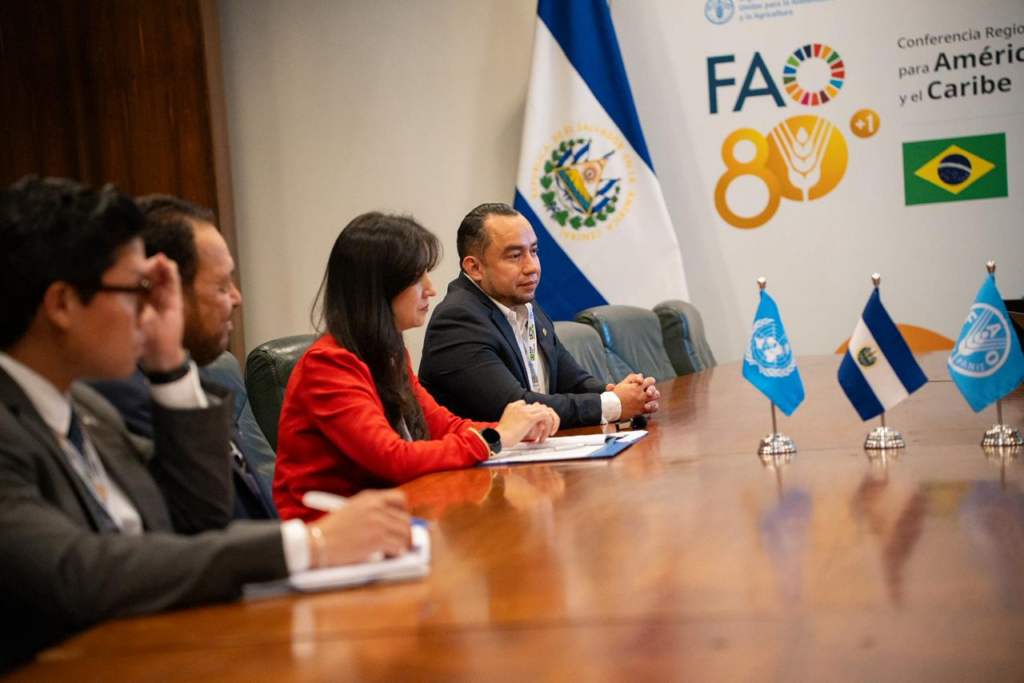
El Salvador’s Vice Minister of Foreign Affairs, Adriana Mira, held a series of meetings with representatives of international organizations and allied governments to strengthen cooperation in strategic areas for the country’s development, including agriculture, education, health, and infrastructure.
One of the meetings was with the Director-General of the Food and Agriculture Organization of the United Nations (FAO), Qu Dongyu, along with the Vice Minister of Agriculture and Livestock of El Salvador, Óscar Domínguez. During the meeting, the officials discussed El Salvador’s designation as the host of the FAO Regional Conference for Latin America and the Caribbean in 2028, known as LARC40.
According to the Vice Minister, this regional event will represent an opportunity to position the country as a leader in the discussion of policies and strategies related to food security, sustainable agricultural development, and international cooperation in the agricultural sector.
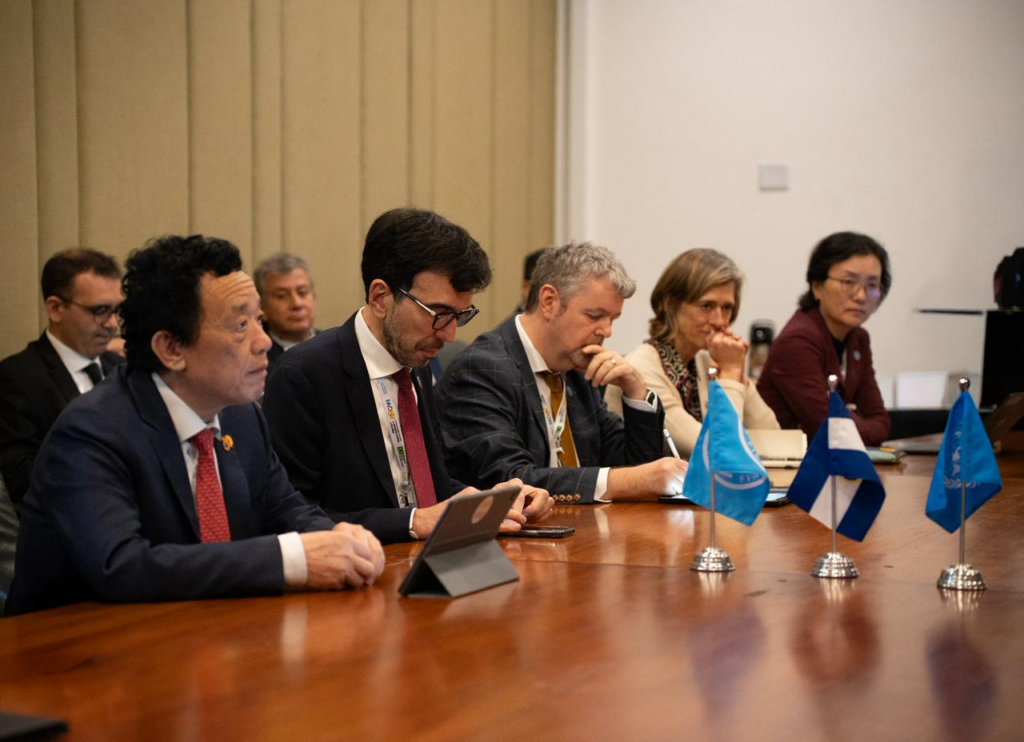
During the dialogue, the progress the country has made in key areas such as agriculture, infrastructure, logistics, and productive development was also highlighted. In this context, the official emphasized that FAO’s technical support and cooperation could further strengthen the results achieved and support new initiatives aimed at the growth of the agricultural sector.
The meeting also provided an opportunity to exchange perspectives on regional challenges related to food production, climate change, and the need to promote more resilient and sustainable agricultural systems.
Cooperation with Brazil in strategic areas
As part of her diplomatic agenda, the Vice Minister also met with the Director of the Brazilian Cooperation Agency (ABC), Ambassador Ruy Pereira, to strengthen cooperation ties between El Salvador and Brazil.
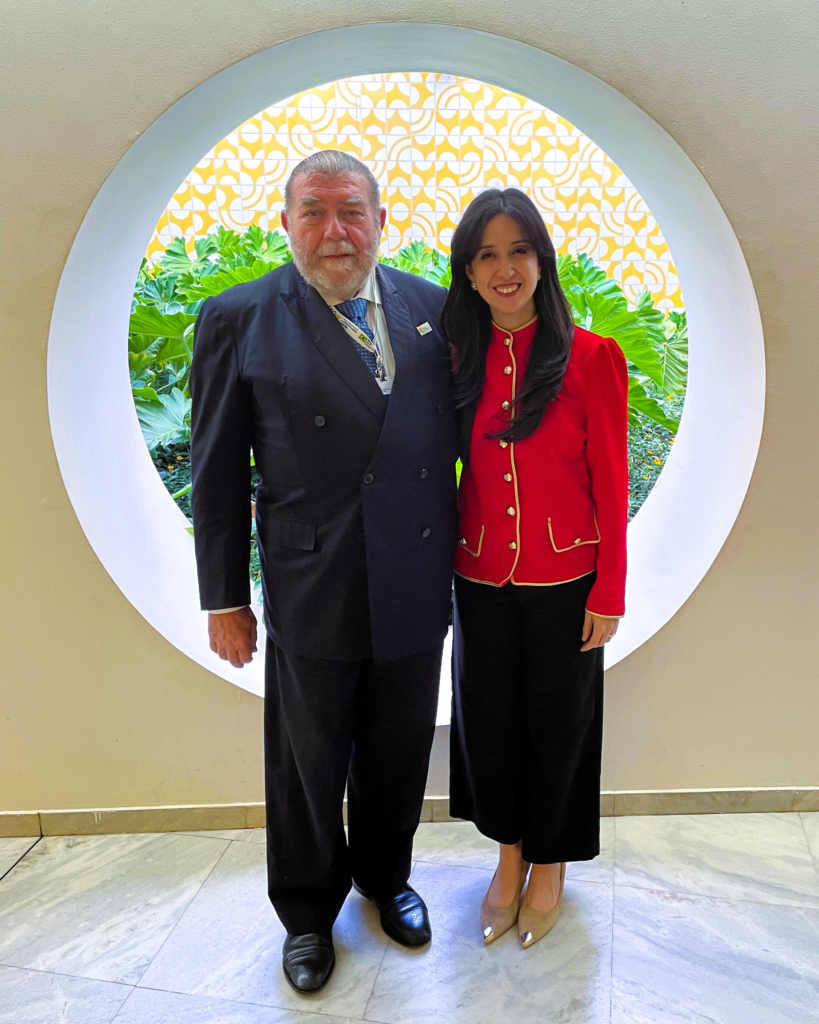
During the meeting, both parties reaffirmed their interest in expanding bilateral collaboration in various priority areas for social and economic development. Among the topics discussed were projects related to agriculture, education, health, early childhood development, as well as initiatives linked to art, culture, and tourism.
The authorities agreed that working together will promote technical cooperation programs and the exchange of experiences that directly benefit communities and strengthen institutional capacities in different sectors.
It was also emphasized that these international partnerships are part of a strategy aimed at promoting sustainable development, strengthening public policies, and generating opportunities that contribute to the well-being of the salvadoran population.
With these meetings, the salvadoran government continues to expand its international cooperation network and consolidate alliances that seek to promote high-impact projects in key areas for the country’s economic and social growth.
You can also read: