


 A. M.
A. M. 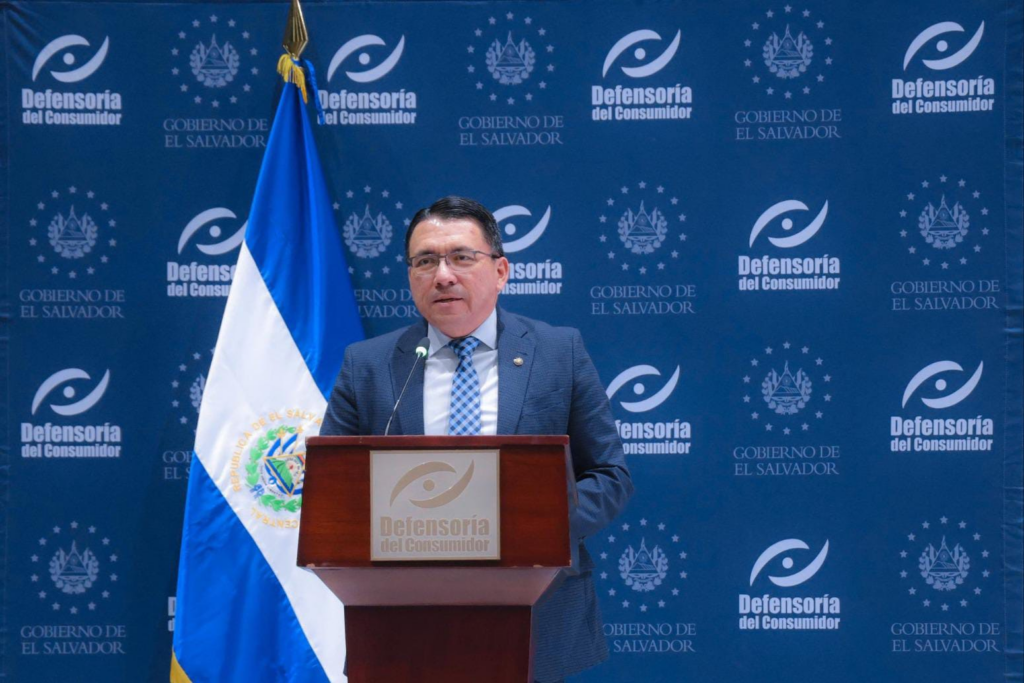
El Salvador commemorates World Consumer Rights Day with the implementation of a series of reforms to the Ley de Protección al Consumidor de El Salvador (LPC) that strengthen consumer protection against abusive market practices. Among the most significant changes is the prohibition of selling products above the prices established by the Consumer Protection Agency of El Salvador (DC), a measure aimed at preventing speculation and protecting the population’s purchasing power.
This provision is part of the reforms implemented since 2019 to modernize the legal framework for consumer protection, establish clearer rules for suppliers, and expand the Consumer Protection Agency’s oversight tools.
Prohibition on Selling Above Set Prices
The prohibition on selling products above the prices established by the Consumer Protection Agency was introduced through Legislative Decree 566 of 2020, which added two articles to the Consumer Protection Law.
This reform establishes that when the Agency determines reference prices or control measures for certain products, suppliers cannot sell them at a higher price. The regulation also allows for the establishment of purchase limits during national emergencies, with the aim of preventing hoarding and guaranteeing equitable access to essential products.
The measure was designed to address situations in which merchants unjustifiably increase prices, especially in contexts of crisis or high demand, directly affecting consumers.
Inspections and penalties for unjustified price increases
The reforms also strengthen the mechanisms for detecting and penalizing unjustified price increases.

Article 18, section h, of the Consumer Protection Law (LPC) establishes that price increases on essential products can be considered abusive practices if suppliers fail to provide a technical justification for the increase. Under this provision, the Defensoría del Consumidor de El Salvador (DC), can conduct inspections and apply sanctions when it detects irregularities.
To date, 143 inspections related to unjustified price increases have been carried out, resulting in 58 fines totaling US$657,351.
This measure aims to prevent merchants from obtaining undue profits through speculation on basic or high-demand consumer goods.
Other reforms that complement price controls
The prohibition on selling above set prices is part of a broader package of reforms that strengthen market oversight.
Legislative Decree 602 of 2019 incorporated six articles related to the regulation of the telecommunications sector. These provisions establish rules on tariffs, service provision, and company responsibilities, as well as defining infractions when suppliers fail to comply with these obligations. In 2022, Legislative Decree 405 added two articles requiring suppliers to maintain product warranty records, either in physical or electronic format. This measure facilitates consumer claims when a product has defects or malfunctions.
Subsequently, Legislative Decree 282 of 2024 introduced a broader reform with 50 new articles that strengthen the Defensoría del Consumidor de El Salvador (DC), and expand its oversight tools. Key changes include the regulation of e-commerce, the monitoring of promotions and offers, the fight against misleading advertising, the incorporation of undercover inspectors, and the creation of procedures for removing dangerous products from the market.
New tools to protect consumers

The reforms also incorporate mechanisms that facilitate the defense of consumer rights in various areas. For example, Articles 109-A and 109-B of the Ley de Protección al Consumidor de El Salvador (LPC) allow the Defensoría del Consumidor, to file collective complaints ex officio when the same problem affects numerous consumers. This mechanism allows the agency to directly represent those affected without everyone having to initiate a separate legal process.
Furthermore, Article 58, paragraph i, authorizes the Defensoría del Consumidor de El Salvador (DC),participation in alternative dispute resolution mechanisms.
Thanks to these tools, hearings have been held involving 307,037 consumers, 60 collective cases have been resolved, and US$29,237,022.72 has been recovered.
Clear rules for purchases, contracts, and services
The reforms also establish more precise rules for common situations in consumer relations.
Article 13 defines the concept of deferred delivery, which occurs when a product or service is delivered after the contract has been signed. The law requires the supplier to fulfill their promises and establishes clear conditions to guarantee the service’s execution.
Article 13-A, for its part, regulates the right of withdrawal, which allows consumers to cancel certain contracts within a specified period. The reform also allows this procedure to be carried out at any Defensoría del Consumidor de El Salvador (DC).
Meanwhile, Article 13-D establishes the reversal of payments when a product has defects, allowing consumers to request a refund or exchange within eight business days without having to exhaust the warranty process beforehand. Stricter Market Oversight
The new legal framework also incorporates tools to improve enforcement.
Article 101-A authorizes the use of undercover inspectors, allowing Defensoría del Consumidor de El Salvador (DC), inspectors to pose as ordinary consumers to verify whether suppliers are actually complying with regulations.

Likewise, Articles 10-A through 10-I establish procedures for removing risky products from the market, requiring suppliers to identify the product, inform the public, and compensate consumers through replacement or refund.
Between july 2024 and march 2026, 35 safety alerts and 283 requirements were issued, primarily for products such as toys and electronics.
Toward a more transparent market
The reforms to the Consumer Protection Law aim to create a more transparent and balanced market, in which both consumers and suppliers have clear rules.
The prohibition on selling products above the prices set by the Defensoría del Consumidor de El Salvador thus becomes a key measure to prevent abuses and guarantee fair access to goods and services, especially during periods of high demand or emergencies.
With these provisions, the country seeks to strengthen consumer protection and prevent practices that affect market stability and the well-being of the population.
You can also read: