

 A. M.
A. M. 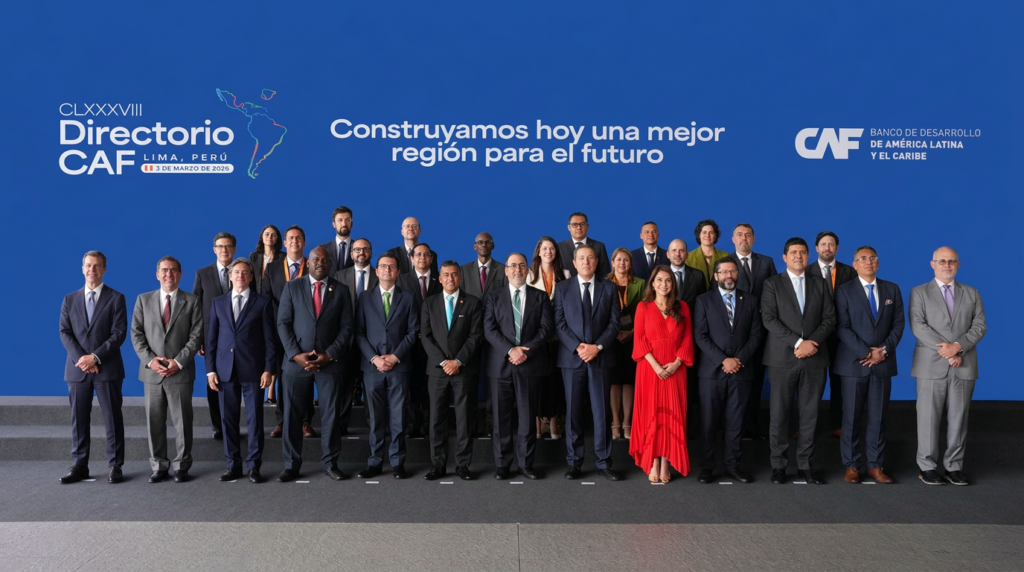
The CAF Board of Directors, meeting in Lima, approved a package of financial resources to improve natural disaster management, climate resilience, water security, and fiscal balance in several countries of the region.
CAF—the Development Bank of Latin America and the Caribbean—approved US$1.13 billion for the region’s sustainable development through four high-impact operations: a US$450 million credit line to strengthen debt management and climate emergency response in Uruguay; a US$230 million loan to ACOSOL to guarantee water security in 11 municipalities on the Costa del Sol in Spain; and US$450 million for Ecuador in two operations to strengthen citizen security and disaster response capacity.
During the session, the Board approved the start of the process of incorporating St. Vincent and the Grenadines as a shareholder of CAF, which will open new avenues to access long-term financial resources and technical cooperation grants, and will allow it to advance its national development agenda.
“With these resources, CAF reaffirms its position as the region’s strategic partner, supporting our shareholders with concrete solutions to the most pressing challenges facing their populations. Furthermore, thanks to our expansion in the Caribbean, we are on track to become the development bank with the largest geographic coverage in Latin America and the Caribbean”, said Sergio Díaz-Granados, CAF’s Executive President.
At the meeting, the Chairmanship of the Board was also transferred to Uruguay. Its Minister of Finance, Gabriel Oddone, will serve a one-year term, from april 1, 2026, to March 31, 2027, during which he will chair all board meetings. Oddone will succeed the Minister of Finance of Trinidad and Tobago, Davendranath Tancoo.
During the Board meeting, CAF also presented its strategy to make Peru a global leader in tourism, through the diversification of destinations, the consolidation of Cusco-Machu Picchu as a world-class attraction, and regional programs for literary, cultural, and religious tourism. The institution also signed an agreement with UN Tourism and the Vargas Llosa Chair to promote innovation in literary tourism in Latin America and the Caribbean.
Another key point of the CAF meetings was the presentation of its new Transparency Report, which compiles the institution’s main advances and challenges in transparency, access to information, and governance. During 2025, the institution expanded the information published, increasing from four to more than thirty indicators, and incorporating data on financing, SDGs, results, and operational information. Digital platforms and citizen participation mechanisms were also strengthened, resulting in a substantial improvement in international transparency assessments and greater use of institutional channels.
You can also read: