


 A. M.
A. M. 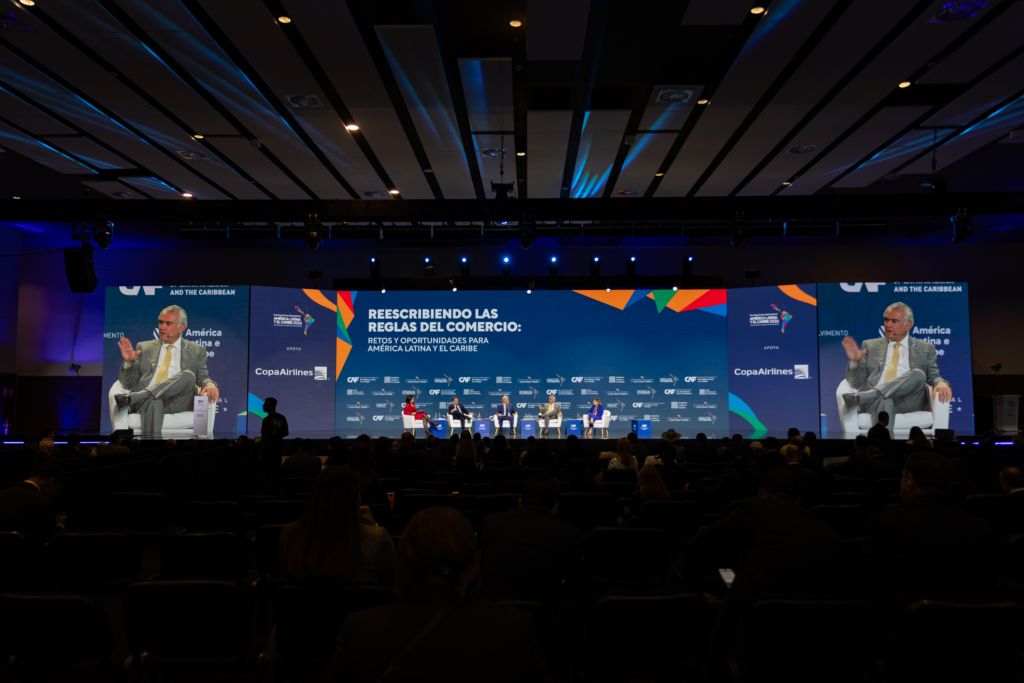
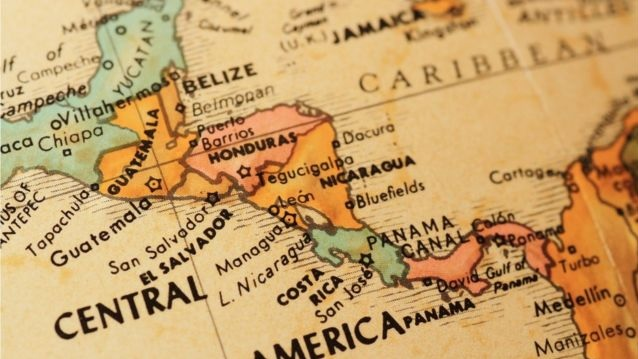
Intraregional trade in Central America represents approximately 25% of its total trade, a figure that highlights the subregion as one of the most integrated in Latin America and the Caribbean. In the current context of disruption to the international trade order, this becomes a key strength for facing global volatility and reducing dependence on external markets.
This was emphasized by the Executive Secretary of the Comisión Económica para América Latina y el Caribe (CEPAL), José Manuel Salazar-Xirinachs, during his participation in the Latin America and Caribbean International Economic Forum 2026, held in Panama City and organized by CAF – Development Bank of Latin America and the Caribbean – in conjunction with the Panamanian government.
The official stressed that, while intraregional trade in South America remains at only 13% or 14%, and Mexico sends more than 80% of its exports to the United States, Central America demonstrates a higher level of economic interconnectedness among its countries. This reality, he affirmed, opens a concrete opportunity to strengthen regional growth starting from the Central American market itself.
Integration as a response to the new global scenario
Salazar-Xirinachs noted that the world is experiencing profound changes in the rules of international trade, marked by geopolitical tensions, technological disputes, and the increasing use of unilateral measures such as tariffs, financial sanctions, and trade restrictions. Given this scenario, ECLAC considers deepening regional integration a sound strategy, especially for small and medium-sized economies.
“We are sitting in a market of 660 million people in Latin America and the Caribbean, and that is a potentially enormous engine of growth”, she said, emphasizing that Central America already has a solid foundation upon which to continue building greater productive and commercial integration.

Product and market diversification
The Executive Secretary emphasized that simply increasing trade among neighboring countries is insufficient; it is essential to diversify the export portfolio, destinations, and trading partners. In this regard, he noted that the region must move toward clear sectoral strategies, leveraging both its natural resources and existing production capacities.
Among the sectors with the greatest potential, he mentioned medical devices, modern services, software, the aerospace industry, and technology startup ecosystems—areas in which several Central American countries have already developed competitive, value-added clusters.
Beyond natural resources
Salazar-Xirinachs emphasized that economic development cannot depend solely on the exploitation of natural resources such as minerals, agriculture, biodiversity, or tourism. While these assets remain relevant, she highlighted that Central America and the region have built productive and technological capacities that do not stem from the subsoil, but rather from policies, investment, and accumulated knowledge.
“There is a productive and technological knowledge structure that can continue to expand if there are clear strategies and coordination between governments and the private sector”, she said.
The challenge: moving from diagnosis to action
Finally, the head of ECLAC warned that none of these opportunities will materialize spontaneously. To capitalize on the 25% intraregional trade that Central America already has and take it to higher levels, political will, national strategies, and regional cooperation are required, as well as joint work with the private sector.
“The diagnosis is clear. The challenge now is how to do it and the determination to move forward”, he concluded, calling on Central American countries to transform their trade integration into a true driver of growth and economic resilience.
You can also read: