


 A. M.
A. M. 
Women who own micro and small businesses in El Salvador begin their day with a silent disadvantage: they dedicate an average of 7 hours and 46 minutes daily to unpaid care work, a burden that limits their productivity and business growth. This is according to an analysis by the Observatorio Mype of País Mype that defines this reality as a “hidden tax” that directly impacts the economy.
According to the report, this is not just a domestic issue, but a structural challenge that affects the performance of thousands of businesses led by women. The time spent caring for the home and family reduces the hours available to plan, innovate, and expand their ventures.
Limited productivity from the start of the day
The study indicates that 35.3% of female entrepreneurs are solely responsible for both family care and income generation in their households. This double burden leads to mental exhaustion and hinders strategic decision-making.
Consequently, many choose to operate in saturated sectors, such as basic retail, which offer greater flexibility in scheduling but lower profit margins. Meanwhile, other entrepreneurs can dedicate more time to finding suppliers, exploring new markets, or improving their production.
Location and sales: invisible barriers
One of the most revealing findings is that 75% of women-led businesses operate near their homes. This decision is driven by logistical reasons, such as attending to family emergencies, and not necessarily by commercial criteria.
This geographic limitation reduces their access to areas with higher customer traffic and purchasing power. The report indicates that women’s average daily sales reach US$81.94, while men’s average sales reach US$135.54, a significant difference linked, in part, to time availability.
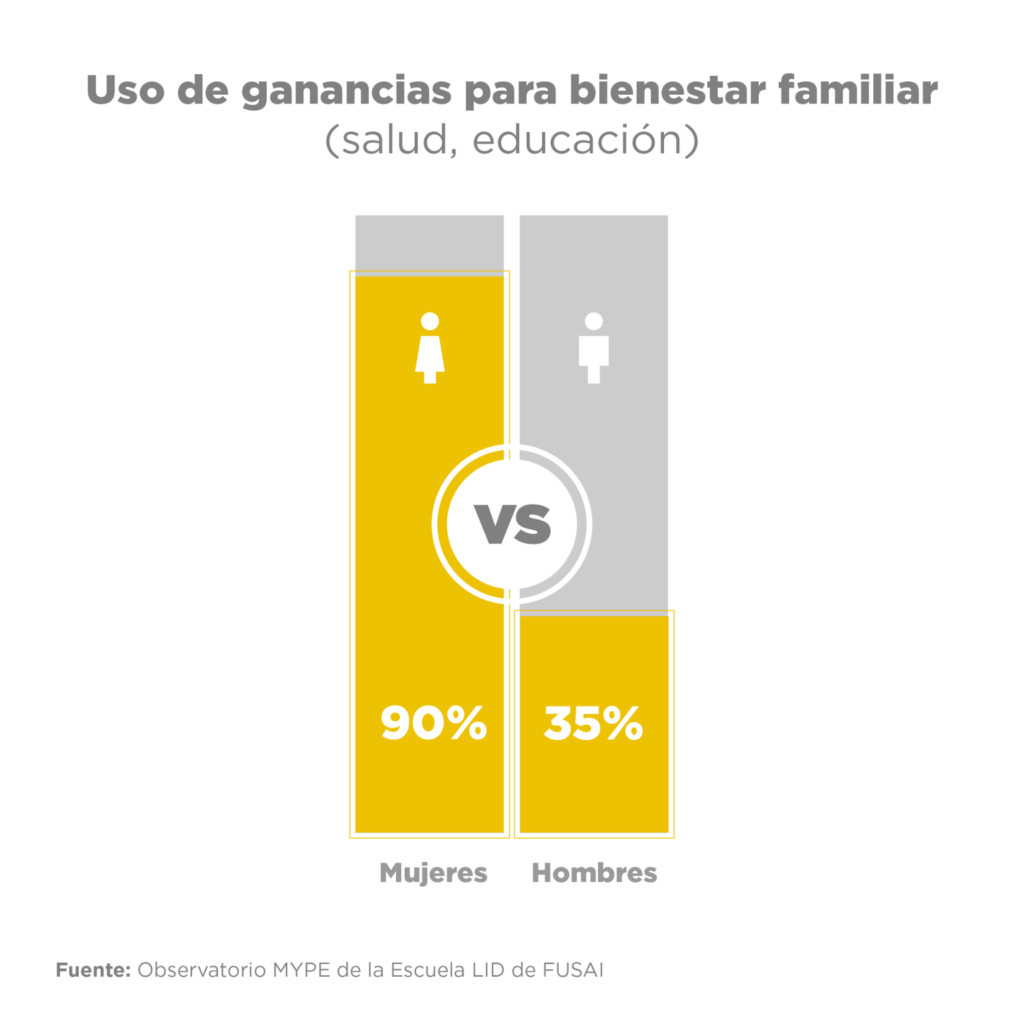
Furthermore, the use of profits also shows significant contrasts. While men reinvest around 65% of their earnings in machinery or productive assets, women allocate nearly 90% of their income to family well-being, such as health and education. This restricts capital accumulation and the modernization of their businesses.
Strategies to recover time
The Observatorio proposes that the solution lies not only in better personal organization, but also in integrating technological and financial tools that free up time.
In the digital sphere, it highlights that 51.6% of businesswomen already use digital wallets and fintech services, reducing trips to financial institutions. Likewise, platforms like WhatsApp Business facilitate sales and customer service without requiring constant physical presence.
The use of simple decision rules, known as heuristics, also helps reduce daily mental workload and allows for focusing on strategic tasks.
Structural changes in formal businesses
For small, formalized businesses, the analysis suggests that care costs (such as childcare or caregivers) should be considered necessary operating expenses to ensure business management.
It also recommends purchasing micro-health and life insurance to prevent family emergencies from impacting business finances, as well as using specialized care service platforms, which transforms an individual responsibility into a professional solution.
A high-impact economic challenge
The report concludes that the income gap, which reaches up to 197.9% in favor of male-led businesses, is not due to a difference in skills, but rather to an unequal distribution of available time.
According to the Observatorio Mype, freeing up some of those nearly eight hours a day could have a significant impact on the sector’s productivity and growth. Technology, access to financing, and shared care models are identified as key tools for transforming a structural limitation into an opportunity for economic development.
The final message is clear: protecting women entrepreneurs’ time not only improves their quality of life but also unlocks economic potential that is currently limited by unpaid care work.
You can also read: