

 dinero_admin
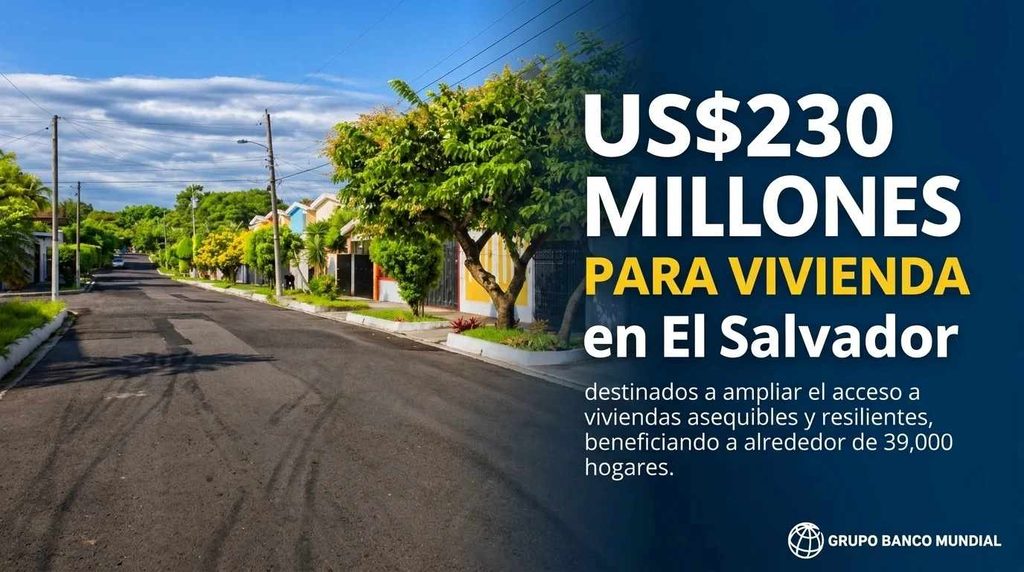
The World Bank’s Executive Board has approved US$230 million in financing to boost access to affordable and resilient housing in El Salvador. This funding constitutes the first stage of the “HogarES” program, which is expected to benefit approximately 39,000 households. The initiative aims to expand mortgage credit options, increase the housing supply, and facilitate private sector investment in the industry.
The program is part of a Multiphase Programmatic Approach (MPA) titled “Housing Opportunity Made Equal” (HOME), which will be implemented in two stages over a ten-year period. Its first phase, HogarES, will run from 2027 to 2031 and will focus on improving access to adequate housing, particularly for low- and middle-income families.
Key beneficiaries include households with variable incomes, informal sector workers, first-time homebuyers, and female-headed households. The goal is to broaden financing alternatives for segments of the population that may face greater challenges in obtaining mortgage credit or purchasing property.
Minister of Housing Michelle Sol highlighted that this approval represents a significant step toward strengthening the housing sector and will create new opportunities for salvadoran families. She explained that the operation includes expanding mortgage financing, increasing housing availability, and encouraging greater private sector participation.
In addition to the US$230 million in financing, the first stage of the program aims to mobilize US$335 million in private capital. This means the initiative seeks to attract additional resources from companies and investors to expand the development of housing projects and increase the supply of homes in the country.
Regarding employment, HogarES is projected to support the creation of approximately 11,700 full-time equivalent jobs per year. Of these, more than 5,000 would benefit women and approximately 1,550 would benefit young people, a development that also presents an opportunity to invigorate activities within the construction and real estate sectors.
The program will combine support from the World Bank, aimed at strengthening financing mechanisms, land management, and institutions linked to the housing sector, with the expertise of the International Finance Corporation (IFC). The latter will provide advisory services to structure housing projects and promote sustainable construction practices, with the goal of attracting new investors.
Minister of Finance Jerson Posada noted that this operation will expand financing options for social housing, strengthen the sector, and generate opportunities for employment and economic growth. Meanwhile, Diletta Doretti, World Bank Group country manager for El Salvador, highlighted that the project seeks to mobilize private capital so that more households can gain access to affordable housing that is resilient to extreme events.
The initiative also addresses the country’s housing challenges. According to data shared by the World Bank, approximately 68% of salvadoran households face some form of housing deficit, a situation that underscores the need to increase the availability of housing and improve living conditions. Through the “HogarES” program, the country aims to improve access to housing solutions and strengthen the capacity of families to cope with natural disasters and other risks.
With the approval of these resources, El Salvador will launch an initial phase of financing that combines public investment, the mobilization of private capital, and institutional strengthening to expand access to housing. The program aims to reach 39,000 households and create the conditions to drive housing development between 2027 and 2031.
You may also want to read: