

 A. M.
A. M. 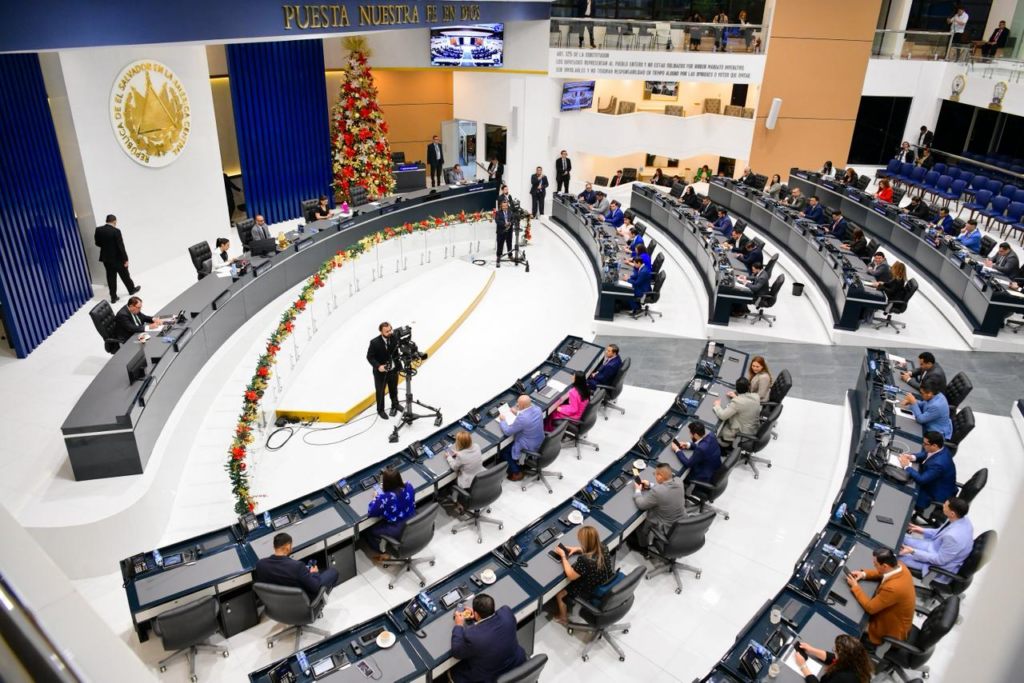
The Legislative Assembly approved allocating a budget of US$125.4 million to the TSE for the 2027 elections and US$46.7 million for overseas voting. These resources will be used for logistics, technology, and vote counting for the electoral event.
In 2027, El Salvador will hold a unified electoral process, concentrating three elections on the same day. Therefore, the members of the Legislative Assembly approved, with 57 votes, US$125.4 million in funding for the electoral event.
This budget allocation is in response to the constitutional reform approved in 2025 to Article 154, which moved the end of the current presidential term to june 1, 2027, allowing the three electoral processes to take place in the same year.
With these resources, the Tribunal Supremo Electoral (TSE) will finance the presidential, legislative, and municipal elections scheduled for 2027, a process in which the electoral roll exceeds 6 million citizens. Of these, 932,316 reside abroad, a figure that has grown by almost 200,000 compared to the last election.
Of the total funds, US$56 million will be allocated to support the vote counting at the polling stations, as well as the transmission, processing, and dissemination of results.
In addition, US$23.5 million will be allocated to electoral organization and logistics, and US$15.8 million for financial administration and the payment of personnel participating in the process.
The plan also includes US$6.8 million for training, US$7 million for the final vote count, and US$5.3 million for electoral communication activities, including information campaigns. An additional US$5.4 million is allocated to strengthen logistical and administrative support.
Last november, the TSE requested an additional budget of US$8.5 million to consolidate the elections onto a single date, a unification that will allow for estimated savings of up to US$132 million compared to holding separate elections until 2029. With the reform, the country will go from 13 to 9 electoral processes over 25 years, representing cumulative savings of up to US$560 million, according to the head of the Tribunal.
With the reform, the country will go from 13 to 9 electoral processes over 25 years, representing cumulative savings of up to US$560 million, according to the head of the TSE.
Nuevas Ideas Party Representative Giovanny Zaldaña explained that Article 274 of the Electoral Code stipulates that the TSE must receive a special budget to cover the special expenses of the electoral process. He detailed that the Tribunal itself prepares the plan, submits it to the Ministry of Finance, and the Ministry then forwards it to the Legislative Assembly for approval.
“Everything is in order and within the legal procedure”, Zaldaña assured.
His fellow party member, Dania González, stated that the budget approved for the 2027 electoral process incorporates key elements to strengthen and modernize the voting system, both within and outside the country.
The legislator explained that the budget includes innovations aimed at optimizing resources and improving the administration of the electoral event.
Among these, she mentioned the technological upgrade of the system to prevent failures, a 12% increase in payments to temporary electoral bodies as part of efforts to strengthen the system, and payments for members of the polling station boards, including alternates.
It also includes simulations of the final vote count, a practice that will allow for anticipating and correcting potential problems before election day, and the strengthening of electronic voting, both in-person and remote.
“We want transparent, fair elections that adhere to the Constitution and the Law on Overseas Suffrage. Salvadorans deserve a high-quality electoral process”, the legislator said.
US$46.7 million for voting abroad
The Assembly also approved, with 57 votes, an additional budget of US$46.7 million to finance overseas voting in 2027. These funds will be used to contract the company responsible for the remote internet voting system, implement in-person electronic voting, develop the voter registration software, and ensure the transmission of preliminary results.
In addition, specialized audits of voting systems and information campaigns targeting the diaspora will be financed. In total, the budget will cover 22 programs of the 2027 General Election Plan related to logistics, technology, and communication for overseas voting.
Representative Giovanny Zaldaña also recalled that the Special Law for the Exercise of Suffrage Abroad was approved on october 18, 2022, and emphasized that thanks to this legislation, salvadorans residing outside the country will be able to participate again in the 2027 elections, just as they did in the previous elections.
“This strengthens democracy and guarantees that our brothers and sisters abroad can continue to exercise their right to vote”, he said.
The budget for overseas voting will be valid for three years (2025-2027), distributed as follows:
• US$40 million in 2025, allocated to pre-election activities.
• US$4.6 million in 2026, allocated to pre-election activities.
• US$2.1 million in 2027, for actions directly related to election day.
Since the first US$40 million must be spent this year, the legislators also amended the 2025 Budget Law with 54 votes to incorporate these funds and allow the Supreme Electoral Tribunal (TSE) to begin the corresponding logistical preparations.
You can also read: