

 A. M.
A. M. 
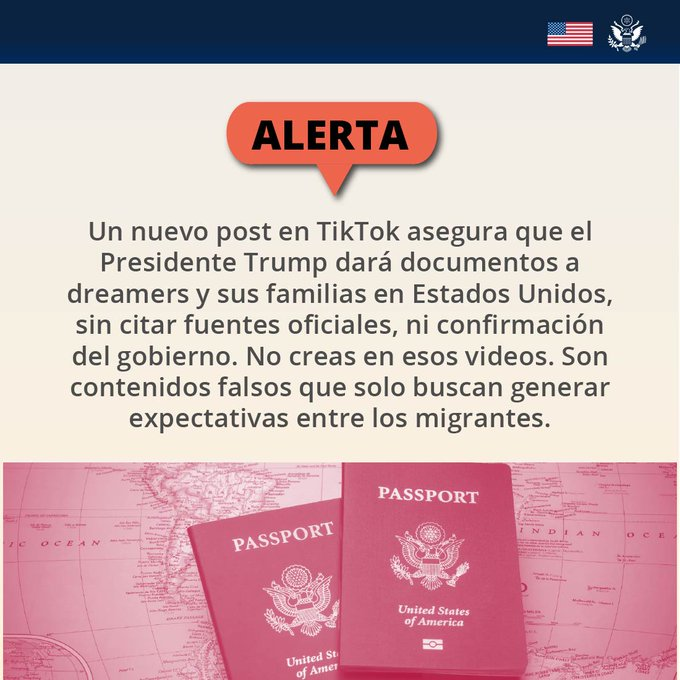
The U.S. Embassy in El Salvador warned about a TikTok video circulating that claims former President Donald Trump will grant documents and permanent residency to Dreamers and their families, information that the diplomatic mission has labeled as false.
Through its official channels, the Embassy explained that the content is presented as breaking news, but it does not cite official sources or include verifiable statements from the U.S. government. Furthermore, it clarified that to date there is no official announcement or public policy that supports this claim.
Warning about disinformation on social media
The diplomatic mission urged the public not to trust this type of viral content and to verify information only through official channels. According to the Embassy, these videos seek to generate expectations among migrants and their families, taking advantage of the uncertainty surrounding immigration policies.
Disinformation related to migration often spreads rapidly on social media, especially on platforms like TikTok, where short and eye-catching content can reach millions of views in a short time without going through journalistic verification processes.
Context of immigration policy
In the United States, the status of Dreamers—young people benefiting from the Acción Diferida para los Llegados en la Infancia (DACA)——remains a subject of political and legal debate. Any change to their immigration status requires formal legislative processes or executive decisions, which are communicated by federal authorities through official announcements.
Immigration experts point out that rumors about mass regularization often arise during periods of high political tension, but rarely correspond to actual measures. Therefore, they recommend that the migrant population consult reliable sources before making decisions based on unconfirmed information.
Impact of misinformation
The spread of false news about migration can have significant consequences for migrants, who may take risks, incur unnecessary expenses, or fall victim to scams. International organizations and consular authorities have repeatedly warned about networks that use rumors to offer fraudulent immigration services.
Call for Verification
The Embassy reiterated its call to obtain information only from official U.S. government statements, consulates, federal agencies, and reputable media outlets. It also recommended reporting misleading content to reduce the spread of disinformation.
In a context where social media is a primary source of information, authorities emphasize the importance of digital literacy and fact-checking to prevent the spread of rumors that can affect vulnerable communities.
You can also read: