

 dinero_admin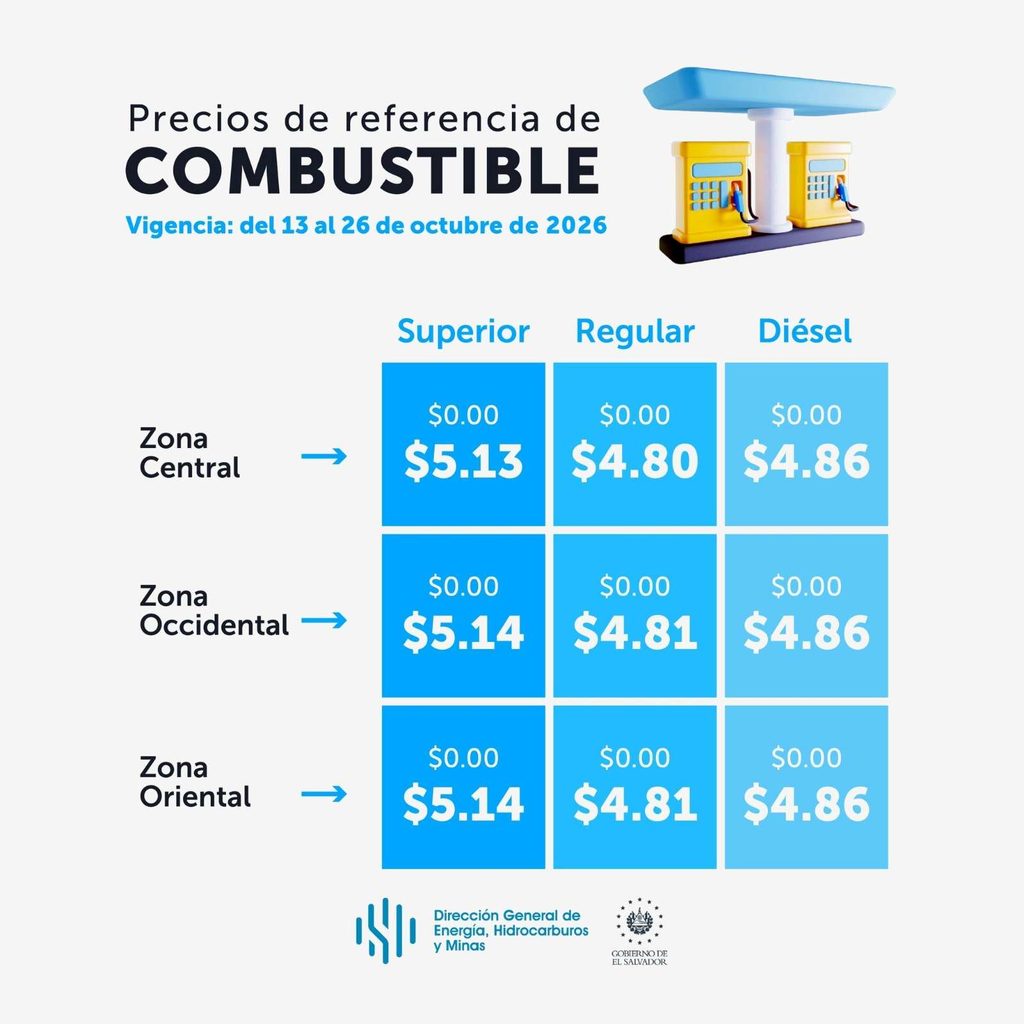
Reference fuel prices in El Salvador will remain unchanged for the second consecutive two-week period, according to the Dirección General de Energía, Hidrocarburos y Minas (DGEHM). These rates will be in effect from october 13 to october 26, 2026, maintaining the same prices for Premium and Regular gasoline, as well as diesel, across the country’s three zones.
According to the agency, a gallon of Premium gasoline will cost US$5.13 in the central zone and US$5.14 in the western and eastern zones. Meanwhile, Regular gasoline will sell for US$4.80 in the central zone and US$4.81 in the western and eastern zones.
For diesel, the reference price will be US$4.86 per gallon nationwide. The DGEHM noted that the price change for all three fuel types will be US$0.00; consequently, motorists will see neither increases nor decreases in reference prices during this two-week period.
International factors sustain market uncertainty
The DGEHM explained that this price stability occurs against an international backdrop of factors creating uncertainty in the hydrocarbon market. Among these, it highlighted the recent attack on Saudi Arabia’s East-West Pipeline, an event that could influence expectations regarding global oil supplies.
Another factor cited is Hurricane Isaias, which caused the closure of oil platforms and refineries in the United States. These disruptions create instability in the international market, as they can impact fuel production and processing operations. Additionally, the institution noted that the International Energy Agency (IEA) reported, in its first report of october, reductions in U.S. oil and diesel reserves. Changes in the inventories of these products serve as an indicator that markets monitor to assess supply availability and potential price fluctuations.
Despite this scenario, the DGEHM attributed the stability of reference prices in El Salvador to the management of the domestic market and the coordinated efforts between the government and oil companies.
Prices include taxes; inspections continue
The institution noted that the published reference prices include applicable statutory taxes, as well as contributions earmarked for stabilizing public passenger transport fares and for the Fondo de Estabilización del Fomento Económico (FEFE).
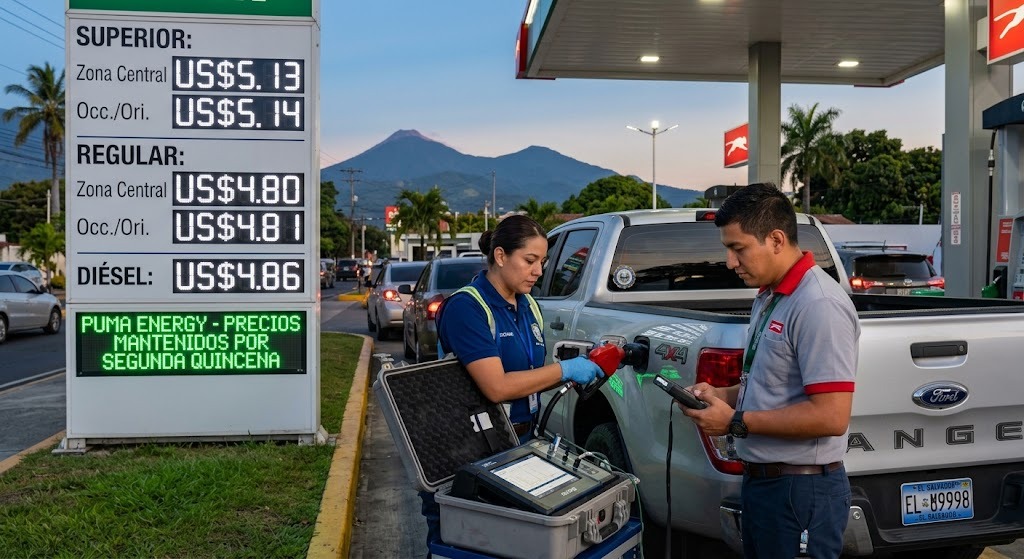
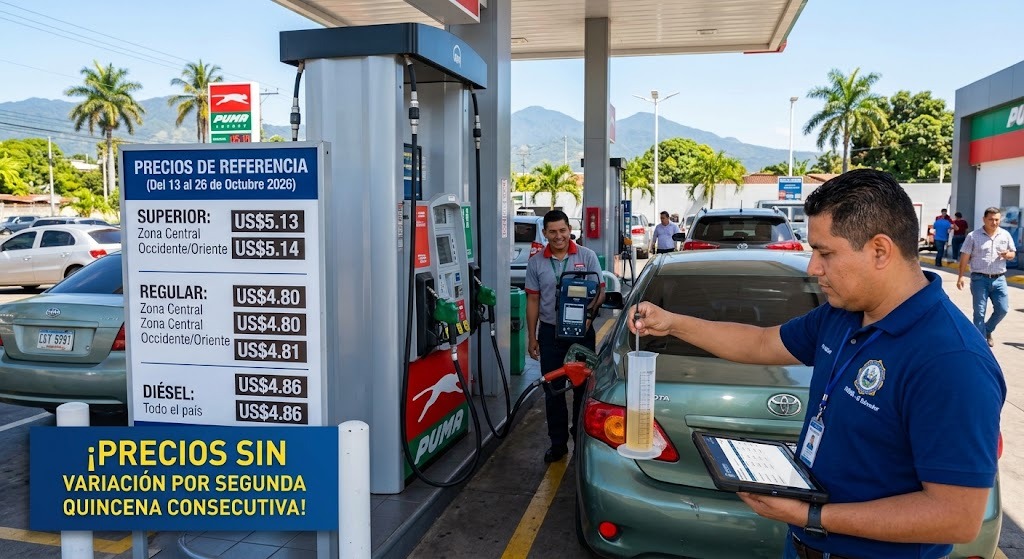
Furthermore, it reported that it continues to conduct inspections at service stations to verify that fuels meet technical specifications and that consumers receive the exact quantity for which they pay.
Inspectors also constantly monitor companies engaged in the sale of petroleum-derived products. The DGEHM warned that establishments failing to comply with legal regulations could face appropriate sanctions.
Through these controls, the institution aims to protect consumers and make it easier for Salvadorans to compare options available at gas stations, based on both price and service quality.
You may also read: