dinero_admin
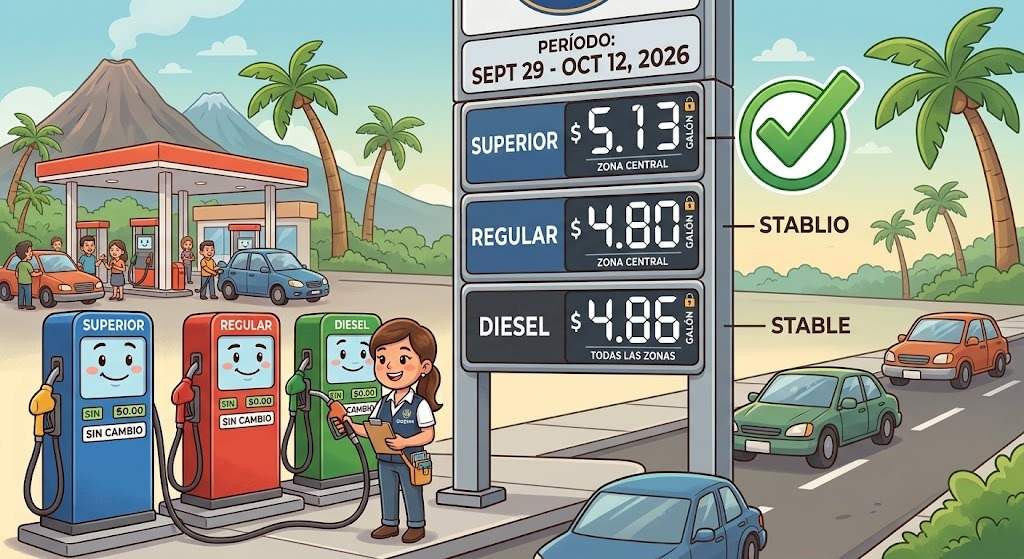
The Dirección General de Energía, Hidrocarburos y Minas (DGEHM) reported that reference fuel prices will remain unchanged from september 29 to october 12, 2026, in all three regions of the country. Premium gasoline will be priced at US$5.13 per gallon in the central region and US$5.14 in the western and eastern regions, while regular gasoline will cost US$4.80 in the central region and US$4.81 in the western and eastern regions.
As for diesel, the reference price will be US$4.86 per gallon in all three regions. The DGEHM specified that the price change for all three fuels is US$0.00, meaning prices will remain the same during this period.
The agency noted that this stability is being maintained amid an international landscape marked by factors that are putting pressure on the petroleum products market. Among these, it cited the escalating tensions between the United States and Iran, which are jeopardizing the passage of oil tankers through the Strait of Hormuz, one of the main routes for global oil transport.
Another factor cited is the possibility that the United States might restrict diesel sales to other countries, a measure that could reduce the amount of this product available on the international market.
According to the DGEHM, despite international uncertainty and price increases in other markets in the region, the domestic market has maintained stable fuel prices. The agency attributed this trend to the management of the domestic market and coordinated efforts between the government and oil companies and stated that prices in El Salvador remain among the lowest in the region.
The reference prices include taxes established by law, as well as the Contribución para la Estabilización de las Tarifas del Servicio Público del Transporte Colectivo de Pasajeros (COTRANS) and Fondo de Estabilización del Fomento Económico (FEFE).
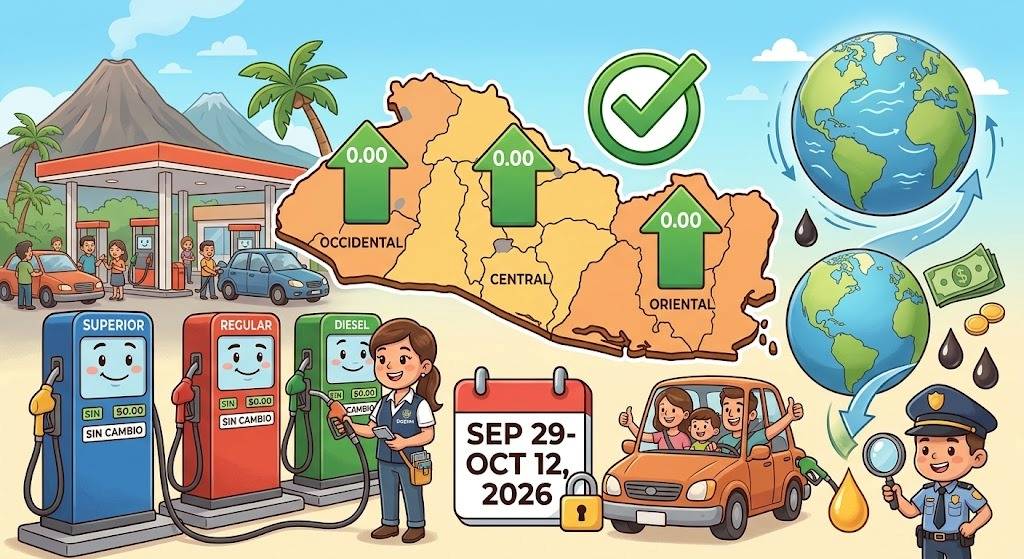
The DGEHM also reported that it has stepped up inspections at gas stations to ensure that consumers receive both the amount of fuel they pay for and a product that meets the required technical specifications.
In addition, the agency’s inspectors conduct ongoing market surveys among companies engaged in the sale of petroleum products. If violations of the law are detected, companies may be subject to the corresponding penalties.
Through these actions, DGEHM seeks to ensure that consumers receive the exact amount of fuel they pay for, in compliance with established quality standards, and that they can choose the gas station that provides them with the best customer service.
You can also read: