


 dinero_admin
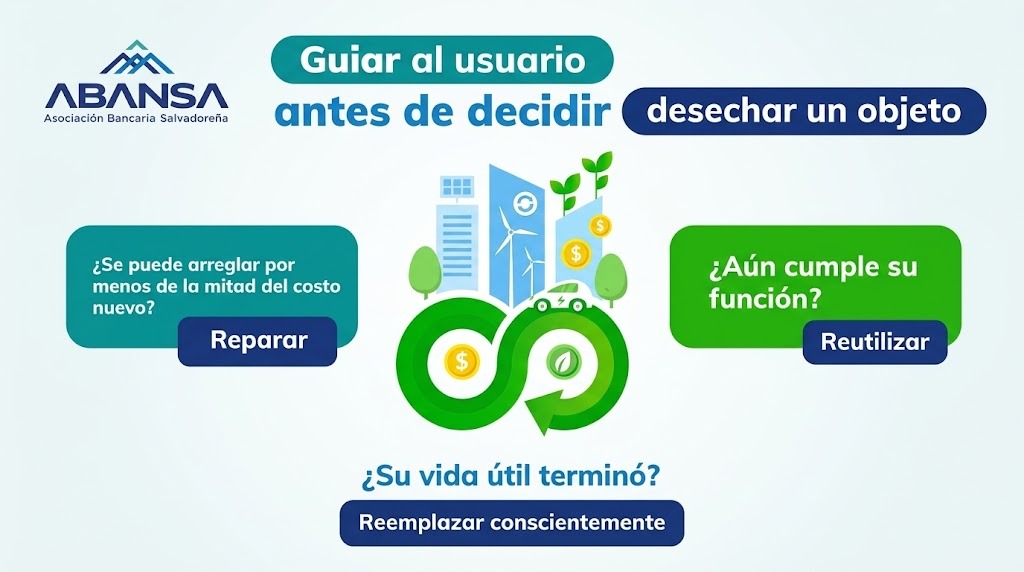
The Asociación Bancaria Salvadoreña (ABANSA) has shared a series of recommendations to help consumers make more conscious decisions before discarding an item, a practice that can contribute both to household savings and environmental protection. The association emphasizes that evaluating whether an item can still be used, repaired, or truly needs to be replaced helps reduce unnecessary expenses and maintain a more sustainable budget.
The approach involves following three criteria before deciding what to do with an item that is damaged, no longer in use, or appears to have reached the end of its functional life. The first step is to determine whether the item can still perform its intended function, as not everything that seems obsolete or has sustained some damage needs to be replaced immediately.
One option is repair especially when the cost of fixing an item is less than half the price of buying a new one. ABANSA suggests using this as a benchmark to decide whether it is worth investing in repairs rather than spending a larger sum on a replacement. This can help extend the lifespan of products and avoid unnecessary expenditures.
The second criterion is reuse. If an item still functions and is in good enough condition to remain in use, there is no immediate need to purchase a replacement. Continuing to use existing items allows for better resource management and helps avoid purchases driven solely by the desire to acquire something new.
The third option is to consciously replace items that have reached the end of their useful life. In such cases, the recommendation is to recognize when a product can no longer effectively serve its purpose and then consider a replacement. Such a decision should be based on a genuine need rather than a consumer impulse.
These practices also impact on personal finances, as frequently purchasing items that could otherwise be repaired or continued to be used results in avoidable expenses. By assessing the condition of each item before replacing it, households can better manage their income and allocate those resources to other priorities within the family budget.
Beyond the economic benefit, adopting these practices fosters more responsible consumption, as it allows items to be used for longer and reduces the number of objects that end up as waste. In this way, repairing, reusing, and replacing items only when necessary are actions that can be integrated into everyday purchasing decisions.
ABANSA noted that adopting this simple process helps reduce unnecessary expenses and build a more sustainable budget. The recommendation encourages consumers to evaluate their needs before making a purchase, keeping in mind that sound financial management also begins with making responsible use of the goods one already owns.
You may also want to read: