

 A. M.
A. M. 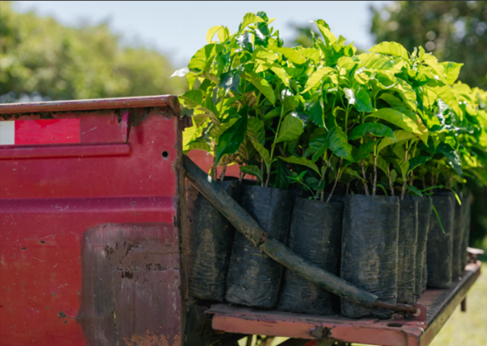
Coffee is at the heart of Starbucks. Every cup begins with the farmers whose livelihoods depend on healthy, productive coffee trees. As climate change transforms growing conditions—with rising temperatures, shifting rainfall patterns, and increased pest and disease pressure, farmers need stronger, more resilient varieties that will allow them to maintain their farms’ productivity long-term.
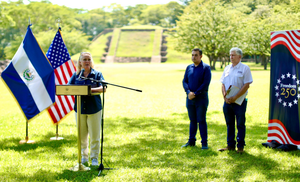
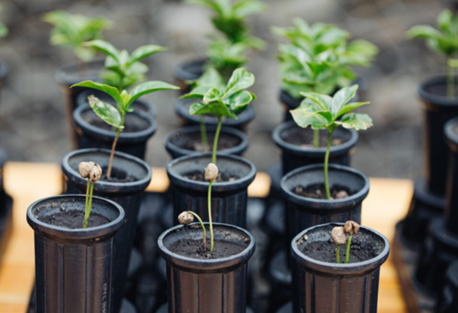
Starbucks has reached a significant milestone in its work to support the future of high-quality Arabica coffee: the donation of 100 million coffee trees grown from varieties selected for their performance in adverse climates. Since 2017, Starbucks has been donating trees to farmers in El Salvador, Guatemala, and Mexico. The company is also committed to donating an additional 50 million trees to farms in strategic locations such as Ethiopia, Tanzania, Indonesia, Costa Rica, Honduras, and Colombia, among others, while continuing to support farmers in El Salvador, Guatemala, and Mexico.
A milestone years in the making
In 2017, Starbucks set a goal to donate 100 million trees to help small-scale coffee farmers renew aging or disease-prone plots and improve the productivity of their farms. Many of the donated trees come from advanced research at Hacienda Alsacia, Starbucks’ global research and development farm in Costa Rica. There, agronomists study plant varieties, along with soil health, plant nutrition, and disease tolerance, to help farmers adapt to the realities of climate change.
This effort would not be possible without nearly three decades of collaboration with Conservation International. As a partner in the initiative, Conservation International helps integrate environmental and social practices into the program, from protecting forests to promoting shade management and advocating for farmers’ rights. Since the initiative’s inception, the organization has worked directly with farmers, nurseries, and supplier partners to ensure they receive high-quality plants and that the guidelines are understood and respected. This monitoring helps ensure that the approach meets the needs of farmers and generates significant benefits throughout the supply chain.
“With climate change threatening the future of coffee, building resilient farming systems has never been more urgent. Supporting farmers as they adapt to changing conditions can help them and their land remain productive while protecting vital ecosystems”, said Raina Lang, Senior Director of Sustainable Coffee at Conservation International. “Cross-sector collaboration between businesses, NGOs, and communities is the future of conservation, as it can deliver positive outcomes for the climate, people, and livelihoods”.
How they make a difference
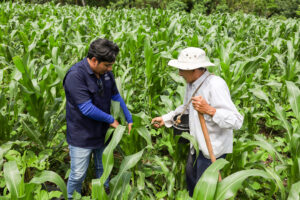
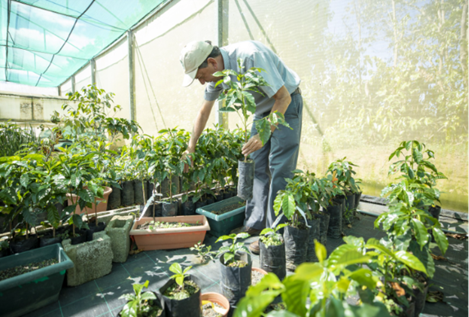
Healthy coffee trees can sustain a family’s livelihood for decades when adapted to their region’s growing conditions. Many farmers still rely on trees that struggle under climate pressure or are susceptible to diseases like coffee rust. Replanting with more resilient varieties can give them a foundation for more stable production over time, especially when combined with agronomic support and access to financing.
Starbucks is expanding to financing through the Global Farmer Fund. Last year, the company reached its goal of providing $100 million to smallholder farmers worldwide. The fund works with non-governmental organizations, fund managers, and financial institutions to support them with access to capital to renovate farms, improve infrastructure, and strengthen their financial stability. Many loan recipients also receive technical assistance in best agricultural practices, business planning, and price risk management. In addition, they can receive training in management skills and understanding climate risks, followed by support to adapt to the impacts of climate change. These advisory services aim to benefit farmers long after the loan has been repaid.
These advances help extend the viability of coffee production in regions affected by climate change and strengthen the long-term resilience of the global supply.
Looking ahead: $50 million more
Reaching the $100 million milestone is an important step, but it is not the end of the road. The additional 50 million trees Starbucks will donate in the next phase reinforce its commitment to responsible sourcing, on-farm innovation, and its “Back to Starbucks” focus on quality and craftsmanship.
“The future of coffee depends on the actions we take today”, said Ricardo Arias-Nath, Senior Vice President of Global Coffee and Tea and President for Latin America and the Caribbean. “We are investing in farmers, protecting coffee landscapes, and scaling solutions that contribute to strengthening resilience throughout our supply chain. When we lead with purpose, we help ensure the future of coffee for everyone”.
Supporting the future of high-quality Arabica coffee is also supporting the future of Starbucks and the communities that grow it. With 100 million trees already planted and 50 million more to come, the company is working with farmers to strengthen climate resilience, improve productivity, and help ensure that high-quality coffee remains available for years to come.
You can also read: