

 dinero_admin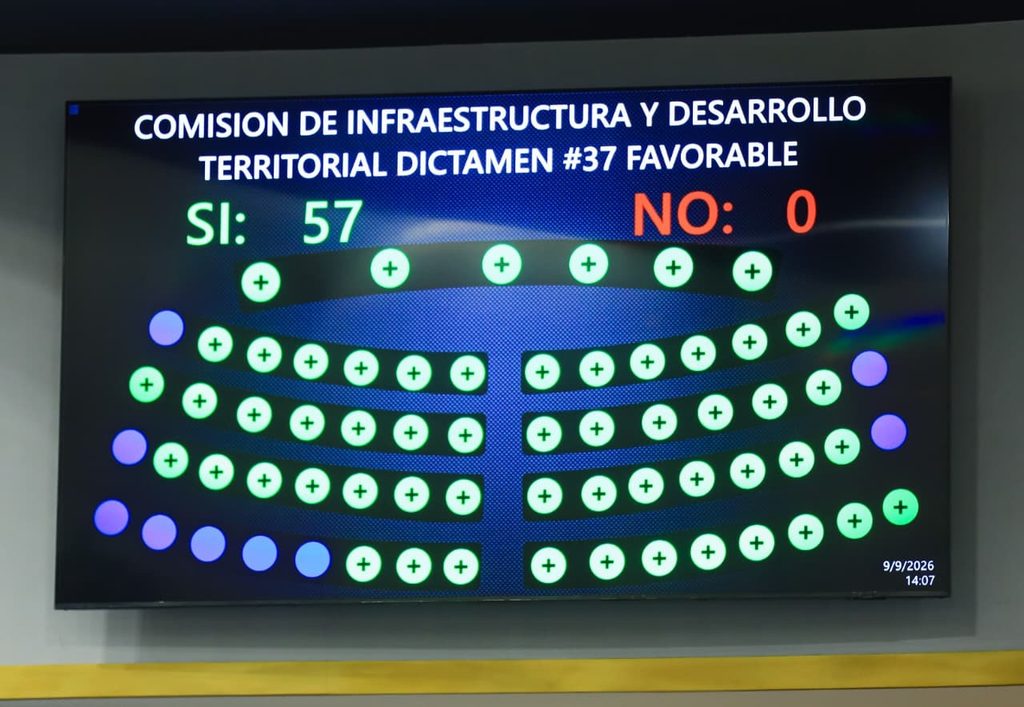
The Legislative Assembly approved, with 57 votes, the Special Law on Professional Liability for Persons Subject to Registration in the Registry of Professionals and Service Providers in Urban Development and Construction. This law establishes new rules regarding the registration, oversight, and professional practice of individuals involved in construction and urban development activities.
The regulations govern professionals involved in the various stages of a project, ranging from planning and design to execution, supervision, control, and maintenance. The Registry of Professionals has been operational since 2024—having been created as part of Ley de la Dirección de Ordenamiento Territorial (DOT), but specific requirements and responsibilities for those within the system are now being formally established.
The registry will be categorized by specialty, including areas such as environmental services, urban auditing, construction, cultural heritage, and administrative processing. To join the registry, professionals must provide proof of the relevant education and experience. For instance, those conducting impact assessments or environmental diagnoses must demonstrate at least 80 hours of training in Environmental Impact Assessment (or related studies), in addition to three years of professional experience and two years of experience in environmental management.
Environmental assessment auditors will be required to demonstrate participation in at least three approved environmental impact studies or environmental diagnoses. In the cultural sector, professionals conducting archaeological or paleontological research, or working on the assessment and restoration of built heritage, must hold a master’s or doctoral degree in a related field and provide proof of five years of professional experience.
The law also incorporates digital tools to strengthen the oversight of administrative procedures. Professionals will be required to use a Firma Electrónica Certificada (FEC) and a Professional Electronic Seal to validate documents such as blueprints, calculation reports, project logs, and technical opinions.
Additionally, the DOT will oversee continuing education programs covering regulatory updates and the use of the System for the Administration and Authorization of Construction and Subdivision Permits. Completion of this training will be a requirement for renewing one’s registration. The regulations will also allow foreign professionals participating on a temporary basis or in specific projects to apply for the recognition of similar professional credentials obtained in other countries.
The new legal framework also establishes a system for classifying infractions as minor, serious, or very serious. Serious infractions include practicing with an expired registration, working outside one’s registered specialty, failing to comply with technical or safety standards, and using materials that do not meet quality standards. Very serious infractions include practicing without being registered, submitting false or altered documents, and acting with negligence or incompetence resulting in serious consequences.
Financial penalties will range up to one minimum wage for minor infractions, two to three minimum wages for serious infractions, and four to 20 minimum wages for very serious infractions. During the review of the legislation, it was explained that the latter could entail fines ranging from US$1,635.20 to US$8,176, depending on the specific violation.
You may also read: