

 dinero_admin
The Economic Commission for Latin America and the Caribbean (ECLAC) emphasized that having reliable and high-quality official statistics is fundamental to boosting economic growth, improving productivity, and designing effective public policies in the region. This statement was made during the opening of the XXV Meeting of the Executive Committee of the Statistical Conference of the Americas, held in Santiago, Chile, which brings together representatives of the national statistical systems of Latin America and the Caribbean.
During the meeting, ECLAC Executive Secretary José Manuel Salazar-Xirinachs stressed that the availability of accurate data has become a strategic element for addressing some of the region’s main economic challenges, including informal employment, low productivity, and limitations in accelerating development.
He noted that the Economic Survey of Latin America and the Caribbean 2026 identifies formalization of production as one of the ways to increase productivity and strengthen economic growth. However, she pointed out that to understand the magnitude of informality and design effective solutions, it is essential to have regular, comparable, and high-quality statistics.
According to ECLAC, statistical information is the basis for developing accurate economic diagnoses, measuring results, and evaluating the impact of public policies. This includes areas such as productive development, employment, investment, environmental sustainability, and social protection. Without reliable data, the organization warning, decision-making and the efficient allocation of resources are hindered.
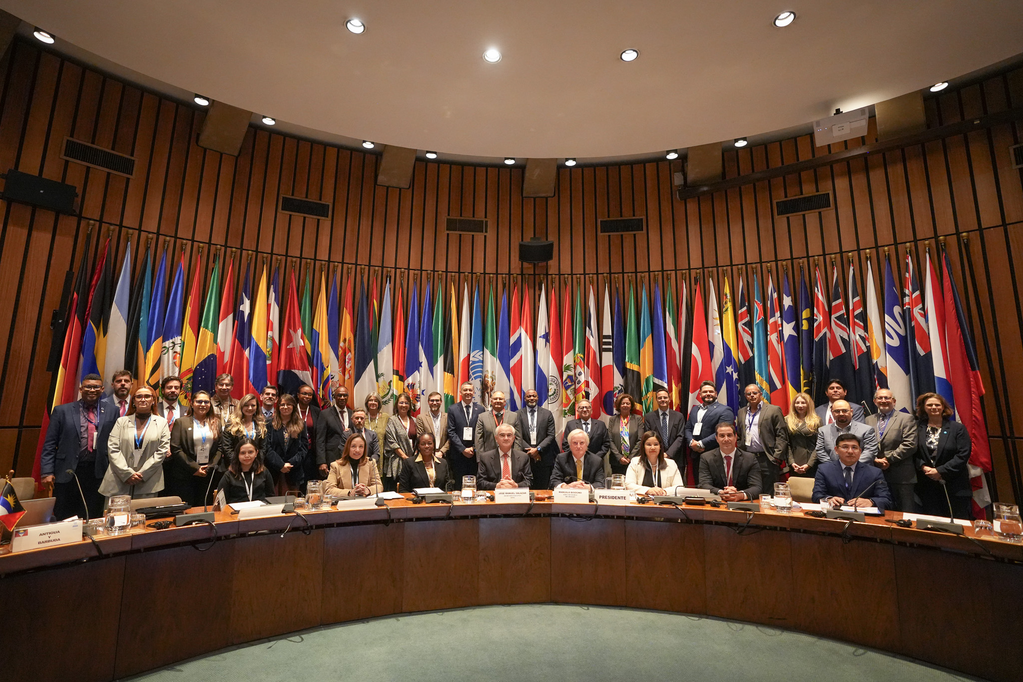
Salazar-Xirinachs stated that economic and business statistics are essential for strengthening competitiveness and promoting productive development. She also emphasized that the information generated by statistical systems allows governments to identify trends, detect gaps, and design strategies aimed at improving the economic and social conditions of their countries.
Another topic addressed was the need to strengthen the institutional capacities of national statistical systems. Participants agreed that the quality of available information directly influences the ability of governments to respond to the economic, technological, social, and environmental changes facing the region.

Marcelo Bisogno, technical director of Instituto Nacional de Estadística (INE) of Uruguay and representative of the country presiding over the Statistical Conference of the Americas, emphasized that cooperation among the region’s statistical systems is a strategic asset. He also noted that data produced independently, rigorously, and transparently are fundamental to strengthening public trust and improving governance.
During the meeting, progress and challenges related to household surveys, one of the main instruments for measuring economic and social variables, will also be analyzed, as well as strategies to strengthen statistical production in the countries of the region. For ECLAC, improving data quality is not only a technical necessity but also an essential condition for promoting policies that foster productivity, formalization of the economy, and sustainable development in Latin America and the Caribbean.
You can also read: