

 dinero_admin
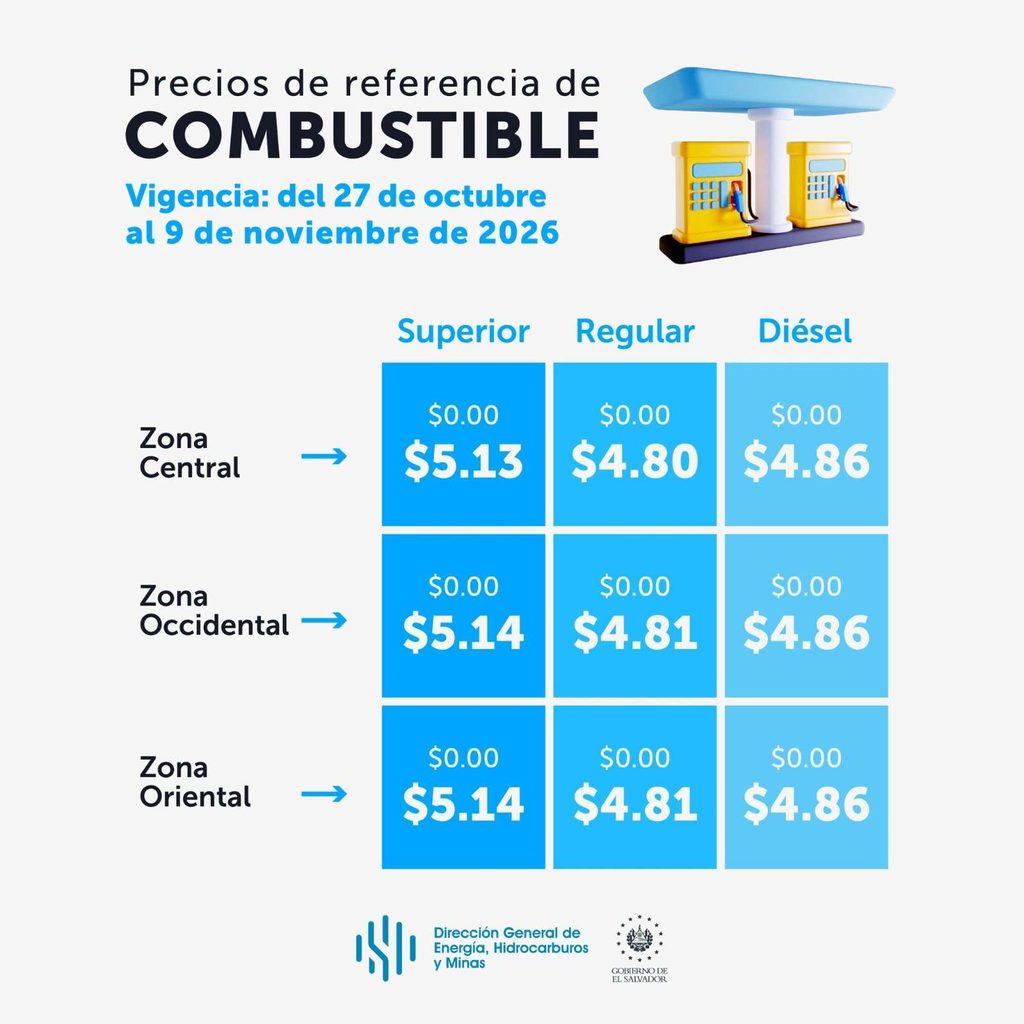
Reference fuel prices in El Salvador will remain unchanged for the third consecutive week, despite uncertainty in the international oil market, according to the Dirección General de Energía, Hidrocarburos y Minas (DGEHM). These rates will be in effect from october 27 to november 9, 2026.
During this period, premium gasoline will be sold at US$5.13 per gallon in the central zone, and at US$5.14 per gallon in the western and eastern zones. Meanwhile, regular gasoline will have a reference price of US$4.80 in the central zone and US$4.81 in the other two regions.
As for diesel, the price will remain at US$4.86 per gallon across all three zones of the country. According to information released by the institution, there are no changes to any of the fuel prices compared to the previous two-week period.
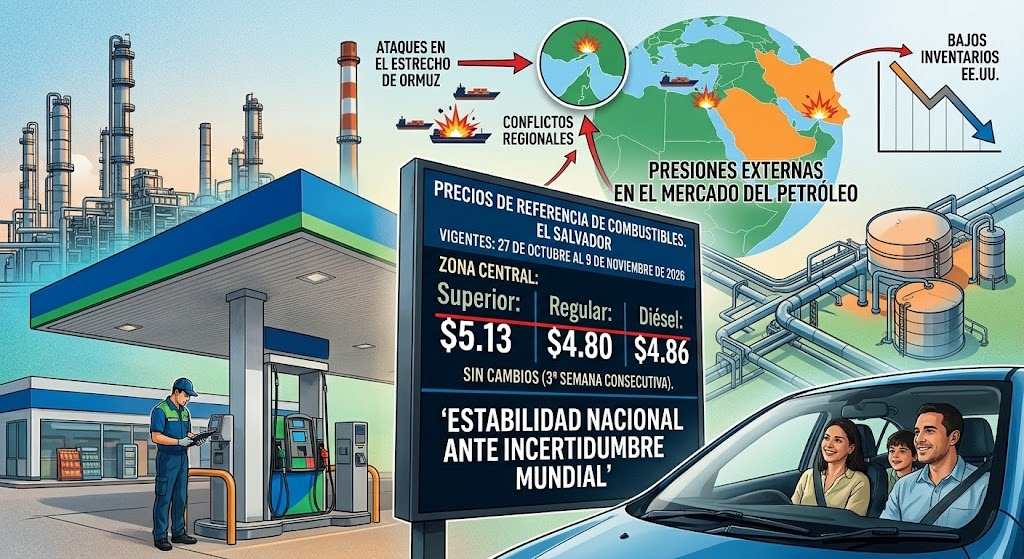
This price stability persists despite external pressures facing the oil market. Among the factors noted by the DGEHM are disruptions to the supply of oil and its derivatives in the Strait of Hormuz, caused by attacks on vessels, which have created uncertainty regarding the international transport of hydrocarbons.
The institution also cited the intensification of attacks between the Houthis in Yemen and Saudi Arabia, as well as concerns regarding potential new U.S. strikes against Iran. These developments continue to fuel uncertainty surrounding the global oil supply and the future trajectory of prices.
Compounding these factors is the ongoing decline in oil and diesel inventories in the United States, a situation that adds further pressure to the international market. When reserves fall, expectations regarding the future availability of these products can influence the reference prices for crude oil and its derivatives.
The DGEHM attributed the stability of domestic prices to the coordinated effort between the government and oil companies. This collaboration, it noted, has made it possible to maintain gasoline and diesel prices, even amidst international uncertainty and price increases across the region.
The reference prices include legally mandated taxes, as well as contributions earmarked for the transporte público colectivo y masivo (COTRANS) and Fondo de Estabilización del Fomento Económico (FEFE).
The institution also reported that it continues to conduct inspections at service stations to ensure that fuels meet technical specifications and that consumers receive the exact quantity for which they pay. Establishments that fail to comply with regulations face the corresponding penalties.
With prices remaining in effect until november 9, consumers will see no change in the reference cost per gallon during this two-week period. Nevertheless, developments in the international oil market will remain a key factor for future price adjustments.
You may also want to read: