

 dinero_admin
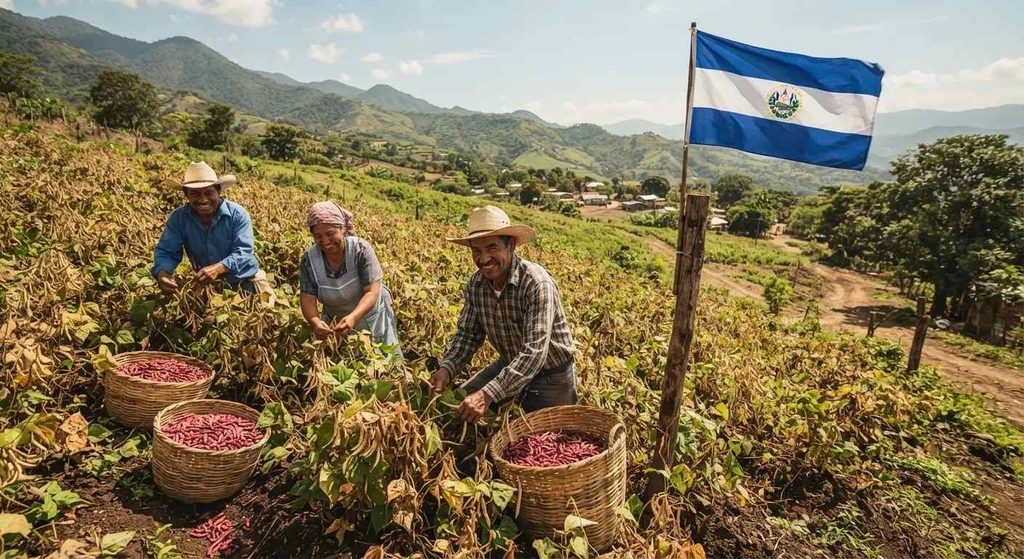
El Salvador projects a harvest of up to 1.25 million quintals of beans through the Programa de Aumento a la Producción (PAP), an initiative by the Ministerio de Agricultura y Ganadería (MAG) designed to boost crop yields and strengthen the national supply of this staple grain. Óscar Domínguez, the ad honorem deputy Minister of Agriculture, emphasized the country’s continued commitment to local production, noting that for the second consecutive year, the program is utilizing 100% domestically sourced seeds.
According to the official, the initiative aims to develop high-yield agriculture capable of generating larger volumes of food, thereby contributing to the availability of grains within the salvadoran market. Unlike other programs primarily focused on household subsistence, the PAP centers on increasing productivity to secure harvests that significantly impact the nation’s food supply.
Highlighting the program’s achievements, Domínguez noted that the national average yield for bean crops has been doubled. He explained that this progress was made possible through technical support provided to farmers and the integration of agricultural technologies that improve planting and harvesting processes.
Currently, approximately 49,000 blocks (a local unit of land area) are dedicated to bean cultivation, with a projected harvest of roughly 1.2 million quintals, according to data shared in MAG’s promotional material. In his statement, the deputy minister estimated the total production at 1.25 million quintals.
Increasing productivity is a core objective of the program, as it seeks to optimize the use of land designated for cultivation and maximize the yield per unit of planted area. To this end, the initiative employs strategies such as providing technical guidance and utilizing domestic seeds.
The harvest process itself reflects the diligent work carried out by farmers throughout the various stages of crop cultivation. The MAG shared images of the bean-threshing process, a task that involves beating dried plants to dislodge the beans from their pods, as a preparatory step for storage and commercialization.
Domínguez highlighted that the results of the Programa de Aumento a la Producción are strengthening the country’s agricultural capacity and moving it toward greater availability of domestically produced beans. The commitment to maintaining production using salvadoran-sourced seeds is also part of an effort to boost local productive capabilities.
Through this initiative, the MAG aims to consolidate an agricultural production model that goes beyond meeting the needs of the farming families themselves, generating sufficient volume to contribute to the national market supply. With a projected yield of up to 1.25 million quintals, beans have become one of the priority crops within the strategy to strengthen food production in El Salvador.
You may also want to read: