

 dinero_admin
In 2015, El Salvador recorded a homicide rate of 106 per 100,000 inhabitants, one of the highest in the world. Ten years later, the country recorded 82 homicides for the entire year—a transformation that radically altered the reality of security in El Salvador and continues to attract attention, analysis, and debate both within and beyond its borders. What happened between those two moments, and what decisions made a change of that magnitude possible? That is the story that *Cero Crimen*—the new book by Yossi Abadi and Sharon Gal-Or, published by Editorial Planeta—seeks to reconstruct.
The book starts with the statistics but aims to go beyond them. *Cero Crimen* reconstructs the structure that allowed gangs to consolidate their power over decades as a parallel authority across vast swaths of the country. The book examines their extortion mechanisms, records of collections, punishment systems, and revenue-generating capacity—which, according to the figures documented in the publication, came to represent nearly 3% of the Gross Domestic Product (GDP)—as well as the political and institutional conditions that allowed these structures to grow and the decisions that subsequently marked a turning point.

An inside look at the transformation
One of the elements that sets this work apart is the perspective of its authors. Yossi Abadi, a writer, businessman, and honorary consul of El Salvador in Israel, has maintained a close relationship with the country and has spent years promoting it to international business leaders and investors. That connection, as the editorial material explains, allowed him to gain access to testimonies, events, and moments linked to the years of greatest transformation. *Cero Crimen* was developed in collaboration with Sharon Gal-Or, who was closely involved in shaping the editorial project.
“Between the statistics on violence that for years shaped El Salvador’s international image and the reality the country is currently experiencing, there is a story that deserves to be analyzed. *Cero Crimen* seeks to reconstruct that process, understand the decisions that made it possible, and open a conversation about the lessons this transformation can offer to other societies that still live under fear and violence”, (suggested quote for Yossi Abadi).

The book also highlights the everyday reality of violence. Extortion, the book argues, did not operate solely as an isolated crime, but as part of an organized structure of territorial and economic control that directly affected communities, families, and productive activities. This approach helps us understand why the transformation of security goes beyond homicide statistics and extends into social, institutional, and economic spheres.
The debate behind the numbers
*Cero Crimen* does not shy away from some of the issues that have placed the salvadoran model at the center of international debate. The book addresses the state of emergency and its scope, the debate over human rights, the use of social media as a tool for communication and presidential leadership, institutional legitimacy, and questions regarding the sustainability of the security model.

In this way, the book raises questions that extend beyond El Salvador: what happens when a society reaches the limit of its tolerance for violence, how much weight do results carry in legitimizing public decisions, and which elements of a transformation built under specific circumstances can—or cannot—serve as a model for other countries.
“A social transformation of this magnitude cannot be understood solely by comparing statistics. Behind the numbers are people, institutions, decisions, and consequences. Our aim is to provide insights that allow readers to understand this process, question it, and form their own reflections on what happened in El Salvador”.
From a local problem to an international conversation

The publication of *Cero Crimen* by Editorial Planeta—one of the most influential publishing groups in the Spanish-speaking market—extends this discussion beyond the salvadoran audience. According to the editorial statement, the book will be released simultaneously in bookstores across various countries in the region, bringing El Salvador’s transformation to the attention of readers interested in security, politics, leadership, and social transformation.
This international component is particularly relevant because, for decades, violence was one of the main elements associated with El Salvador’s image abroad. *Cero Crimen* aims to examine what occurred during the transition from that reality to the situation currently reflected in security statistics, and to analyze the decisions, tensions, and consequences that accompanied the process.

Abadi’s background also adds an international dimension to the publication. In addition to his business activities, he serves as El Salvador’s honorary consul in Israel and has helped promote the country to international business leaders and investors. He was recently honored by the Salvadoran government with the Order of José Simeón Cañas, Liberator of the Slaves, for his work promoting El Salvador abroad.
A book to understand a transformation that continues to spark debate
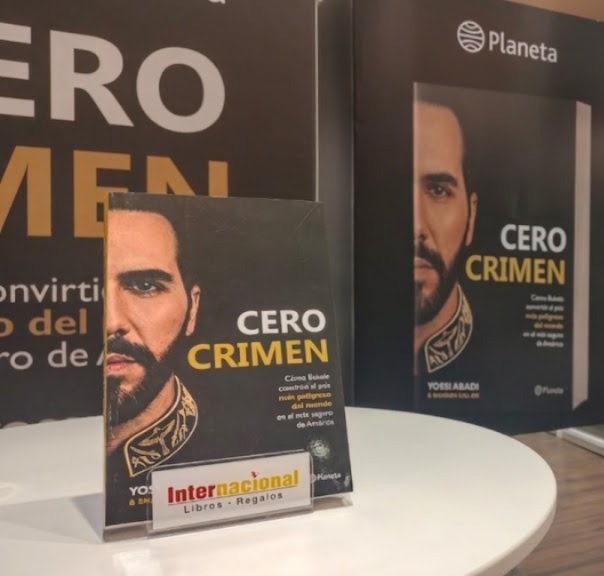
Rather than merely presenting an assessment of security, *Cero Crimen* sets out to reconstruct a pivotal decade in El Salvador’s recent history. The book presents readers with the “before” and “after” of a country that went from facing extreme levels of violence to experiencing a historic decline in homicides, as well as the decisions and controversies that accompanied that transformation.
The book may be of interest not only to readers of current political affairs but also to those studying public safety, social sciences, economics, leadership, public policy, and international relations, as it presents the Salvadoran case as a starting point for a broader discussion on violence, the state, institutions, and social transformation.
You may also be interested in: