

 dinero_admin
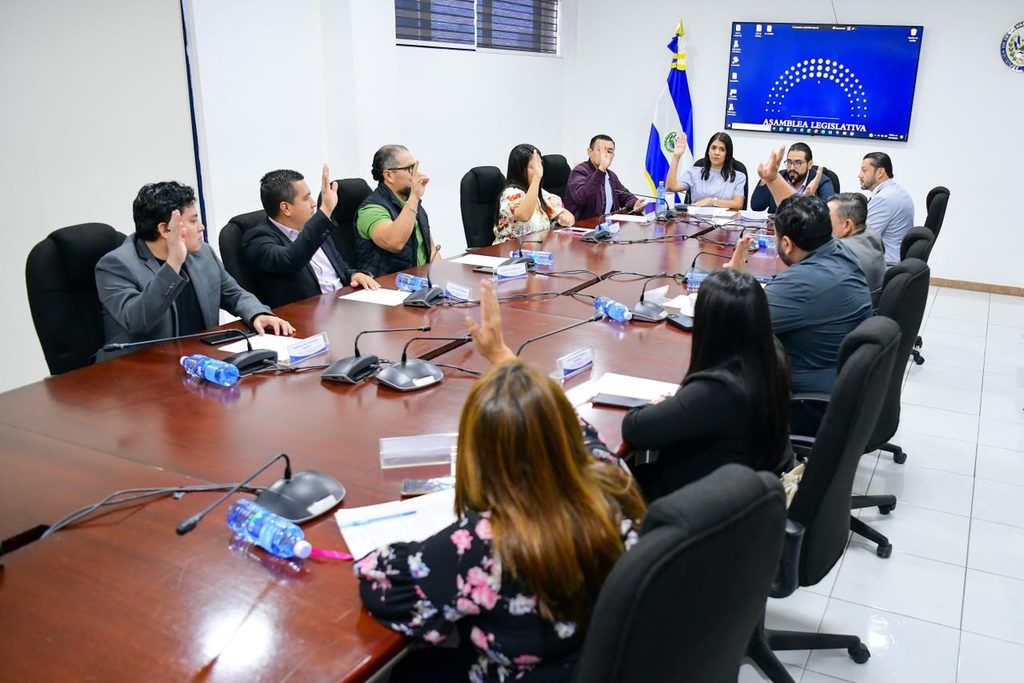
The Infrastructure and Territorial Development Committee has issued a favorable opinion on a reform to the Forestry Law, in effect since june 2002, that would authorize the Dirección de Ordenamiento Territorial y Construcción (DOT) to approve land-use changes on forested land classified under categories VI, VII, and VIII. The proposal, requested by the Ministerio de Agricultura y Ganadería (MAG), seeks to incorporate technical and legal criteria for evaluating such projects.
Currently, Article 12 of the Forestry Law prohibits changing the land use of areas in these categories if they have tree cover, permitting only their sustainable use. The reform proposes adding a second clause that would allow the DOT to process and resolve applications for land-use changes, provided that the conditions established by the regulations are met.
María Paola Bardi de Acosta, executive director of the DOT, explained to the lawmakers that this update aims to strengthen the technical assessment of the land by taking into account its actual conditions and the viability of proposed projects. According to the official, having clear rules and defined legal criteria would facilitate responsible decision-making and provide greater certainty for those looking to make investments.
The proposal also includes safeguards for protected natural areas, water recharge zones, and other spaces of high ecological value. As discussed during the deliberations, the modernization of these regulations is not intended to reduce environmental protection; rather, it seeks to establish parameters for evaluating applications and determining which ones may be granted authorization.
The DOT is the state entity responsible for issuing authorizations and construction permits for new subdivisions, infrastructure works, urban development projects, and other related activities. If the reform is approved by the full legislative body, this institution will be tasked with processing and resolving permit applications related to the land-use changes covered by the amendment. Classes VI, VII, and VIII belong to a classification system known as “Land Use Capability,” developed by the United States Department of Agriculture and used in various countries. This model categorizes land into eight classes based on its limitations for agriculture: the higher the number, the more restrictions the soil presents for intensive cultivation.
Specifically, land in classes VI, VII, and VIII are considered non-arable due to factors such as steep slopes, erosion risk, shallow soil depth, or the presence of rocks. While these characteristics limit agricultural use, it does not mean that all land within these categories shares the same environmental conditions, nor does it automatically imply that such land is suitable for construction or other purposes.
The initiative seeks to amend the legal framework so that applications for changes in land use can be evaluated based on technical and legal criteria. However, a favorable recommendation from the committee does not mean the reform is already in effect; it must still be submitted to the full legislative body for consideration. Its scope will depend on the final text that is approved and the conditions established for authorizing projects, particularly on land with tree cover and in areas of environmental significance.
You may also want to read: