

 dinero_admin

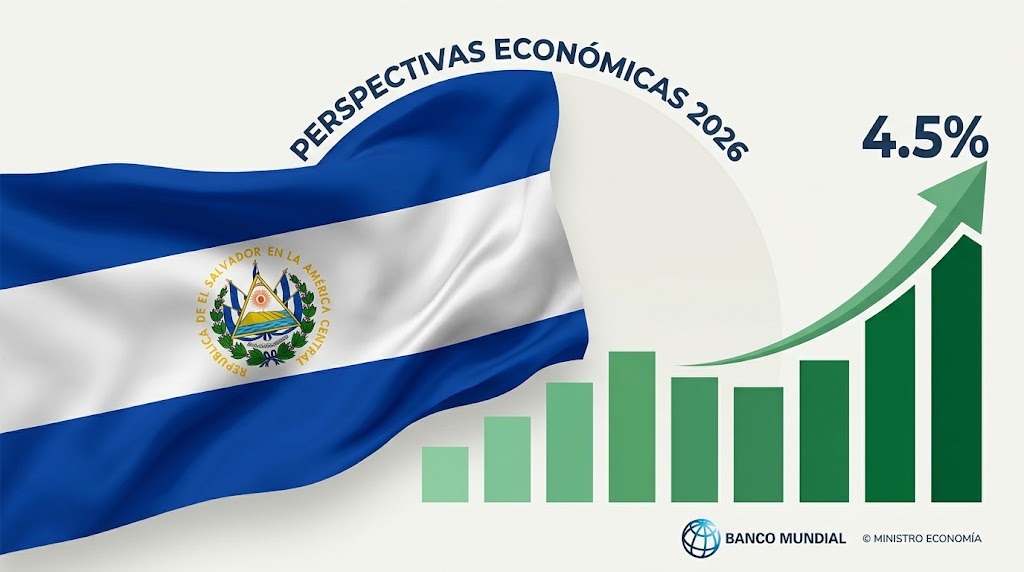
El Salvador could rank among the fastest-growing economies in Latin America and the Caribbean in 2026, with a projected 4.5% expansion in its Gross Domestic Product (GDP), according to World Bank estimates. This forecast would place the country fourth in the region and first in Central America, as noted by Minister of Economy María Luisa Hayem during an interview on the Radio YSKL program Punto de Vista.
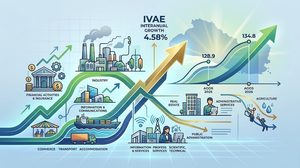
The official pointed out that the country’s economic performance maintains a positive trend, with recent results reflecting productive activity across various sectors. By way of context, she noted that the salvadoran economy grew by 3.9% by the end of 2025, while the second quarter of 2026 saw an expansion of 5.1%.
Hayem explained that the international organization’s projections are a favorable sign for the salvadoran economy, particularly because the estimated growth would significantly exceed the 2.2% regional average forecast for Latin America and the Caribbean. The World Bank has also noted that El Salvador continues to outperform the Latin American average, driven by private investment and the dynamism of sectors such as construction and tourism.
The Minister attributed part of this performance to the diversification of economic activity and to conditions that have fostered business development. She highlighted that salvadoran exporters have reached 60 new markets with 204 different productsa clear expansion of the trade destinations for national output.
The official also mentioned that improved security conditions, a better business climate, and the digitization of administrative procedures have helped create incentives for companies to explore new markets and diversify their product offerings. This process helps expand commercial opportunities and reduces the concentration of exports in specific destinations.
Regarding the activities driving the economy, Hayem identified construction as one of the most dynamic sectors. Other key areas include tourism, healthcare services, and energy sectors that, according to the minister, are contributing to the economic growth recorded during 2026.
Another point highlighted during the interview was investment in public infrastructure and projects led by the private sector. Hayem expressed optimism regarding the year-end outlook, noting that investment commitments from both the government and businesses are crucial for sustaining economic activity.
Among the most significant projects, she mentioned a recently announced US$2.9 billion investment by the Spanish group Cox, which includes initiatives in the energy and water sectors in the eastern part of the country. The minister pointed to such projects as examples of investment opportunities being developed outside of El Salvador’s central region.
Economic performance is also reflected in the results from 2025 and the latest data on productive activity. The 3.9% growth recorded at the end of last year, combined with a 5.1% expansion during the second quarter of 2026, indicates an acceleration compared to the previous year’s performance. For Hayem, a key takeaway is that this growth is distributed across various economic activities rather than relying on a single sector.
With a projected growth rate of 4.5% for 2026, El Salvador aims to establish itself as one of the fastest-growing economies in Latin America and the Caribbean. Trends in investment and exports, along with the performance of sectors such as construction, tourism, healthcare, and energy, will be decisive in determining whether the country meets this forecast by the end of the year.
You may also want to read: