

 dinero_admin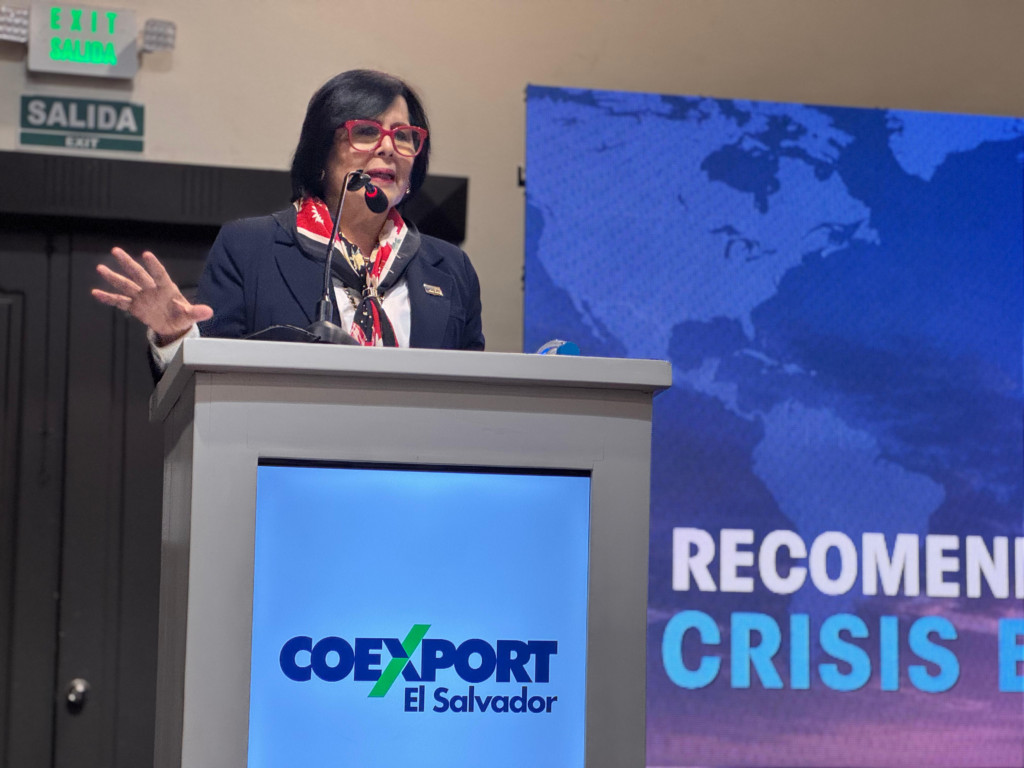
Salvadoran exports continue operating, and international trade has not stopped despite the crisis in the Middle East; however, companies are facing higher logistics costs, delays, and difficulties importing raw materials necessary to maintain production, stated Silvia Cuéllar, president of the Corporación de Exportadores de El Salvador (COEXPORT),
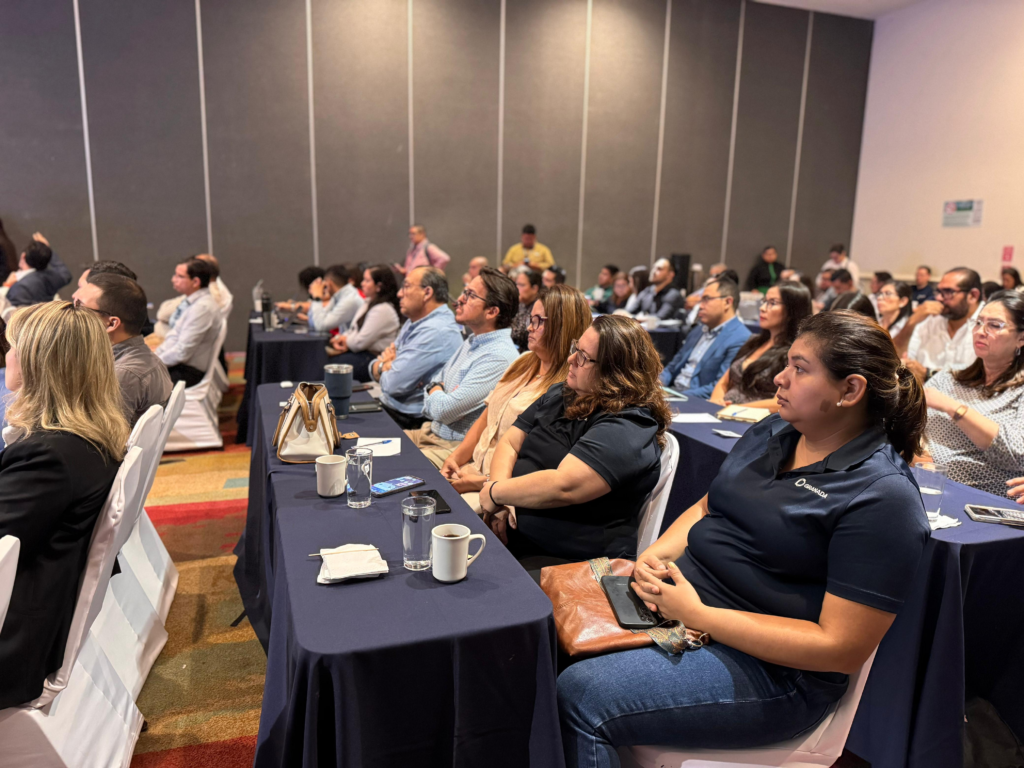
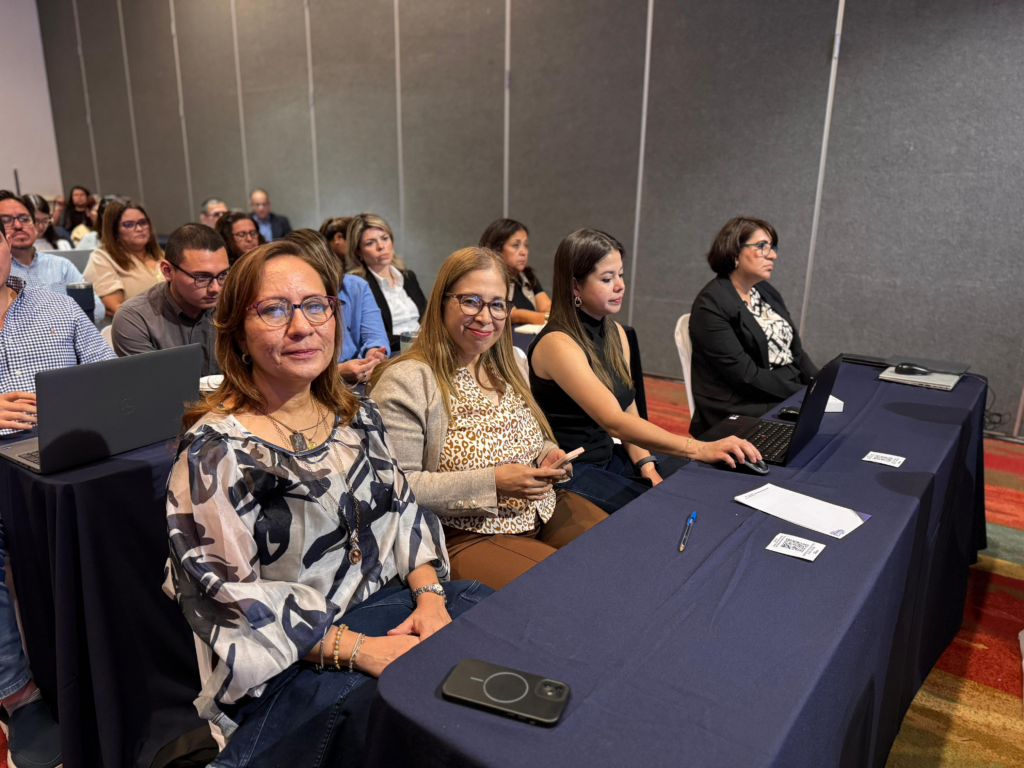
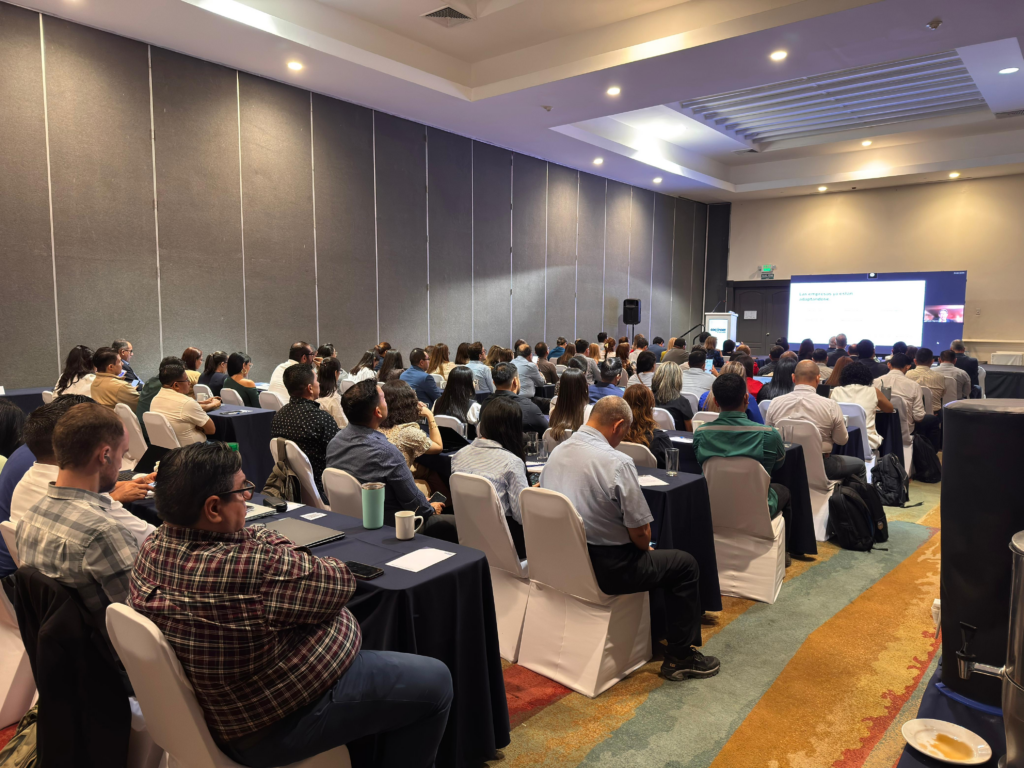
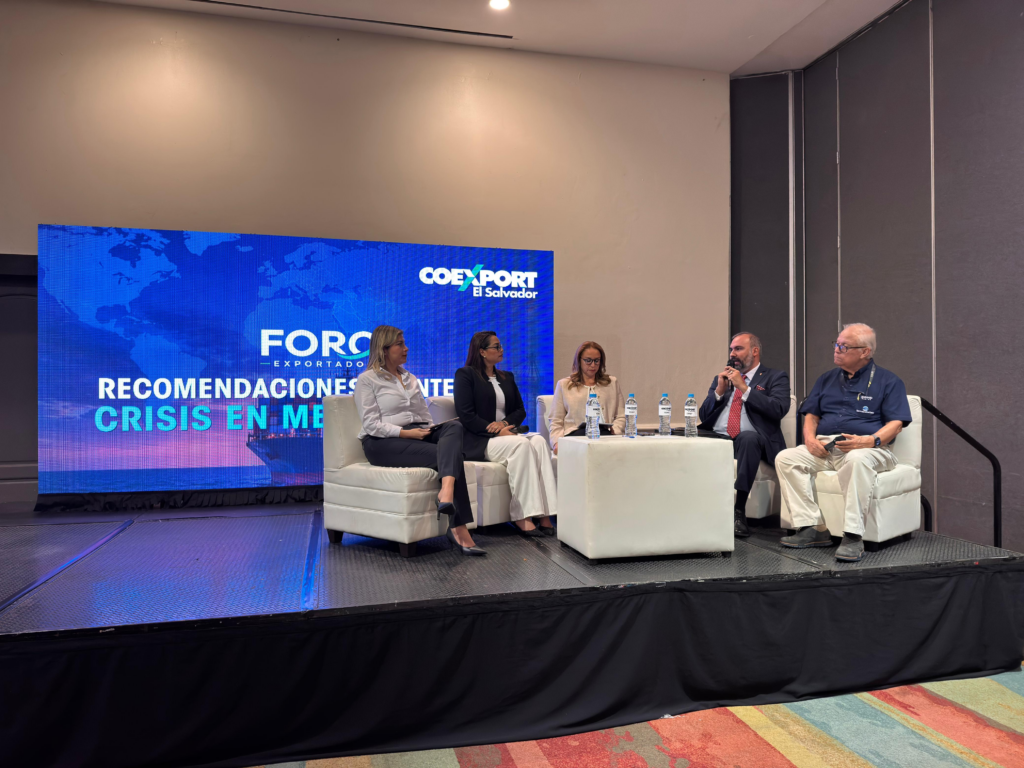
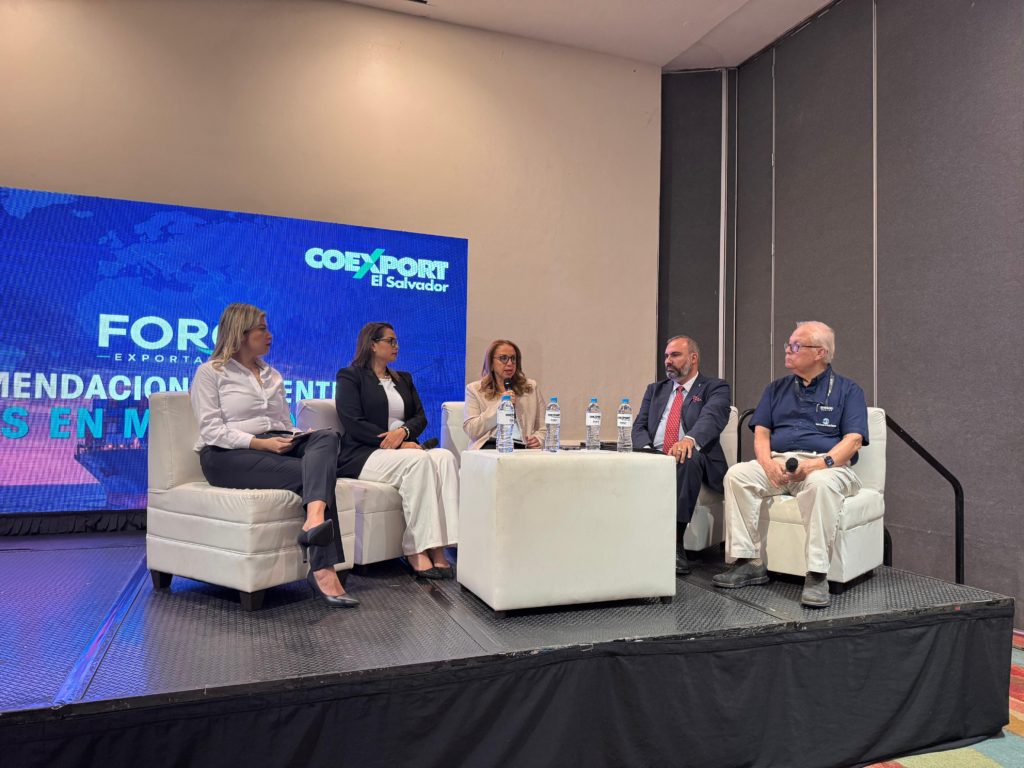
The statements were made during the forum “Recommendations in the Face of the Crisis in the Middle East”, organized by COEXPORT and aimed at analyzing how the current international scenario is impacting global supply chains and the operations of the salvadoran export sector.
“Trade doesn’t stop. What happens is that it becomes more expensive”, Cuéllar said.
The industry representative explained that, so far, companies have not registered serious export shutdowns or massive contract breaches, because many companies have already learned to react to these types of scenarios after previous experiences such as the COVID-19 pandemic and the conflict between Russia and Ukraine.
The main problem lies in supplies and logistics.
Although exports remain active, Cuéllar pointed out that the main impact is on the import of raw materials and supplies used to produce exportable goods.
She explained that products such as fertilizers, plastic resins, grains, flours, and other petroleum derivatives have experienced price increases and logistical difficulties due to disruptions in international shipping routes.
“We are most affected by what we have to bring in from suppliers who arrive via that route”, she said.
The president of COEXPORT indicated that the increase in maritime transport costs has become one of the main challenges for salvadoran companies.
She detailed that some containers from Asia, which previously cost between US$1,300 and US$2,000, can now reach up to US$6,000.
“The increase in freight is significant”, she noted.
Companies are seeking new routes and suppliers.
Faced with this scenario, companies are adopting new strategies to guarantee supply and maintain the continuity of their operations.
During the forum, it was highlighted that many companies are increasing strategic inventories, diversifying suppliers, and seeking alternative trade routes to reduce risks.
In addition, experts recommended strengthening purchase and shipping planning further in advance, as well as using technological tools to constantly monitor logistics chains.
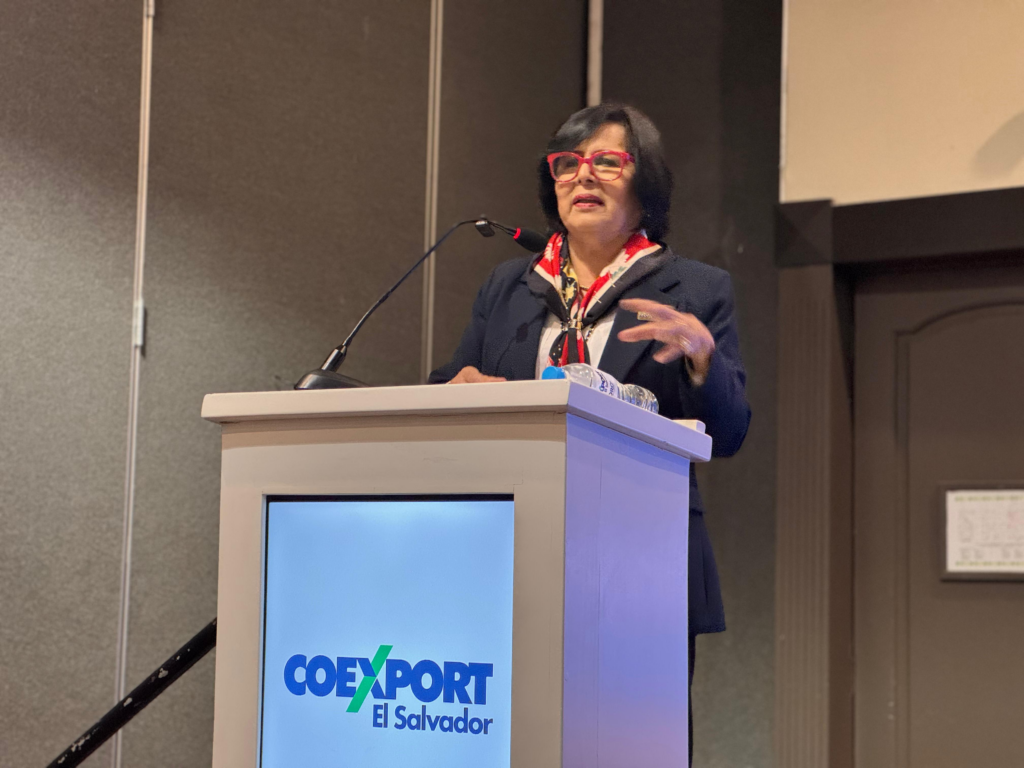
Cuéllar explained that companies must now act with greater flexibility and maintain constant vigilance over the behavior of international trade.
“Strategic planning is no longer annual; now it’s practically monthly”, he said.
Exports continue, but some sectors need greater dynamism.
The meeting also addressed the situation of salvadoran coffee, one of the country’s flagship export products.
Cuéllar explained that the sector has registered an increase in the value of exports due to the good international price of coffee, although with a reduction in the volume exported. According to her, in 2021 El Salvador exported approximately 29 million kilograms of coffee, valued at US$112 million, while recently exports reached nearly US$170 million, but with a volume of around 26 million kilograms.
“We are selling at higher prices, but exporting less volume”, she said.
The president of COEXPORT indicated that international demand remains strong, especially from Europe, the United States, China, and Korea, but acknowledged that the country needs to increase its production capacity to better meet international orders.
Crisis also opens opportunities for the region
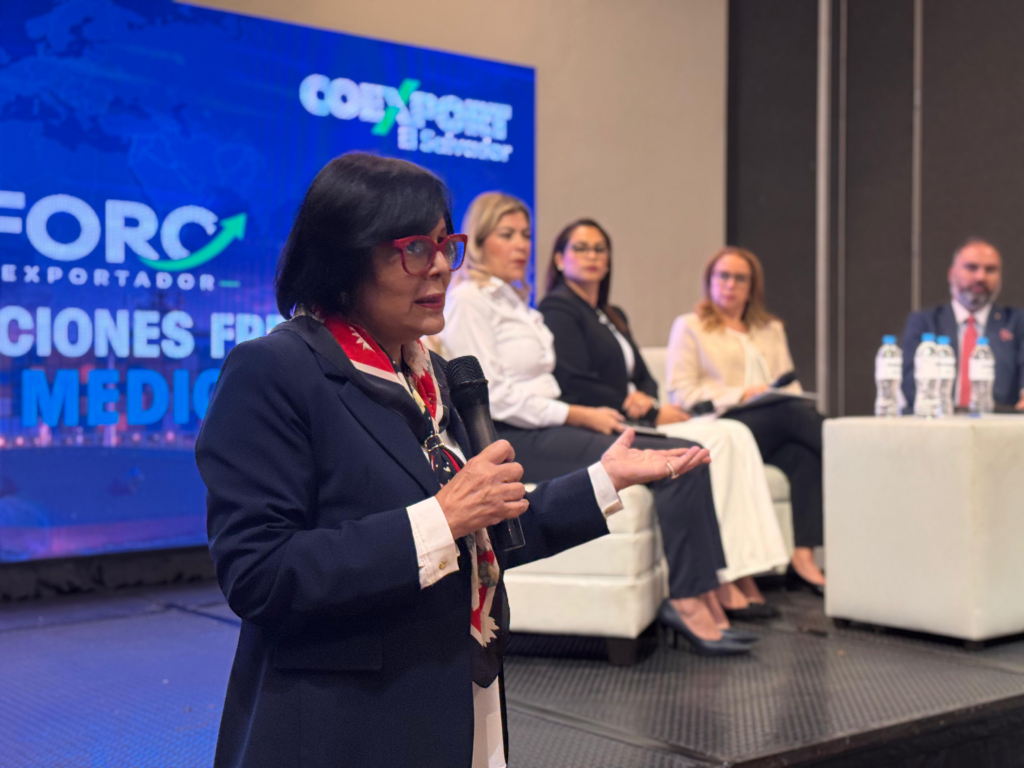
Despite the difficulties, COEXPORT believes that the current international context is also generating opportunities for El Salvador and Central America.
Cuéllar explained that several international companies are looking to shift purchases from Asia to closer markets in Latin America to reduce delivery times and logistical risks.
“Before, they bought from China, then they moved to Mexico, and now they’re coming to the region to find suppliers”, she explained.
This phenomenon, known as nearshoring, could benefit salvadoran companies interested in integrating into new international supply chains.
However, Cuéllar acknowledged that for some products, local capacity is already at its limit, and it’s not always possible to meet all the demand.
The United States remains the main market
COEXPORT highlighted that a large portion of salvadoran exports continue to be directed toward the United States and Central America, which has allowed them to partially mitigate the direct impact of logistical disruptions related to the Middle East.
According to Cuéllar, around 35% of national exports are destined for the United States, while another significant portion goes to the Central American region.
The trade association believes that strengthening exports remains key to generating employment, attracting investment, and expanding economic opportunities in the country.
Finally, COEXPORT pointed out that the current context demands more resilient, flexible companies that are prepared to respond quickly to changes in international trade.
You can also read: