

 dinero_admin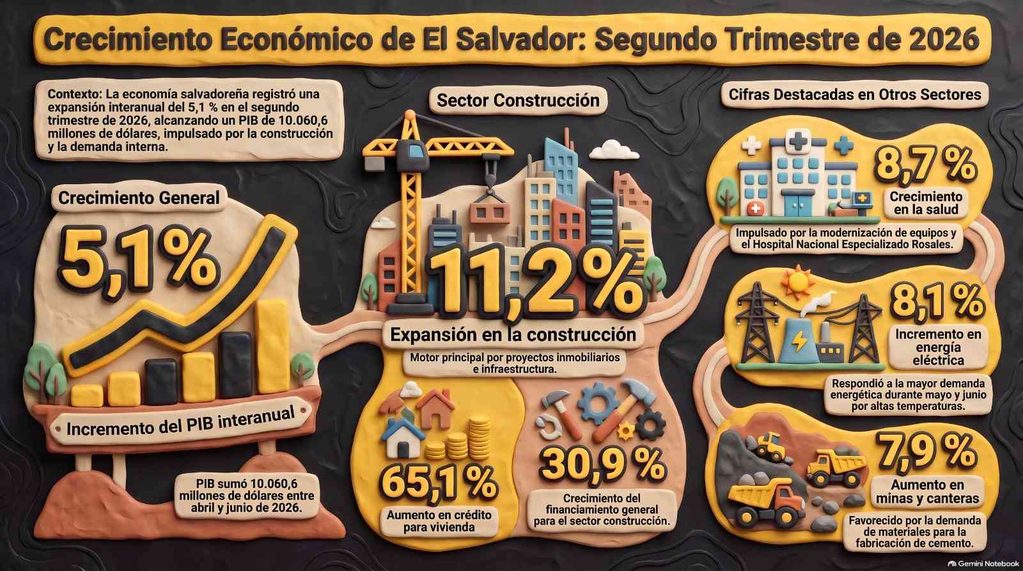
El Salvador’s economy recorded year-on-year growth of 5.1% during the second quarter of 2026, driven primarily by the dynamism of the construction sector and the favorable performance of most productive activities, according to data published by Banco Central de Reserva (BCR).
According to the institution, Gross Domestic Product (GDP) reached US$10,060.6 million between april and june of this year, representing an increase of US$926.5 million compared to the same period in 2025.
Construction remains the main driver
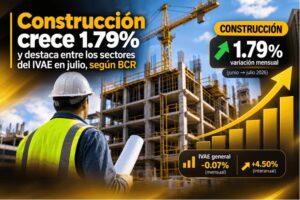
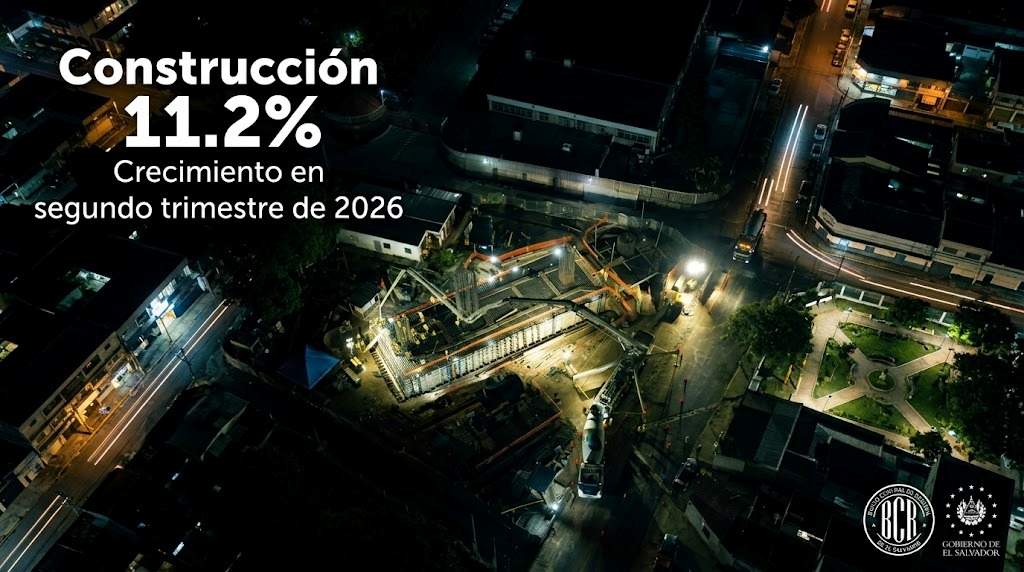
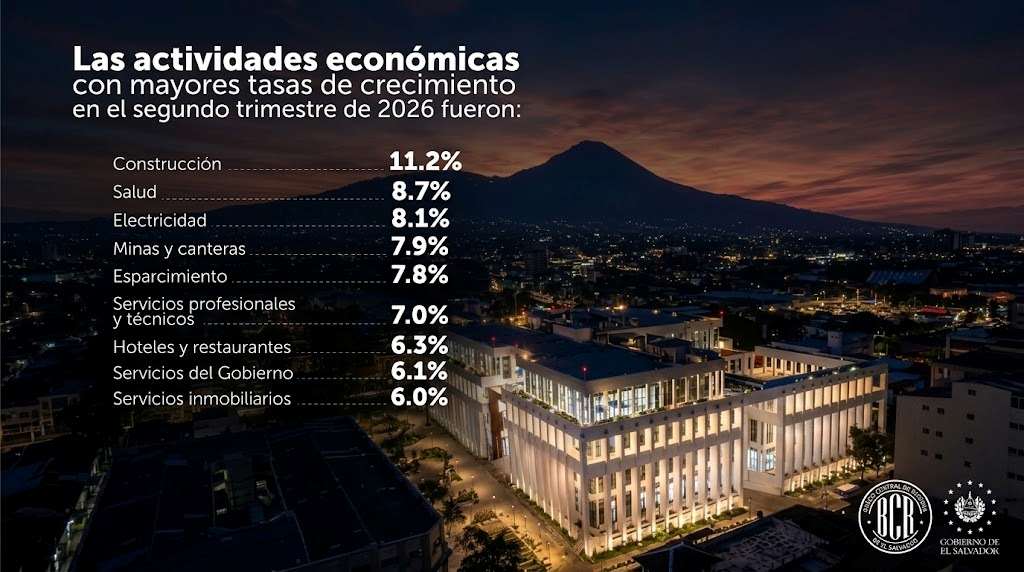
The activity that contributed most to growth was construction, which recorded an expansion of 11.2%, solidifying its position as one of the economy’s most dynamic sectors. The BCR attributes this result to progress in real estate, commercial, tourism, logistics, and public infrastructure projects.
The sector’s momentum was also reflected in financing. As of june 2026, credit allocated to construction grew by 30.9%, while housing financing increased by 65.1% compared to the previous year.
Additionally, apparent cement consumption rose by 19.9%, signaling increased execution of works and projects across the country.
The effect extended to other activities
Growth in construction also benefited sectors linked to its supply chain. Mining and quarrying output increased by 7.9%, driven by the demand for materials used in cement production.
Likewise, professional and technical services grew by 7.0%, supported by higher demand for engineering, architecture, and consulting services related to new projects.
Healthcare, electricity, and services also advance
Among the best-performing activities during the quarter, the healthcare sector stood out with 8.7% growth, followed by electricity supply (8.1%) and recreational activities (7.8%).
According to the BCR, the growth in healthcare activity was linked to the strengthening of medical services, equipment modernization, and the opening of the new Hospital Nacional Especializado Rosales.
Regarding electricity, the increase was driven by higher energy demand during may and june, months that saw high temperatures across the country.
Tourism, commerce, and remittances boost consumption
Service activities also maintained a positive trend. The hotel and restaurant sectors grew by 6.3%, real estate activities by 6.0%, education by 5.7%, information and communications by 5.2%, and financial and insurance services by 5.0%.
The BCR noted that tourism, recreational and cultural events, and increased demand for digital services during the start of the 2026 World Cup contributed to this momentum.
This was bolstered by family remittances, which totaled US$2.625 billion between april and june 2026, strengthening the purchasing power of salvadoran households.
Agriculture and personal services record declines
Not all activities showed positive results. Agricultural activity contracted by 0.9%, while personal services declined by 0.5% compared to the second quarter of 2025.
Despite this, the BCR highlighted that most economic sectors maintained a favorable trajectory, supported by investment, service sector growth, and strong domestic demand.
For the institution, these results reflect an economy that continues to expand, with construction serving as one of its key drivers in 2026.
You may also read: