

 dinero_admin
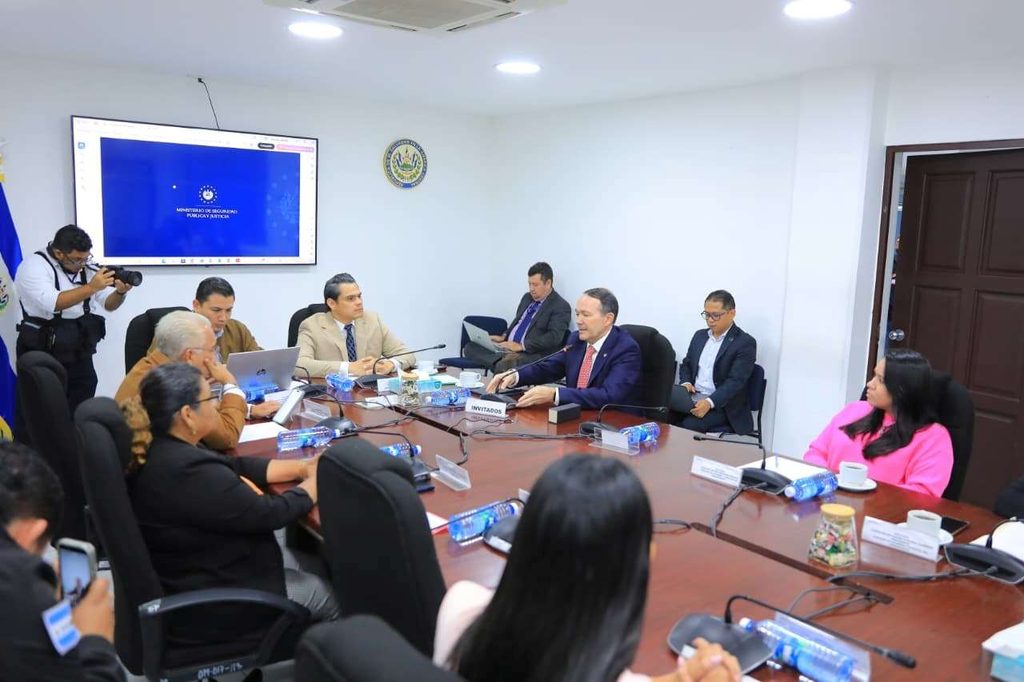
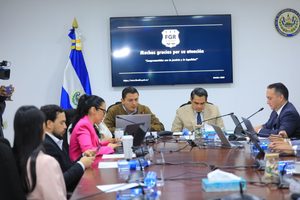
The Ministry of Justice and Public Security requested a budget of US$682.59 million for 2027, representing a US$20 million reduction compared to the US$702.59 million allocated for 2026. Minister Gustavo Villatoro explained to the Finance Committee of the Legislative Assembly that the decrease is due to a reorganization of resources to allocate more funds to education and vocational training, without affecting the operational capacity of security institutions.
During the presentation of the budget for the next fiscal year, Villatoro outlined the Ministry’s priorities, including the technological modernization of the Policía Nacional Civil (PNC), the improvement of police facilities, and the strengthening of emergency response tools. One of the main goals is to expand the number of so-called digital twins, artificial intelligence-based assistants that help automate tasks and support institutional operations, from 17 to 50. The largest allocation would go to the PNC, with US$446.29 million, a reduction of US$25.63 million compared to 2016. The minister assured that this adjustment will not affect police service coverage or the payment of salaries, benefits, and bonuses for personnel. The Dirección de Centros Penales would receive US$128.63 million; the Ministry of the Interior, US$42.09 million; and the Cybersecurity Agency, US$22.01 million.
The remaining resources would be distributed among the Registro Nacional de las Personas Naturales (RNPN), with US$13.04 million; the Academia Nacional de Seguridad Pública (ANSP), with US$9.76 million; the Directorate of Migration, with US$7.86 million; and other agencies, which would receive US$3.15 million. Furthermore, the ministry plans to invest US$15 million in modernizing police technology, of which US$4 million would be allocated to artificial intelligence tools and US$6.6 million to strengthening internet and broadband systems.
According to Villatoro, the modernization would allow for the incorporation of facial recognition tools into more than 21,500 computers used by police officers, with the aim of facilitating the identification of individuals and the retrieval of information during procedures. An additional US$4.4 million would be invested in expanding the fiber optic network and conducting trials with 5G technology, which would allow for connecting surveillance cameras in remote or difficult-to-access areas without relying on wired connections.
In terms of infrastructure, the Ministry of Security plans to allocate US$9.76 million to construction and improvement projects. Of these funds, US$6.21 million would be directed to the State Secretariat, partly through a loan from Italy; US$1.5 million to prisons; US$1.8 million to police projects; and US$250,000 to the Academia Nacional de Seguridad Pública. Among the planned projects are the relocation of the Santa Tecla police station to the former ANSP facilities, the relocation of the Sonsonate station, and the construction of security structures at border crossings for Immigration, Police, and Customs personnel.
The Minister also highlighted the use of technology to improve police response. The country has 17 AI-powered virtual agents to expedite investigations and monitor online activity. San Salvador also has six rapid response drone stations that, according to the official, can reach the scene of an emergency reported to 911 in less than five minutes. Using this system, 1,300 cases have been handled, including situations such as accidents, fires, and tracking suspects.
Regarding security results, Villatoro stated that crime was reduced by more than 97% during 2016 and that the administration has gone 1,350 days without a homicide. He also noted that the real-time connection between patrol cars and the crime map has helped expedite police response. In terms of transportation, the institution has 369 electric vehicles, including patrol cars, motorcycles, and buses, in addition to more than 53 charging stations installed at various precincts.
In the fight against drug trafficking, between january 1 and o1, 2026, the Anti-Narcotics Police seized more than 15,829 kilograms of drugs, valued at US$389.22 million. During the operations, 1,336 people were arrested, and US$355,455 in cash, 1,188 cell phones, 35 firearms, 157 vehicles, five speedboats, and one ship were seized. These figures were presented by the minister as part of the results of the security operations carried out during the year.
The presentation also included progress in police training and immigration services. The Academia Nacional de Seguridad Pública graduated 469 technicians and 424 graduates, while 1,382 officers were promoted to the rank of corporal and 12 to the rank of sub-inspector. In 2026, the Immigration Department issued 257,572 passports, granted 14,245 residency permits, and awarded 190 citizenships and naturalizations. With the requested budget for 2027, the ministry aims to maintain security services, expand the use of technology, and continue infrastructure and training projects.