dinero_admin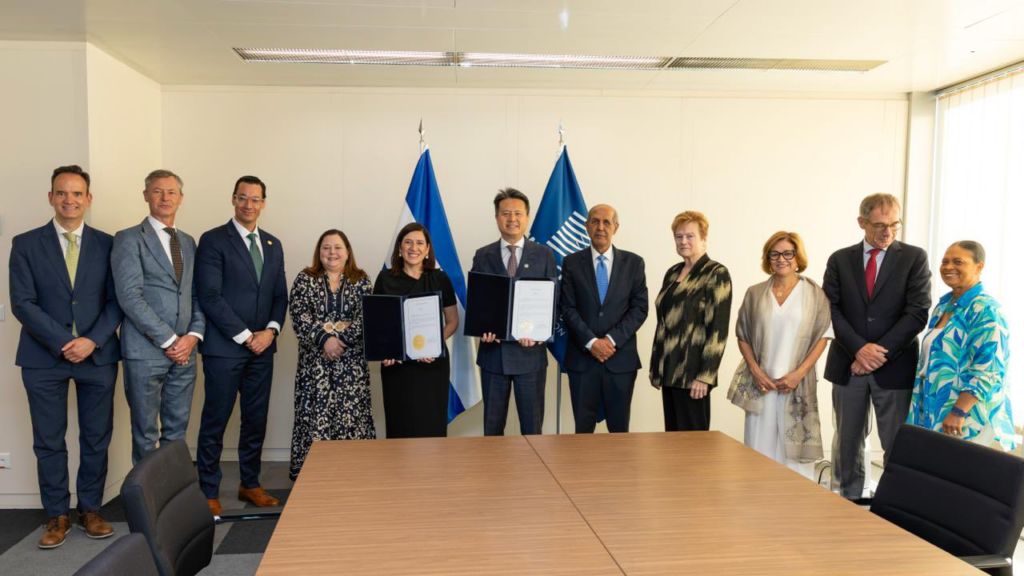
El Salvador is advancing in strengthening the conditions for investment and business development by joining four international treaties on intellectual property, a measure that seeks to provide greater legal certainty to companies, entrepreneurs, and innovators who develop products, brands, designs, and new technologies.
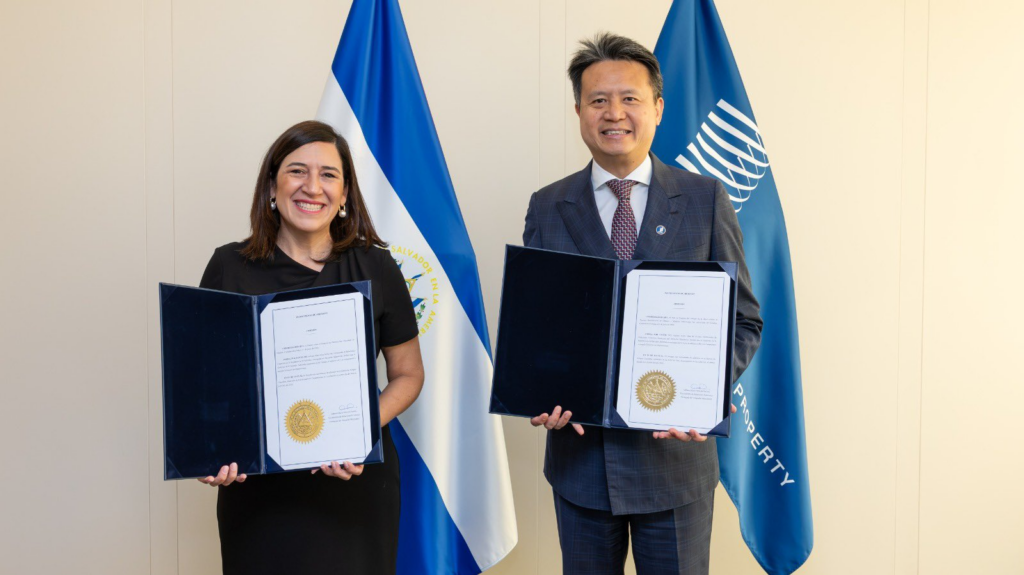
The Minister of Economy, María Luisa Hayem, reported that, together with the Consejo Nacional de Registros (CNR), the instruments of accession to these international agreements were presented to the World Intellectual Property Organization (WIPO). With these treaties, the country seeks to modernize its processes and align itself with global standards in the protection of intangible assets.
The treaties are the Geneva Act of the Hague Agreement Concerning the International Registration of Industrial Designs, the Patent Law Treaty (PLT), the Singapore Treaty on the Law of Trademarks, and the Riyadh Treaty on the Law of Industrial Designs.
From an economic perspective, the incorporation of these instruments represents a tool to strengthen the confidence of domestic and foreign investors by offering more efficient mechanisms for registering and protecting creations, innovations, and distinctive signs in international markets.
Intellectual property is considered a key element for business competitiveness, as it allows companies, entrepreneurs, and innovation centers to protect their developments and obtain greater economic value from their ideas, products, and processes.
With these agreements, Salvadoran companies will have access to procedures that facilitate the protection of their trademarks, patents, and designs abroad, which can contribute to greater participation in international markets and the growth of innovation-based sectors.
Likewise, the modernization of registration systems can encourage new investments by offering a more robust framework for protecting intellectual property rights and reducing risks for those seeking to develop businesses in El Salvador.
Minister Hayem emphasized that these actions are part of the efforts to consolidate a more attractive environment for investment, promote entrepreneurship, and strengthen the country’s capacity to compete in a global economy where innovation and knowledge play an increasingly important role.
You can also read: