

 dinero_admin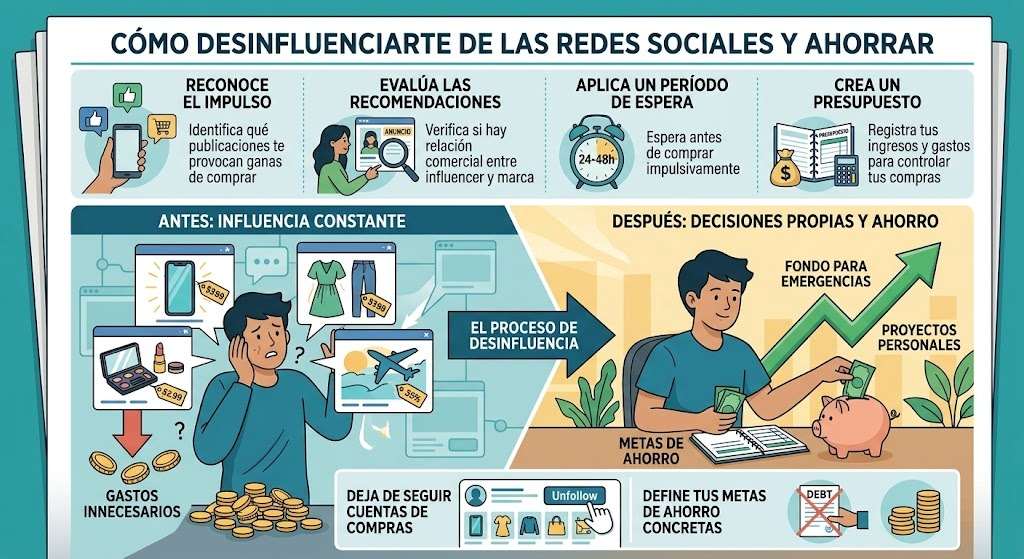
Social media has become a constant source of recommendations for products, fashion trends, tech gadgets, cosmetics, travel, and lifestyles that can influence purchasing decisions. While these platforms allow you to discover new products and compare options, they can also drive spending that wasn’t part of the family budget and make it harder to meet savings goals.
“De-influencing” means learning to make your own consumer choices rather than automatically buying what content creators recommend or what others show online. It isn’t about quitting social media but rather recognizing when a post addresses a genuine need and when it triggers a desire to buy based on trends, social pressure, or the fear of missing out.
The U.S. Federal Trade Commission (FTC) warns of the importance of identifying commercial relationships between influencers and brands. These arrangements can involve payments, free products, or other perks in exchange for promoting items. Therefore, before trusting a recommendation, it is wise to check for any advertising relationship and look for additional information about the product.
The problem arises when someone logs onto social media for entertainment and ends up buying something they hadn’t planned to purchase. Small, repeated expenses can add up, reducing the money available for utilities, food, transportation, or savings. Furthermore, posts often showcase appealing products and experiences without necessarily reflecting all the associated costs, so it is important to evaluate whether a purchase fits your personal financial situation.
One of the first steps to avoid this type of spending is to identify which content triggers the strongest urge to buy. If shopping videos, product recommendations, or posts from specific accounts lead to impulse purchases, you can unfollow those profiles, mute commercial posts, or limit the time you spend viewing that content. It is also advisable to set a waiting period of 24 to 48 hours before purchasing a non-essential item, to evaluate whether it is truly needed or if the interest in it will fade.
A personal budget is another essential tool for managing consumption. Consumer.gov, an initiative of the U.S. government, recommends tracking income and expenses to understand how money is being spent. Adopting this habit makes it possible to identify how much is being allocated to clothing, cosmetics, food delivery, electronic devices, and other products promoted online. With this information, you can set a limit for personal purchases and entertainment, without compromising the resources earmarked for basic needs and financial obligations.
To turn money that is no longer spent into savings, it is important to set concrete goals such as building an emergency fund, paying off debt, or gathering resources for a personal project. The U.S. Consumer Financial Protection Bureau (CFPB) recommends defining financial objectives and making regular contributions based on what your financial situation allows. For example, if a person spends $15 a week on impulse purchases, after four weeks they will have spent $60, an amount that could be put, in whole or in part, toward a savings goal.
“De-influencing” does not mean giving up all discretionary purchases; rather, it means regaining control over your financial decisions. Comparing prices, checking for promotions, critically analyzing commercial recommendations, and sticking to a budget help avoid unnecessary spending. In a digital environment that constantly introduces new trends, learning to distinguish between what you want and what you truly need allows for more discerning consumption, helps protect your available funds, and paves the way toward greater financial stability.
You may also want to read: