

 dinero_admin
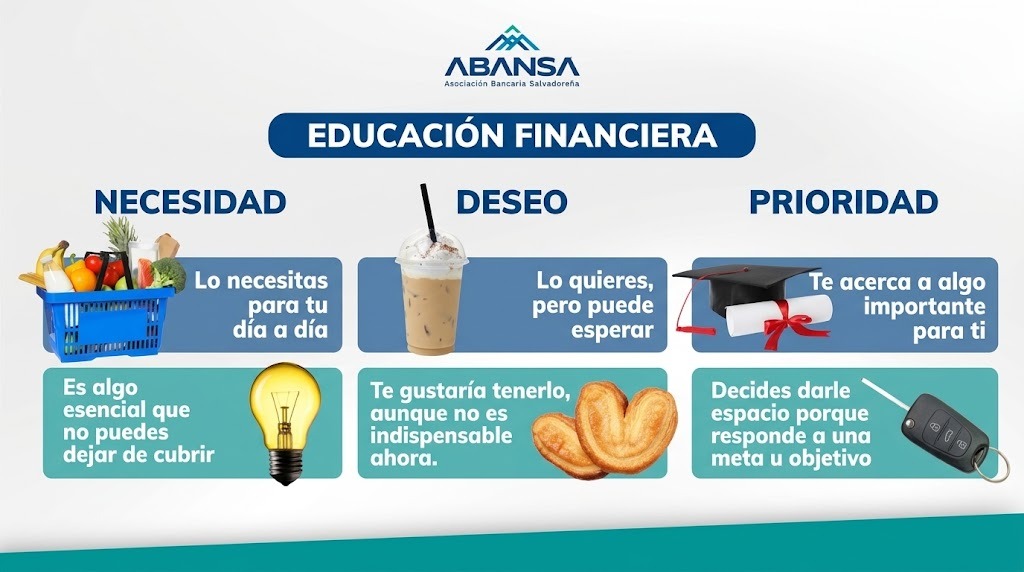
The Asociación Bancaria Salvadoreña (ABANSA) advises consumers to reflect on their purchasing decisions before spending money, with the goal of better managing their resources and staying on track with their financial objectives. The organization emphasizes the importance of distinguishing between what is needed, what is desired, and what contributes to achieving a personal goal.
Before making a purchase, ABANSA suggests asking a simple question: Do I need this today, do I just want it, or does it bring me closer to a goal? This exercise helps determine whether an expense is essential, whether it can wait, or whether it aligns with an important objective.
Differentiating needs from wants
Needs refer to essential daily expenses that must be addressed to maintain well-being and fulfill everyday responsibilities. These are products or services that cannot be neglected without negatively impacting other areas of life.
Wants are things a person would like to acquire but are not strictly necessary at that moment. While they may provide satisfaction, it is important to recognize that not every desired purchase needs to be made immediately. Identifying these helps avoid impulsive spending and allows one to decide which purchases can be postponed without compromising basic needs.
Priorities and financial goals
ABANSA also highlights the importance of identifying priorities, spending decisions that contribute to reaching a personal goal or objective. Theserequiresrelate to plans that require organization and financial resources; allocating space for them within a budget ensures that money is directed toward specific, defined purposes.
To apply this approach, one can evaluate how each purchase influences their personal plans. If an expense is neither essential nor contributes to an important goal, it may be worth postponing it and reallocating those resources toward something of greater current relevance.
Planning before spending
Distinguishing between needs, wants, and priorities enables consumers to make purchasing decisions with greater clarity. This classification helps identify which expenses should be addressed first, which can wait, and which resources should be set aside for future goals.
ABANSA recommends using this framework as a practical tool before making a purchase. Furthermore, the association suggests keeping their informational material on hand to consult when making future consumer decisions. Incorporating this habit into your daily money management can help you control spending, avoid unnecessary purchases, and better organize your personal finances.
You may also want to read: