


 dinero_admin
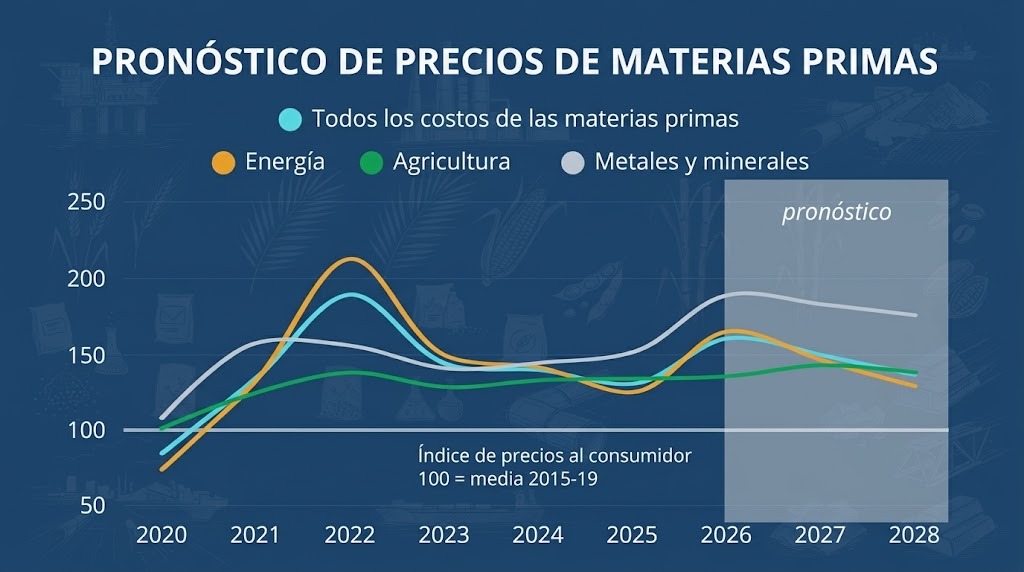
Commodity prices will rise by 23% by 2026, driven by geopolitical tensions, disruptions in energy supplies, and risks threatening agricultural production, according to the World Bank Group’s latest Commodity Markets Outlook report. The institution warns that these pressures could drive up the cost of food and fuel, fuel inflation, and slow global economic growth.
The report projects that energy prices will rise by 32% this year, following three consecutive years of decline. The conflict in the Middle East has reduced oil inventories and heightened risks to international supply, leading to expectations that energy prices will reach their highest level in four years. By 2027, the World Bank forecasts a moderation in these costs, although the trend will depend on market conditions and the duration of international tensions.
In the oil market, the agency estimates that Brent crude, used as an international benchmark, will average US$91 per barrel in 2026, compared to US$69 in 2025. By 2027, the projection points to a decline to US$79 per barrel. However, the World Bank warns that an escalation of the conflict in the Middle East and ongoing damage to Russian oil infrastructure could trigger further price increases. In an adverse scenario, Brent could average US$105 per barrel in 2027.
The price hike would also affect food. The report forecasts that prices for basic food products will rise by about 10% in 2026 and an additional 7% in 2027, representing a cumulative increase of 18% over both years. Factors putting pressure on this market include disruptions in grain shipments, the threat of El Niño to crops, and higher costs for fuels and fertilizers used in agricultural production.
The institution also warns of the risks facing the global oil supply. Supply is projected to decline by 5.2% in 2026, the largest drop in more than four decades, excluding the contraction recorded during the 2020 global recession. At the same time, consumption could fall by 2.5% due to high prices and shifts in energy demand, including electrification in China. Since production would remain below consumption, it would be necessary to draw on existing reserves, leaving the market more vulnerable to further disruptions.
Fertilizers are another source of pressure for the agricultural sector. The World Bank estimates that fertilizer prices will rise by 14% in 2026, before returning to 2025 levels next year. Although the rise in urea prices seen in early 2026 has moderated, rising energy costs and supply constraints could be passed on to agricultural production costs and, subsequently, affect food prices.
In other markets, metals are also expected to see significant increases. The agency forecasts that prices will rise 25% in 2026 and reach a new high, driven by demand for aluminum, copper, and tin for renewable energy projects, electric vehicles, and data centers, as well as supply disruptions. By 2027, it anticipates a 3% decline. For precious metals, such as gold and silver, a 40% increase is projected this year, driven by the search for safe-haven assets amid geopolitical and regulatory uncertainty.
“Commodity markets are being affected simultaneously by several major disruptions”, said Ayhan Kose, deputy chief economist and director of the World Bank’s Outlook Group.
The official warned that rising energy costs and trade disruptions could exacerbate inflation, food insecurity, and challenges to economic growth, and therefore considered protecting the most vulnerable populations a priority. To support countries in the face of these pressures, the World Bank Group has made between US$50,000 million and US$60,000 million available through existing instruments, including US$25,000 million in pre-committed financing, which can be allocated to social safety nets, liquidity for businesses, and support for farms.
The organization also warned that if rising energy costs, further disruptions in grain shipments, and a severe El Niño event were to coincide, it could trigger a more serious food crisis. Although its baseline projections anticipate that commodity prices will fall by 7% in 2027, the actual outcome will depend on conflicts not escalating and the major identified risks not materializing simultaneously.
You can also read: