

 A. M.
A. M. 
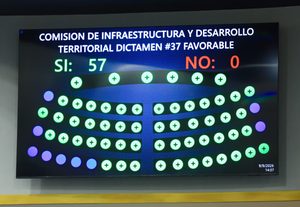
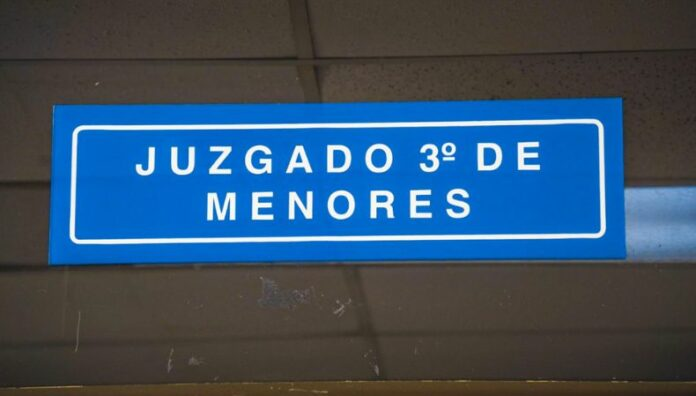
The Legislative Assembly of El Salvador approved, with 58 votes, a reform to the Organic Law of the Judiciary that establishes the conversion of juvenile courts and chambers into criminal courts, as part of a reorganization of the judicial system to handle more serious crimes.
With this measure, these courts will expand their jurisdiction to hear cases related to homicide, femicide, and rape, in addition to assuming functions related to the execution of sentences and the monitoring of convictions.
Reorganization of the Judicial System
The reform seeks to transform the structure of the juvenile criminal justice system to adapt it to new needs in terms of security and the administration of justice. In this regard, the current juvenile courts and juvenile enforcement courts will be renamed criminal courts, with jurisdiction in one or more departments.
Likewise, the juvenile chambers in the Central, Western, and Eastern regions will also be converted into criminal chambers, expanding their territorial coverage and their capacity to handle more complex cases. New Territorial Distribution
As part of the changes, a new organization of court venues is being established nationwide. For example, the Juvenile Court of Soyapango will become the First Criminal Court of San Salvador, with jurisdiction over San Salvador, La Libertad, and Chalatenango.

Similarly, the juvenile courts of Santa Tecla will become criminal courts with jurisdiction in the central region, while other venues in departments such as La Paz, San Vicente, Santa Ana, Sonsonate, San Miguel, Usulután, and La Unión will also be transformed to assume these new functions.
Regarding the chambers, the reorganization will allow the Criminal Chamber of the central region to have jurisdiction over several departments, while the Western and Eastern chambers will cover their respective regions, significantly expanding their reach.
Jurisdiction and functions
The new Criminal Courts and Chambers will be responsible for hearing cases involving serious crimes, as well as executing sentences and supervising compliance with penalties, in accordance with Article 51-A of El Salvador’s Code of Criminal Procedure.
However, cases related to organized crime will continue to be handled by specialized courts, maintaining their differentiated treatment within the judicial system.
Continuity of proceedings and operational adjustments
The reform also establishes that ongoing proceedings, including those that are inactive, will continue to be handled by the same courts, although now under their new designation as criminal courts.
In addition, the transformed enforcement courts must transfer certain case files to the corresponding courts in San Salvador, following established procedures.
The reform also incorporates the possibility of holding in-person, virtual, or hybrid hearings, as well as the use of technological tools to facilitate appearances and case distribution, especially through the “Isidro Menéndez” Integrated Judicial Center.
Scope of the Reform
With this restructuring, authorities seek to optimize the distribution of workload, improve efficiency in case handling, and strengthen the judicial system’s capacity to address high-impact crimes.
The conversion of juvenile courts and chambers into criminal courts represents a structural change in the country’s judicial organization, aimed at responding to current demands in security and justice.
You can also read: