

 dinero_admin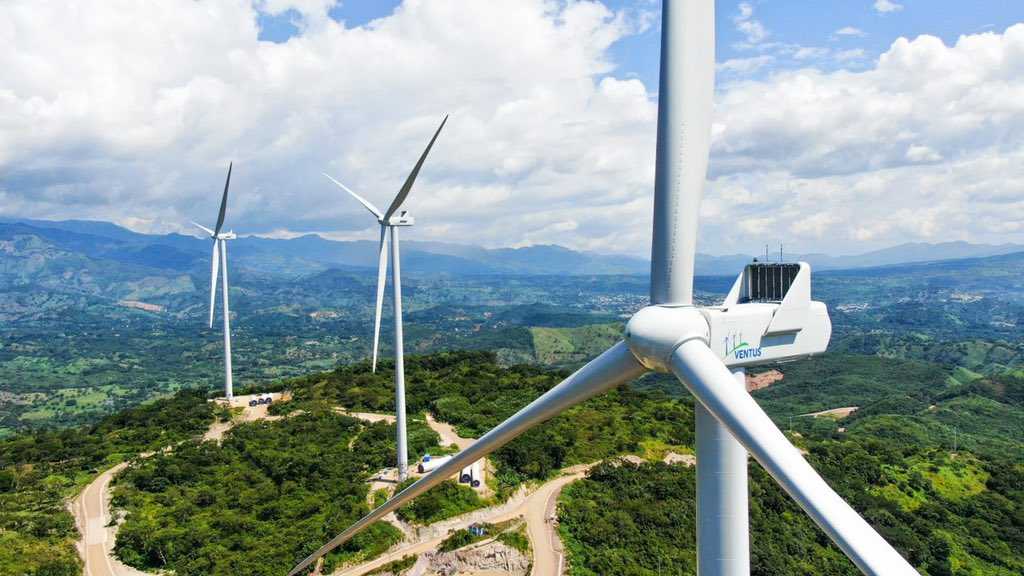
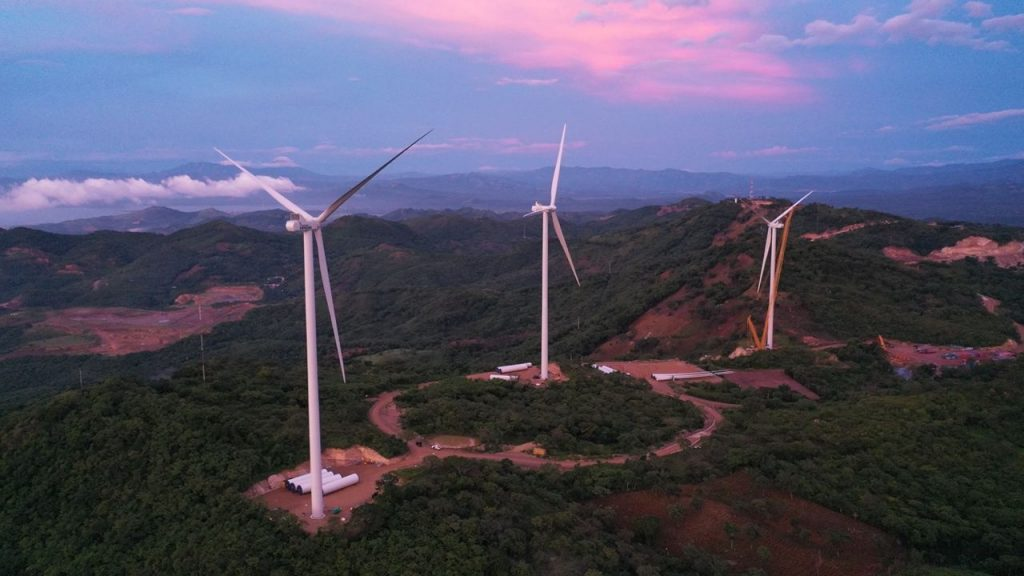
The Government of El Salvador continues to promote strategic investments to strengthen the country’s energy infrastructure. One of its main projects is the Parque Eólico Ventuslocated in Metapán, Santa Ana Norte, which represents an investment of US$85.5 million and has become one of the most important projects for diversifying the national energy mix and guaranteeing a more stable and sustainable electricity supply.
The president of the Empresa Transmisora de El Salvador (ETESAL), Edwin Núñez, emphasized during a television interview that this project reflects the State’s vision of consolidating the country as a regional leader in energy, economic, and infrastructure matters.
According to Núñez, the Parque Eólico Ventusgenerates energy through wind power, utilizing permanent currents detected after technical studies conducted over a period of three to five years. This allows for the constant production of clean energy and reduces dependence on traditional sources.
“El Salvador is consolidating its position with guarantees of sufficient energy and a diversified energy mix”, said the head of ETESAL, who also noted that these types of investments strengthen the country’s competitiveness and generate confidence for future projects.
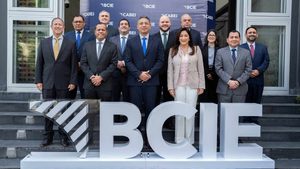
The official also highlighted that El Salvador recently hosted the 2026 Encuentro Anual de Altos Ejecutivos (ENAE) 2026 an event attended by representatives from various Central American and Caribbean countries. During the event, participants learned firsthand about the country’s energy development and installed technical capacity.

Núñez indicated that one of the visits was to the El Volcán Substation, where participants were able to observe the technological and operational level of the salvadoran facilities.
“They told us what an impeccable substation it was. They realized that we have efficiency and all the necessary equipment to avoid situations like those experienced by other countries when they ran out of power”, he said.
The president of ETESAL explained that El Salvador’s energy system is also strengthened through regional integration via the Sistema de Interconexión Eléctrica para los Países de América Central (SIEPAC), a transmission network of approximately 1,800 kilometers connecting Guatemala, El Salvador, Honduras, Nicaragua, Costa Rica, and Panama.
This connection allows for the exchange of energy between the countries and improves the reliability of the regional electrical system, especially during periods of high demand or emergencies.
Furthermore, ETESAL is developing a comprehensive maintenance and expansion plan for the national grid. Núñez detailed that the institution constantly works on three types of maintenance: preventive, predictive, and corrective, with the goal of guaranteeing the stability of the electrical service throughout the country.
“We maintain all the substations that provide energy and are working in new areas where economic and tourism growth demands greater energy capacity”, he noted.
Among these initiatives is the construction of the country’s first Gas-Insulated Substation (GIS), located in Tamanique, La Libertad. This project will benefit more than 16,000 users and aims to address the rapid tourism and residential growth in that region of the country.
The head of ETESAL stated that these works are part of a comprehensive strategy to guarantee sufficient, modern, and reliable energy, supporting the economic, tourism, and industrial growth that El Salvador has experienced in recent years.
You can also read: