

 dinero_admin
The Ministry of Finance will be required to prepare reports and issue fiscal opinions that include the State’s capacity to assume the costs of projects developed under the Alianzas Público Privadas (APP), model, as part of the reforms contemplated in the new APP Law currently under review by the Legislative Assembly.
The proposal was analyzed by the Technology, Tourism, and Investment Committee, which continues to advance in its study of the regulations aimed at modernizing the public investment framework and strengthening private sector participation in infrastructure and public service projects in El Salvador.
During the working session, the legislators met with the Minister of Finance of El Salvador, Jerson Posada, who explained the responsibilities that his ministry will have within the operation of PPPs.
The official indicated that the Ministry of Finance will be responsible for guaranteeing the sustainability and fiscal responsibility of each project through financial and budgetary evaluations that prevent negative impacts on public finances.
“What better place to ensure these projects comply fiscally, that there are no costs that could harm public finances in the medium term, than the Ministry of Finance, which is responsible for the control and management of state resources, public finances, and budgetary control?”, Posada said.
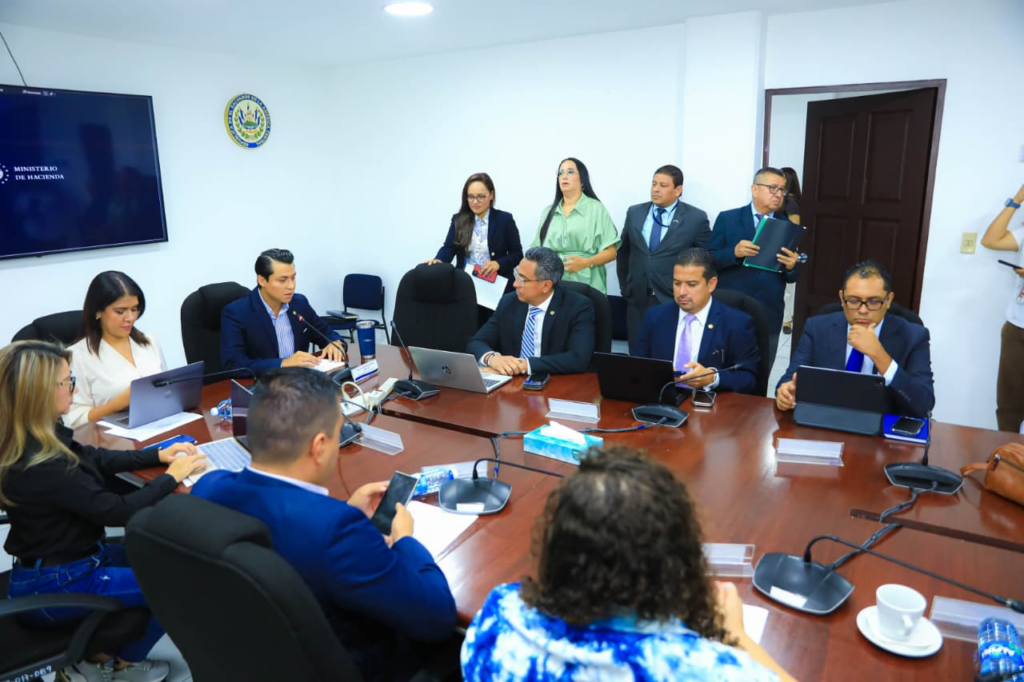
He explained that the ministry will issue fiscal opinions on each APP project, evaluating the state’s capacity to assume the costs, the distribution of risks with potential fiscal impact, and the payment capacity of the private companies involved.
Furthermore, the Ministry of Finance will verify that public institutions incorporate the necessary resources into their budgets to fulfill the obligations arising from the PPP contracts.
The minister also emphasized that each project must undergo a technical analysis known as “value for money,” a tool that will determine whether executing a project through a public-private partnership represents greater benefits and lower costs for the state compared to a traditional public works project.
“This technical analysis is a statistical-mathematical one in which a series of assessments are made of all aspects of the project. These are economic and financial assessments to determine the advisability of carrying out this project through a Public-Private Partnership, versus a traditional public works project”, the official explained.
Public-Private Partnerships (PPPs) are mechanisms through which the State and private companies work together on the design, construction, operation, and maintenance of public projects, sharing risks and responsibilities to improve efficiency and expedite the execution of works and services.
During the legislative debate, Representative William Soriano stated that the role of the Ministry of Finance will be key to guaranteeing sound, balanced, and transparent public finances in large-scale projects.
He also maintained that the new legislation sends a positive message to national and international investors about the conditions El Salvador offers for developing projects and attracting investment.
“El Salvador is taking a historic step thanks to the national transformation. This law accelerates the country’s development”, the legislator said.
The Minister of Finance also emphasized that APPs will allow the government to leverage the experience, innovation, and technology of the private sector to develop projects more efficiently and in less time, in addition to sharing financial risks between the State and the participating companies.
He explained that these types of projects will also be subject to social and financial profitability assessments, with the aim of guaranteeing the efficient use of public resources and ensuring direct benefits for the population.
Parliamentarians will continue analyzing the regulations in upcoming working sessions, which are also expected to include representatives from other institutions involved in investment projects and land-use planning.
You can also read: