


 dinero_admin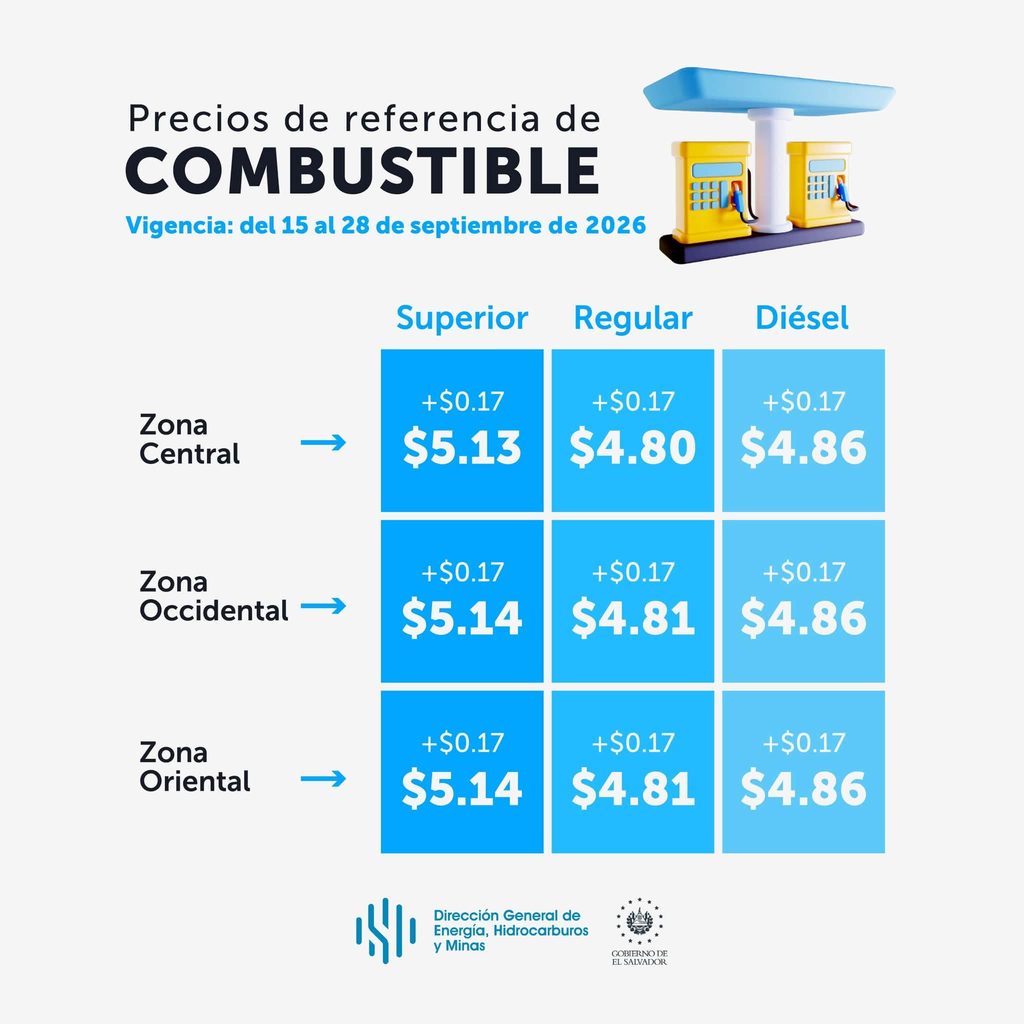
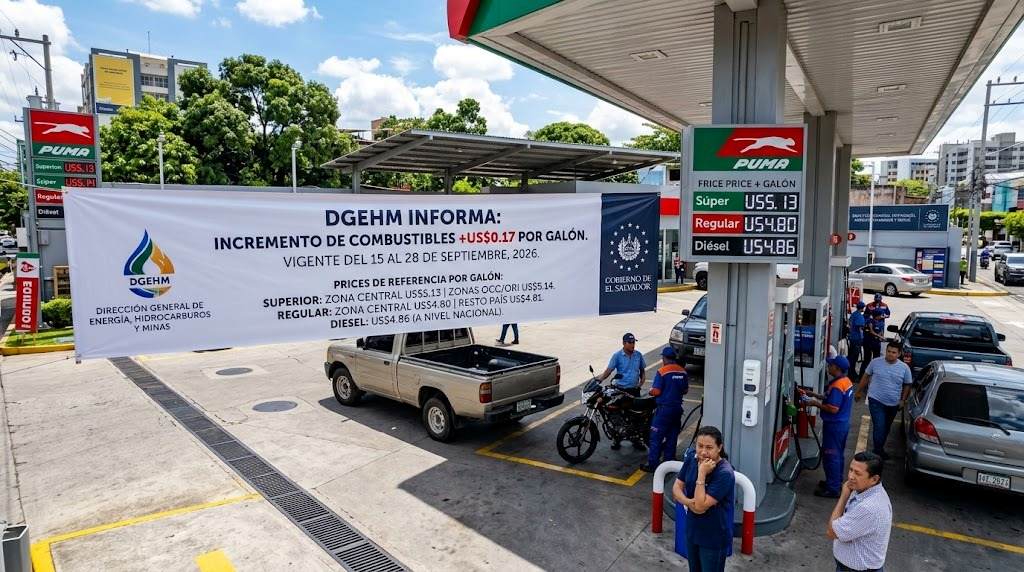
Reference fuel prices in El Salvador will see an increase of US$0.17 per gallon between september 15 and September 28, 2026, according to the Dirección General de Energía, Hidrocarburos y Minas (DGEHM). With this adjustment, premium gasoline will cost US$5.13 in the central zone and US$5.14 in the western and eastern zones; regular gasoline will reach US$4.80 in the central zone and US$4.81 in the rest of the country; while diesel will stand at US$4.86 per gallon across all three regions.
The agency noted that the increase will be uniform across all three fuel types and all zones of the country, representing a change of $0.17 per gallon compared to the previous two-week period. The new reference prices include applicable taxes as well as the FEFE and COTRANS contributions.
According to the DGEHM, a primary factor driving the increase is the situation in the Red Sea, where an armed Houthi group has seized control of the Bab el-Mandeb Strait, a strategic route for the global hydrocarbon trade. This scenario has exerted upward pressure on international prices for oil and its derivatives.
Compounding this are renewed attacks between Russia and Ukraine, which continue to affect gasoline, and diesel supplies in international markets. The ongoing conflict sustains uncertainty regarding energy availability and drives up supply costs.
The DGEHM also noted that rising tensions around the Strait of Hormuz have impacted hydrocarbon transport. According to the agency, this maritime route is currently operating at 20% capacity, reducing the flow of oil and fuels to various markets.
Another factor putting pressure on prices is the increase in attacks on oil infrastructure in Saudi Arabia. The situation forced the closure of the main oil pipeline used for hydrocarbon exports, raising concerns about global supply and contributing to rising fuel prices.
Against this international backdrop, the DGEHM noted that reference prices serve as a guide for consumers and reflect global market trends. The agency continuously monitors the factors influencing price formation to keep the public informed in a timely manner.
Furthermore, the agency reported that it is stepping up inspections at service stations to ensure the quantity and quality of fuel sold in the country. Inspectors verify that consumers receive the exact volume they pay for and that the products meet established technical specifications.
The DGEHM added that it also conducts ongoing checks on companies that market petroleum derivatives. Any failure to comply with current regulations may result in sanctions, with the aim of protecting consumers and fostering transparent competition in the fuel market.
You may also read: