

 dinero_admin
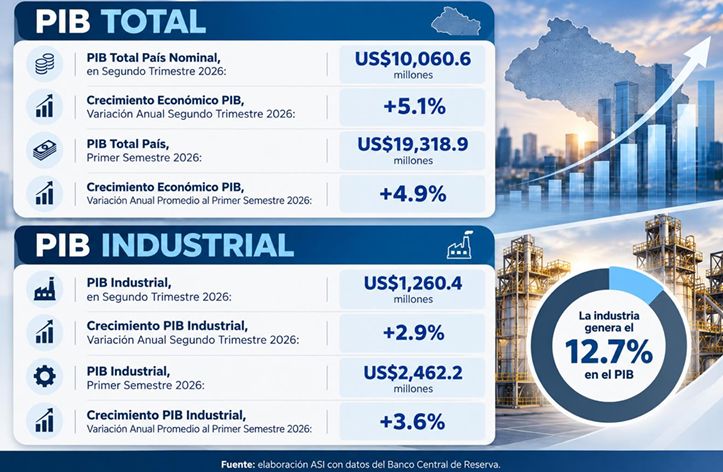
 Salvadoran industry grew by an average of 3.6% during the first half of 2026, driven by new investments and operational expansions within the country. This is according to an analysis by the Asociación Salvadoreña de Industriales (ASI) based on data from the Banco Central de Reserva (BCR).
The sector’s performance aligns with that of the national economy. Gross Domestic Product (GDP) recorded a 5.1% year-on-year change in the second quarter.
Industry contributes 12.7% of GDP, positioning it as a pillar of productive activity and formal employment in El Salvador.
ASI president Jorge Arriaza attributed the result to the collaborative efforts of the productive sector and expects this pace to continue for the remainder of the year.
“We are on the right track. As the private sector, we are developing investment and production opportunities that foster growth”, Arriaza said.
The industry leader projected that the sector could close in 2026 with a growth rate exceeding the 3% recorded in 2025. “The sector will continue to grow. Trends indicate that industry is rebounding rapidly”, he said.
Employment, exports, and talent
For Karla Domínguez, ASI’s Industrial Intelligence Manager, this growth has direct effects extending beyond production plants. “For the industry, 3.6% growth signifies dynamism, job creation, exports, and innovation in human talent. It confirms industry’s role as the engine of the economy”, she explained.
A long-term path
This growth takes place within the framework of the 2025–2029 Industrial Development Plan, which aims to continue energizing the salvadoran economy. Key lines of action include defining new areas for industrial development and strengthening technical skills training for the sector and its value chain.
With these results, ASI reaffirms the industry’s role in generating investment, employment, and opportunities for the country.
Key data